Also see:
Ducati Diavel 1260 S review, test ride
from Autocar India https://ift.tt/2V72z7E
via IFTTT
Also see:
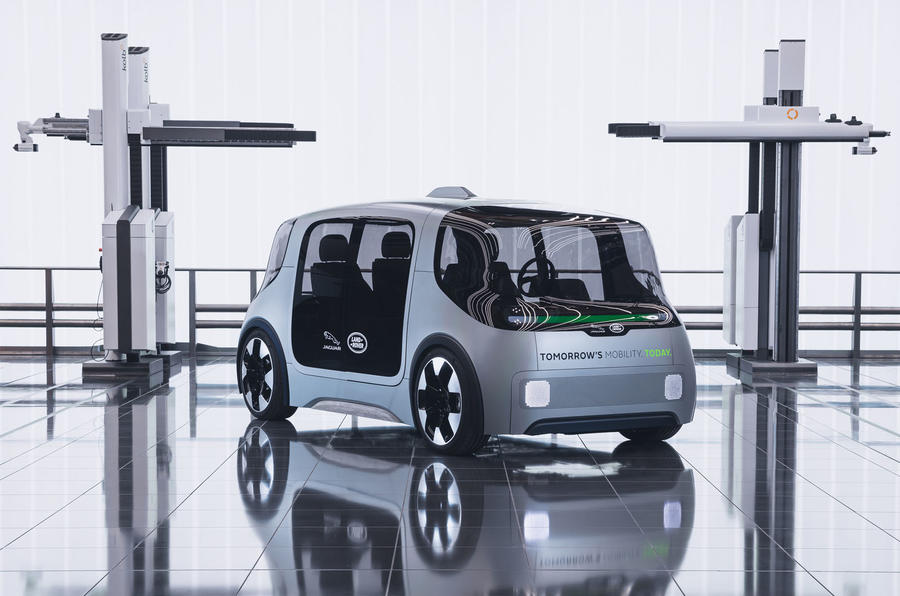
Jaguar Land Rover has shocked the world of future motoring by unveiling a completely new, fully engineered electric car platform that's capable of supporting a wide variety of autonomous, shared and private vehicle configurations.
Work on the project – which is separate from JLR’s current or near-future production car range – is already so far advanced that a multi-use autonomy-ready vehicle, claimed to offer unparalleled interior space and flexibility, will begin road trials in Coventry late next year. City and West Midlands authorities have already agreed to cooperate, viewing the project as “a living laboratory for future mobility”.
Called Project Vector, the vehicle’s all-new 'skateboard' platform was revealed at Warwick University’s National Automotive Innovation Centre (NAIC) by JLR CEO Sir Ralf Speth, who revealed that it had been in secret development there for several years.
He cited Vector as the latest and biggest move yet towards 'Destination Zero' – JLR’s ambition to achieve a future of zero emissions, zero accidents, and zero congestion.
“Jaguar Land Rover understands the trends shaping modern societies,” said Speth. “Through this project, we are collaborating with the brightest minds in academia, our supply chain, and digital services to create connected, integrated mobility systems, the fundamental building blocks for Destination Zero. Vector is precisely the brave and innovative leap forward needed to deliver on our mission.”
The vehicle being readied for the Coventry trials is just 4m long and designed for life in the city, with its battery and drivetrain components packed into a flat floor, allowing maximum design flexibility for the body. The experimental car’s cabin space allows seating configurations for private or shared use, or for commercial use, such as last-mile deliveries.
Project Vector is being developed at NAIC, Speth explained, to give it the advantages of a start-up project, in particular agility and easy collaboration with academic and outside partners. The project’s director is Dr Tim Leverton, an eminent engineer, and researcher who was previously chief engineer at Tata Motors and has worked on projects like the JCB Dieselmax record car and BMW’s original Rolls-Royce Phantom.
The project has been financed by Jaguar Land Rover, but has been structured like a start-up company which plans to seek outside investment.
“The megatrends of urbanisation make connected urban mobility systems necessary and inevitable,” said Leverton. “Shared and private vehicles will share spaces with and be connected to public transit networks, so you can travel on-demand and autonomously. Future urban travel will be a composite of owned and shared vehicles, as well as public transport. Our vision shows the vehicle as a flexible part of the urban mobility network that can be adapted for different purposes.”
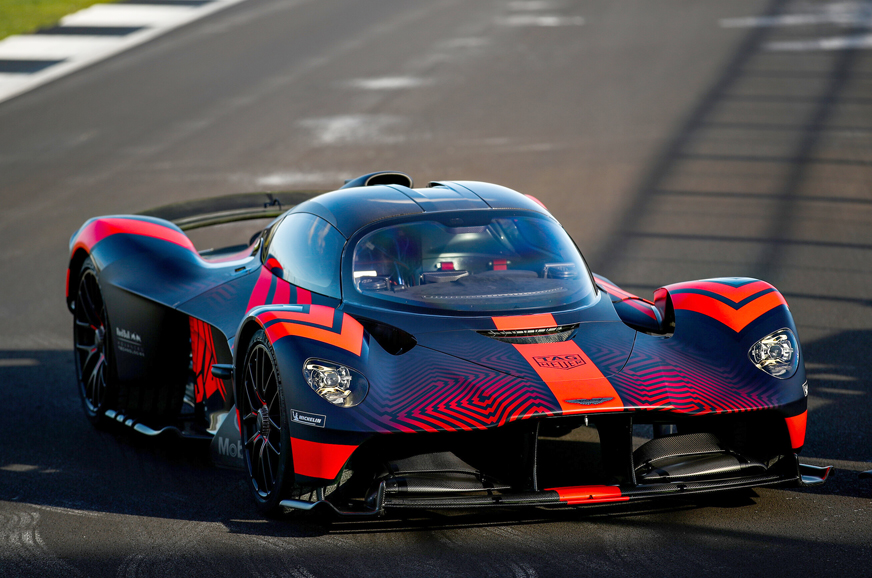
Aston Martin has announced that it has postponed the development of its World Endurance Championship (WEC) Hypercar entry. The British carmaker had initially planned to enter the series with a race-prepared version of the Valkyrie. However, those plans are now on hold as it "considers whether to continue in any future prototype class."
This decision means that the race-spec Valkyrie will not make its WEC debut at Silverstone in August 2020 or compete in the 2021 24 Hours of Le Mans. The company cited uncertainty over the recent Automobile Club de l’Ouest (ACO) and International Motor Sport Association’s (IMSA) decision to combine the hypercar class with the World Endurance Championship's upcoming LMDh prototype category from 2021, and the US-based WeatherTech Sportscar Championship from 2022.
"We entered Aston Martin Valkyrie in WEC and at Le Mans with the understanding that we would be competing with similar machinery and like-minded manufacturers," Aston Martin CEO Andy Palmer said. "The situation has changed and it makes sense for us to pause and reconsider our options."
In response, the FIA Endurance Commission and WEC called the decision "very regrettable but perhaps not unexpected", citing "persistent rumours over the last six months concerning the fragility of the brand’s exposure" and a decision to enter Formula 1 in 2021 as possible reasons for the exit.
The Valkyrie racing project was being readied as a competitor to the Toyota GR Super Sport, a new Peugeot hypercar and potentially entrants from Lamborghini and Porsche in the new top-rung endurance category, which replaces the LMP1 class.
The news comes amid a significant shake-up at Aston Martin following a major investment from a consortium led by billionaire Lawrence Stroll. The move will see the firm return to F1 as a works team, with the Stroll-owned Racing Point F1 team all set to be rebranded as the Aston Martin F1 team from 2021. In the wake of the investment, Aston Martin pledged to launch its Valkyrie hypercar this year, has committed to a revised mid-engined car strategy, and also revealed it will delay the launch of its electric vehicles, including the re-launch of the premium Lagonda brand, until after 2025.
The Valkyrie is the result of a joint venture between Aston Martin and Red Bull Advanced Technologies, which will be maintained “until the Aston Martin Valkyrie is delivered”. It is unclear if the decision to pause its WEC entry is linked to Stroll’s investment.
Aston Martin’s exit from the hypercar category leaves reigning Le Mans champion Toyota as the sole manufacturer to have confirmed its entry for the 2020/2021 season. Peugeot had announced an intention to race in 2022, while American manufacturer Glickenhaus plans to compete with its new SCG007 racer from 2021 onwards. It remains to be seen if the FIA racing body, which oversee the World Endurance Championship, will reconsider the launch date for the new class.

The BS6-compliant Hyundai Venue has started reaching dealerships with prices starting at Rs 6.70 lakh for the petrol variants, and Rs 8.10 lakh for the diesel versions (ex-showroom, Mumbai). The upgrade to BS6 standards has seen a hike in prices by Rs 20,000 and Rs 51,000 for the petrols and diesels, respectively.
Besides the upgraded engines, the compact SUV has also been fitted with some additional equipment, and it gets three new variants. The two new 1.0 petrol variants are the SX+ DCT Dual Tone and the SX Option MT Dual Tone. The new diesel variant is the SX Option Dual Tone. Given below are prices for the BS6 Venue petrol and diesel variants.
| BS6 Venue petrol variant-wise prices | |||
| Variant | BS6 prices | BS4 prices | Difference |
| 1.2 E | Rs 6.70 lakh | Rs 6.55 lakh | Rs 15,000 |
| 1.2 S | Rs 7.40 lakh | Rs 7.25 lakh | Rs 15,000 |
| 1.0 S MT | Rs 8.46 lakh | Rs 8.26 lakh | Rs 20,000 |
| 1.0 S DCT | Rs 9.60 lakh | Rs 9.40 lakh | Rs 20,000 |
| 1.0 SX MT | Rs 9.79 lakh | Rs 9.59 lakh | Rs 20,000 |
| 1.0 SX MT Dual Tone | Rs 9.94 lakh | Rs 9.74 lakh | Rs 20,000 |
| 1.0 SX+ DCT | Rs 11.35 lakh | Rs 11.15 lakh | Rs 20,000 |
| 1.0 SX+ DCT Dual Tone | Rs 11.50 lakh | NA | - |
| 1.0 SX Option MT | Rs 10.85 lakh | Rs 10.65 lakh | Rs 20,000 |
| 1.0 SX Option MT Dual Tone | Rs 10.95 lakh | NA | - |
| BS6 Venue diesel variant-wise prices | |||
| Variant | BS6 prices | BS4 prices | Difference |
| E | Rs 8.10 lakh | Rs 7.80 lakh | Rs 30,000 |
| S | Rs 9.01 lakh | Rs 8.50 lakh | Rs 51,000 |
| SX | Rs 10.00 lakh | Rs 9.83 lakh | Rs 17,000 |
| SX Dual Tone | Rs 10.28 lakh | Rs 9.98 lakh | Rs 30,000 |
| SX Option | Rs 11.40 lakh | Rs 10.89 lakh | Rs 51,000 |
| SX Option Dual Tone | Rs 11.50 lakh | NA | - |
(All prices are ex-showroom, Mumbai)
One of the biggest talking points about the BS6 Venue is its new 1.5-litre, four-cylinder, turbo-diesel engine that's borrowed from the Kia Seltos and it replaces the current Creta’s 1.4-litre unit. Though, in the Venue it is available in a lower state of tune, making 90hp and 220Nm of torque. The petrol engine line-up is the same as the BS4 Venue, comprising a 83hp/115Nm, 1.2-litre naturally aspirated petrol unit and a 120hp/172Nm, 1.0-litre turbo-petrol unit.
For now, the 1.5-diesel and the 1.0-turbo-petrol get 6-speed manual gearboxes, while the turbo-petrol also gets an option of a 7-speed DCT automatic unit. The 1.2-petrol comes with a sole 5-speed gearbox option. Also worth noting is that the diesel engine is not expected to be offered with an automatic gearbox option.
In terms of equipment, higher trims of the Venue get features like auto climate control, an 8.0-inch touchscreen infotainment system, diamond-cut alloy wheels, wireless charging and Hyundai's BlueLink connectivity technology. With this update, the entry-level E and mid-spec S variants get an Alternator Management System (AMS) meant to increase battery life. The SX variant now comes with a tyre pressure monitoring system (TMPS), while the SX+ (automatic only) and SX(O) variants get an additional 12-volt power outlet as well. All these features are in addition to those offered on the BS4 Venue.
Coming to the Hyundai Venue’s rivals, the compact SUV will continue to compete with the Mahindra XUV300 BS6 petrol (which will also get a BS6 diesel option soon), the Maruti Suzuki Vitara Brezza which is now a petrol-only model, the Ford EcoSport and the Tata Nexon facelift.

Ford India has announced prices for the BS6-compliant versions of the Figo hatchback, Aspire compact sedan and Freestyle cross-hatch. Starting at Rs 5.39 lakh, Rs 5.99 lakh and Rs 5.89 lakh, respectively, the BS6 Figo and Aspire start Rs 16,000 and Rs 10,000 higher, respectively, while the entry-level BS6 Freestyle is now Rs 2,000 more affordable.
In terms of diesel engine-equipped models, the BS6 Figo diesel costs about Rs 26,000-30,000 more than the BS4 model, while the base Aspire diesel is about Rs 12,000 dearer. Interestingly, the top-spec Titanium+ variants of the Aspire compact sedan and Freestyle undercut their respective BS4 counterparts by a significant margin. All the diesel versions of these cars also have a re-jigged variant line-up.
The tables below have the details:
| Ford Figo prices | |||
| Variant | BS6 price | BS4 price | Difference |
| 1.2P Ambiente | Rs 5.39 lakh | Rs 5.23 lakh | Rs 16,000 |
| 1.2P Trend | Rs 5.99 lakh | NA | NA |
| 1.2P Titanium | Rs 6.35 lakh | Rs 5.99 lakh | Rs 36,000 |
| 1.2P Titanium Blu | Rs 6.95 lakh | Rs 6.65 lakh | Rs 30,000 |
| 1.5D Ambiente | NA | Rs 6.23 lakh | NA |
| 1.5D Trend | Rs 6.86 lakh | NA | NA |
| 1.5D Titanium | Rs 7.25 lakh | Rs 6.99 lakh | Rs 26,000 |
| 1.5D Titanium Blu | Rs 7.85 lakh | Rs 7.65 lakh | Rs 30,000 |
| Ford Aspire prices | |||
| Variant | BS6 price | BS4 price | Difference |
| 1.2P Ambiente | Rs 5.99 lakh | Rs 5.99 lakh | None |
| 1.2P Trend | Rs 6.59 lakh | Rs 6.63 lakh | - Rs 4,000 |
| 1.2P Trend+ | NA | Rs 6.97 lakh | NA |
| 1.2P Titanium | Rs 7.09 lakh | Rs 7.37 lakh | - Rs 28,000 |
| 1.2P Titanium+ | Rs 7.44 lakh | Rs 7.62 lakh | - Rs 18,000 |
| 1.5D Ambiente | Rs 7.07 lakh (for fleet only) | Rs 6.99 lakh | NA |
| 1.5D Trend | Rs 7.49 lakh | Rs 7.37 lakh | Rs 12,000 |
| 1.5D Trend+ | NA | Rs 7.77 lakh | NA |
| 1.5D Titanium | Rs 7.99 lakh | Rs 8.17 lakh | - Rs 18,000 |
| 1.5D Titanium+ | Rs 8.34 lakh | Rs 8.42 lakh | - Rs 8,000 |
| Ford Freestyle price | |||
| Variant | BS6 price | BS4 price | Difference |
| 1.2P Ambiente | Rs 5.89 lakh | Rs 5.91 lakh | - Rs 2,000 |
| 1.2P Trend | Rs 6.44 lakh | NA | NA |
| 1.2P Trend+ | NA | Rs 6.81 lakh | NA |
| 1.2P Titanium | Rs 6.94 lakh | Rs 7.21 lakh | - Rs 27,000 |
| 1.2P Titanium+ | Rs 7.29 lakh | Rs 7.56 lakh | - Rs 27,000 |
| 1.5D Ambiente | NA | Rs 6.76 lakh | NA |
| 1.5D Trend | Rs 7.34 lakh | NA | NA |
| 1.5D Trend+ | NA | Rs 7.46 lakh | NA |
| 1.5D Titanium | Rs 7.84 lakh | Rs 7.91 lakh | - Rs 7,000 |
| 1.5D Titanium+ | Rs 8.19 lakh | Rs 8.36 lakh | - Rs 17,000 |
The same 1.2-litre petrol and 1.5-litre diesel engines have been upgraded to meet BS6 norms. However, the petrol’s overall output has reduced marginally from 96hp and 120Nm to 96hp and 119Nm of torque. The diesel engine’s output is unchanged, at 100hp and 215Nm of torque. A 5-speed manual gearbox is standard on both. Ford has yet to reveal mileage figures for the BS6-compliant engines, though expect them to drop slightly from the BS4 unit’s.
Ford attributes the decrease in prices for some variants to “increased localisation and alignment of features”, though hasn’t detailed which features have been removed. Dealer sources have confirmed that the higher-spec Figo Titanium gets new design 15-inch alloy wheels, but misses out on a rear defogger and wiper, the automatic climate control system, a reverse camera, the touchscreen infotainment system and front fog lamps. Meanwhile, the top-spec Aspire Titanium+ variant no longer comes with Ford's Sync3 system (it instead gets the FlyAudio system that enables smartphone connectivity) and new 15-inch alloy wheels.
However, the American brand has officially confirmed that all three models will get Ford’s in-car connectivity suite called FordPass across all variants. Other features that have been confirmed at least on range-topping trims include six airbags, a touchscreen infotainment system with on-board navigation, automatic headlights and wipers, keyless entry and go and an auto dimming inside rear view mirror.
Ford will also now offer all three models with a 3-year/1 lakh kilometre warranty as standard.
The Ford Figo rivals the likes of the Maruti Suzuki Swift (which will become petrol-only very soon), priced between Rs 5.19-8.84 lakh, the Hyundai Grand i10 Nios (which gets both petrol and diesel engine options) that costs Rs 5.05-8.05 lakh, and the Volkswagen Polo, which has a Rs 5.82-9.88 lakh* price tag. Do note, prices for the Nios diesel are for the BS4-compliant version and are set to increase, while the Polo will also be a petrol-only model in the BS6 era.
The Aspire, meanwhile, is a serious contender in the compact sedan segment against competition like the Maruti Suzuki Dzire (Rs 5.83-9.53 lakh), Hyundai Aura (Rs 5.80-9.23 lakh), Volkswagen Ameo (Rs 5.94-9.99 lakh*) and the Tata Tigor (Rs 5.75-7.49 lakh). Out of these models, only the Aspire and Aura will have BS6-compliant diesel options.
Ford’s Freestyle is a somewhat more niche product and doesn’t really have any direct rivals. However, on size and price, Maruti Suzuki’s Ignis (Rs 4.89-7.20 lakh) and Mahindra KUV100 NXT (Rs 4.88-7.95 lakh) could be considered as competition.
All prices are ex-showroom, Delhi
*Prices are ex-showroom, pan-India
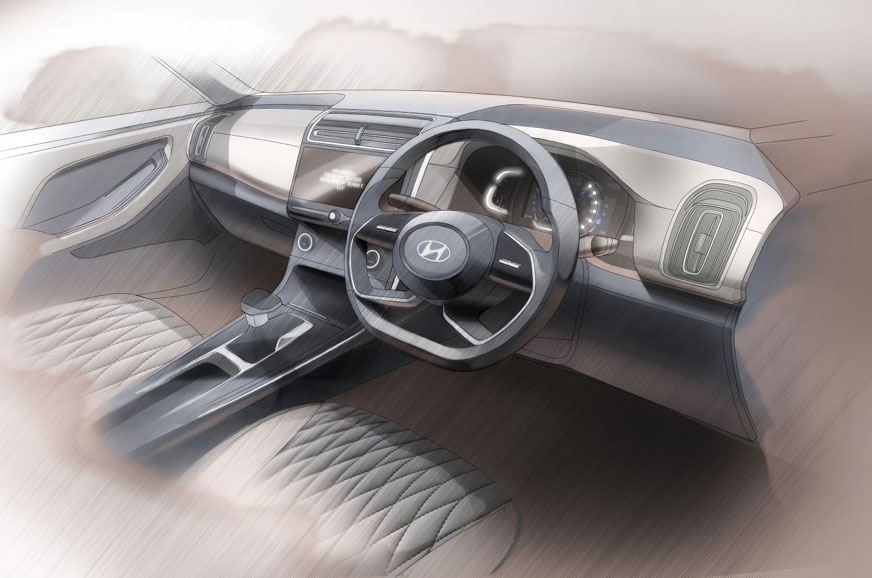
Hyundai has released interior sketches of the upcoming 2020 Creta SUV. The new Creta saw a world premiere at the Auto Expo 2020 but only the exterior was revealed, as it came with tinted windows.
We had reported earlier this month that the new Creta for India will get a unique interior layout and had posted pictures of the partially revealed cabin of the Auto Expo 2020 display car. Hyundai India has now confirmed the same with the sketches. The company also confirmed that the new Creta’s exterior styling is based on the brand’s 'Sensuous Sportiness' design theme that will also be seen on the next-gen i20 hatchback that was unveiled internationally earlier today. The new i20 will come to India later this year.
The new Creta headed to India looks quite similar to the one on sale in China, except for its unique grille inserts and alloy wheel design. On the inside, the model for India gets a completely different dashboard design with a steering wheel that's quite similar to the one on the latest-gen Hyundai Sonata and the upcoming i20, and is loaded with controls for audio, Bluetooth telephony and cruise control. There will also be a fully digital instrument cluster that may also make its way to the refreshed Verna sedan and the i20. Hyundai has given the India-bound Creta a large 10.25-inch infotainment screen that's placed below the AC vents. A key point here is that the infotainment screen on the India-spec Creta has a landscape-oriented layout, unlike the large portrait setup on the China-spec car. Other features on offer include automatic climate control, and an electronic parking brake – a first for Creta. Cooled seats, wireless charging and a panoramic sunroof can also be expected, at least on the top-spec variants.
The black and beige interior theme of the dash is also seen on the perforated seats which get a criss-cross design similar to those on the China-spec ix25.
Under the hood, the new Hyundai Creta for India will come with three engine options. A 115hp, 1.5-litre naturally aspirated petrol engine that can be had with either a 6-speed manual or a CVT automatic gearbox is likely, along with a 115hp, 1.5-litre turbocharged diesel unit with 6-speed manual and torque converter automatic gearbox options. Hyundai could also introduce the Seltos’ 140hp, 1.4-litre turbo-petrol engine, with 6-speed manual and 7-speed dual-clutch automatic gearbox options at a later stage.
Hyundai is expected to open bookings for the Creta soon, ahead of its market launch on March 17, 2020.
Also read
India-bound new Hyundai i20 engine details, features revealed
2020 Hyundai Verna facelift revealed
MG Motor India has announced that its first product for our market, the Hector SUV, has crossed 50,000 bookings. The model was launched las...