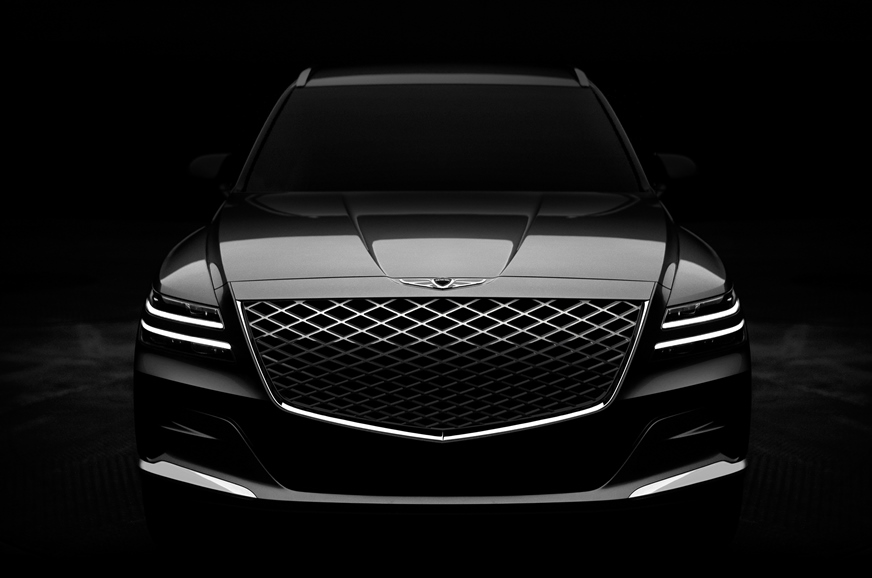
Genesis GV80 premium SUV official images revealed

Hyundai’s premium vehicle division, Genesis, has kick-started 2020 by revealing exterior and interior design images of its maiden SUV, the GV80. First showcased as a concept at the 2017 New York auto show, the production-spec GV80 will soon become the fourth model in the luxury brand’s global line-up, which currently includes the G70, G80 and G90 sedans. The automaker claims that the “V” in the GV80 represents the versatility that its upcoming vehicle will offer.

The official images reveal that the SUV closely takes after the concept Genesis displayed over two years ago, though it now seems a bit more squared-off and toned-down for series production. The front is dominated by the company’s signature ‘crest’ grille flanked by a quad-headlight setup. A prominent shoulder line runs the length of the vehicle from the bonnet right up to the tail lights, and strong character lines dot the front and rear wheel arches – these help in cutting across the bulk of the SUV. The sharply raked D-pillar, split-tail-lamp setup and the large ‘Genesis’ lettering across the tailgate are other interesting styling cues.

The interior is neatly designed with special focus on ‘minimalism’. Use of physical buttons has been minimised by employing dual touchscreens – one high-up on the dashboard for controlling media and the other lower down in the centre console for the climate control system. Other distinctive highlights include a digital instrument cluster, a two-spoke steering wheel, AC vents spanning the width of the dashboard and a rotary gear-selector knob. Generous use of leather (as well as wood and metallic accents) throughout the cabin further raises the premium quotient.

The Korean marque has revealed that like its sedan siblings, the GV80 will be based on a rear-wheel-drive platform unique to the Genesis brand, and an optional all-wheel-drive setup is available. Moreover, a three-row version of the SUV will also be on offer. 

Though the company hasn’t released information on the mechanicals, the GV80 is expected with a 304hp, 2.5-litre, six-cylinder petrol engine; a 380hp, 3.5-litre, V6 petrol unit and a 278hp, 3.0-litre, in-line, six-cylinder diesel engine. More details will be provided closer to the launch of the premium SUV in South Korea later this month.

As we previously reported, Hyundai is actively mulling over bringing the Genesis brand to our market. Though the company’s debut in India is touted to be with an SUV, the GV80 is unlikely to be the launch vehicle here, since it is primarily aimed at left-hand-drive markets.

The brand’s second SUV, the GV70, has already been spied in Korea and is slated to be revealed later in the year. This is the likely contender for its India launch. Positioned below Genesis’ maiden SUV, the GV70 will be based on the next-gen Tucson platform and will rival the likes of the BMW X3, the Mercedes-Benz GLC, the Audi Q5 and the Jaguar E-Pace.


from Autocar India https://ift.tt/2SU8U54
via IFTTT

Honda to preview future mobility tech at CES 2020

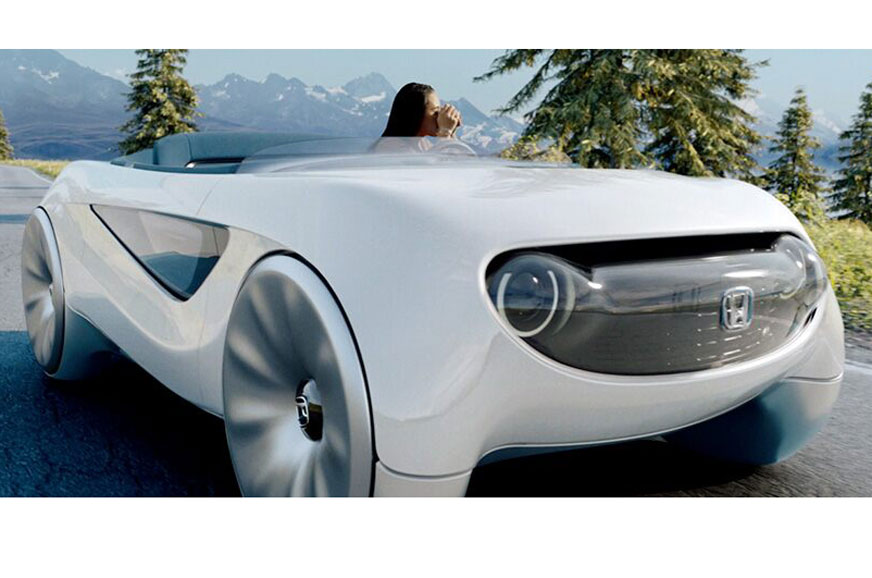
Honda’s exhibit at Consumer Electronics Show 2020 (CES) - being held from January 7 to 10, 2020 - in Las Vegas will feature global debuts of concepts that integrate connected, autonomous, shared and electric (CASE) technologies in new mobility products and services. Some of the eye-catching technology concepts and prototypes include the augmented driving concept, the energy management solutions and ‘Safe Swarm’ and ‘Smart Intersection’ prototypes.

Augmented Driving Concept

This augmented driving concept features a seamless transition from autonomous to semi-autonomous driving operation. This system is constantly on standby, ready to intervene and control the vehicle when needed. The driving system changes between automatic and manual mode with a switch and features more than eight modes between fully autonomous and semi-autonomous operation. Various sensors in the vehicle continuously read the user’s intention to smoothly shift between these modes, creating an instinctive driving experience. The reinvented steering wheel offers new types of driving experiences. The vehicle will start by patting the steering wheel twice, pull the steering wheel and the vehicle will slow down, push it and the vehicle will accelerate.

Future Honda Mobility VR Experience

Honda will also preview a mobility ecosystem forecast for 2035 and beyond, with fully autonomous vehicles, shared autonomous mobility and an aerial mobility infrastructure. In the Future Honda Mobility VR demonstration, CES attendees can experience a journey through the urban future with a V2X system safely navigating the drive, encounter an autonomous shared mobility pod and also take flight in a personal vertical takeoff and landing (VTOL) vehicle.

Honda Xcelerator Collaborations

Honda Xcelerator will also debut collaborations at CES 2020, with start-ups focused on augmenting human capabilities and devices that enhance workplace ergonomics for the manufacturing environment. The soon-to-be commercialised technologies are based on successful collaborations with Drivemode, a start-up that develops and operates smartphone-based connected services, and SoundHound, the leading innovator in voice-enabled AI and conversational intelligence technologies.

‘Smartphone as Brain’ with Drivemode

Honda and Drivemode jointly developed the ‘Smartphone as Brain’ technology, which provides a safe and convenient way for drivers or motorcycle riders to integrate their smartphones into the driving and riding experience, while minimising distraction. For instance, riders can connect their smartphone and motorcycle by Bluetooth, enabling them to control their smartphone either using switches on the steering handles or voice recognition. Honda acquired Drivemode in October 2019.

Honda Energy Management Concept

Honda is creating convenient renewable energy solutions that will be on display in its Energy Management Concept. The company has been developing the Honda Mobile Power Pack, a portable, swappable, rechargeable battery with output of 1kWh or more. When multiple Honda Mobile Power Packs are used simultaneously, they can power electric motorcycles, small-sized electric mobility products and even facilitate stable supply of electricity in people’s homes. This will additionally feature the US debut of Honda’s EV personal mobility concept named ESMO (Electric Smart Mobility).

‘Safe Swarm’ and ‘Smart Intersection’

Honda will show the progress of its ‘Safe Swarm’ and ‘Smart Intersection’ prototype safety system. Using V2X technology, ‘Safe Swarm’ allows vehicles to communicate with surrounding vehicles and share key information such as location and speed. With this information, along with the sensor suite on the vehicle, the driver or automated vehicle systems can determine the safest course of action to prevent collisions and reduce traffic congestion.

Additionally, Honda will show a red light runner detection scenario of its ‘smart intersection’ technology. Traffic collisions at roadway intersections account for roughly 40 percent of all collisions and 20 percent of the nearly 35,000 traffic-related deaths in the US each year. The ‘smart intersection’ utilises Honda’s proprietary object recognition software in conjunction with intersection-mounted cameras and V2X communications. This enables cars to virtually see through and around buildings and walls in nearly all weather conditions to help identify and alert drivers to otherwise hidden hazards.


from Autocar India https://ift.tt/36qj8OU
via IFTTT

India-spec Kia Carnival key details surface

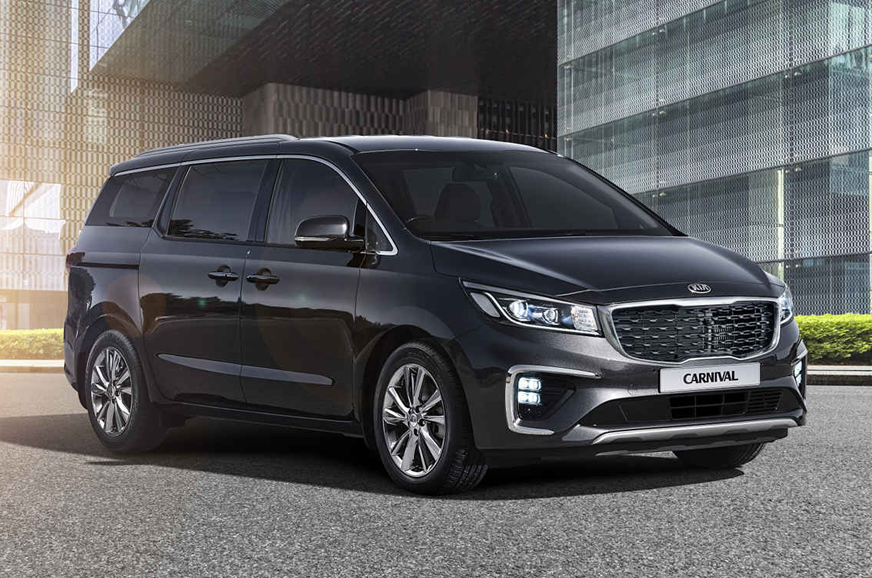
In the run-up to the MPV’s launch at the 2020 Auto Expo, we’ve got fresh details of the Kia Carnival. It seems like at its estimated Rs 30 lakh ex-showroom price, the Carnival will definitely be a cut above the current Toyota Innova Crysta – the closest rival to Kia’s MPV.

Beginning with the powertrain, we previously reported that the Carnival for India will get a 2.2-litre, four-cylinder turbo-diesel engine. We can now confirm that this unit will produce 200hp at 3,800rpm and 440Nm of torque at 1,750-2,750rpm. Our information also confirms that an 8-speed automatic gearbox will be standard.

We previously stated that the Carnival will be offered in six-, seven- and eight-seat configurations, which should help to make the MPV available across multiple price points. The entry-level Carnival – likely to be the eight-seater – should be a decently well-kitted model, though the top-spec version – likely to be the six-seater – will be decidedly more premium.

On the outside, the range-topping Carnival will get Kia’s signature ‘Tiger Nose’ grille, 18-inch alloy wheels, a floating-roof design, a rear spoiler, LED headlights, fog lights and tail-lights, along with front and rear skid plates.

Safety kit on the higher versions of the India-spec Carnival will include six airbags, traction control and electronic stability control systems, hill-start assist, a tyre pressure monitoring system, a rear parking camera, front and rear parking sensors, an automatic defogger and an electronic parking brake.

The creature comforts on offer should definitely make Kia’s Carnival quite desirable. Top-spec variants will get a powered tailgate, keyless entry and go, wireless charging, a power-adjustable and ventilated driver’s seat, cruise control, a rake- and reach-adjustable steering unit, power windows for all three rows, three-zone climate control, Nappa leather upholstery and a dual-pane powered sunroof.

Like the only other Kia on sale in India, the Seltos, the Carnival will also come with UVO Connect – Kia's in-car connectivity suite. The 8.0-inch touchscreen infotainment system is situated dead-centre in the dashboard and will come with an eSIM to enable all the connectivity features, and be paired to a Harman Kardon sound system. The two 10.1-inch screens (mounted at the back of the front seats for the rear passengers) will also be standard on higher trims.

The information we’ve got also reveals that the Carnival gets 540 litres of luggage-carrying capacity with all three rows up, which expands to 1,624 litres with the third row down and a whopping 2,759 litres with the second row folded away as well.

Bookings for the Kia Carnival have unofficially begun, and more details will trickle out before its launch in February 2020, so watch this space.

Do you think the features available on the Kia Carnival will make it a better buy than its main rival, the Toyota Innova Crysta? Let us know in the comments below.

Also see:

Kia Seltos awarded 5-star ANCAP rating

Kia Seltos EV in the works


from Autocar India https://ift.tt/2MOmzXR
via IFTTT

Review: 2020 Range Rover Evoque review, test drive

It says Range Rover on the tin, so taking it off-piste shouldn’t be a problem. This, however, is not going to be easy, no sir. The path down to the river is deeply rutted, the gradient is steep, and then, what makes things more interesting is that the rounded riverbed rocks act like ball bearings under the wheels. Forget driving, walking here is fraught with difficulty.

The rough and the smooth

First things first; must get the setup right. There’s no traditional Terrain Response dial, and that foxes me for a bit. But I soon figure out how to use the neat click wheel and dial up the ‘Mud and Ruts’. Then using a spotter on the outside to check for ground clearance, I crawl forward. This version of the Evoque I’m driving doesn’t have air springs or a ‘lift’ feature, so I need to be careful not to ground it. As I move forward there are some bits where the belly gets close to the ground, but as soon as I get the ‘All clear’, the Evoque skips down the path with the confidence of a mountain goat. This is good because, despite all the rubble and loose stuff, it seems to have a vice-like grip on the ground below. And what makes driving the Evoque easier is that the throttle responses are perfectly metered. This is doubly true on the arduous climb back up, where traction and the smooth release of torque from the engine at low engine speeds are even more important. A bit more ground clearance and the baby Rangie could be mega on the rough stuff, transverse-engine, front-biased four-wheel-drive setup and all.

Metal knobs controls multiple functions; active modes light up.

Anyway, DNA test done, it’s time to get back to the highway. The forest road that takes us there, however, isn’t in good condition. Used by overloaded trucks, ironically supplying a road-building project nearby, the surface is completely bombed out. More a collection of badly filled-in potholes and heat-warped ripples, with small patches of regular tarmac sprinkled loosely in between – it is just a nightmare. I start off slow, and this causes some small amount of vertical movement. The Evoque’s fairly stiff setup tosses us around over some of the sharp-edged bumps and there is clearly a bit of firmness detectable even over some of the patchy tarmac. However, as I go a bit faster, the ride improves considerably. The tall springs now seem to work better, the dampers round off bumps nicely, and then what impresses is that the faster I travel over this patchwork highway, the more comfortable the Evoque feels.


For a while it seems this patchwork road will continue forever, but then all of a sudden, we come upon a part that’s been freshly surfaced. It isn’t billiard-table smooth and carries tell-tale signs of a hastily done job, with many small dips and sudden changes in the surface. Still, what gets me excited is that the road twists, bends, dips and rises like a giant python. Now, normally, corners like these wouldn’t elicit this much excitement sat behind the wheel of an SUV, but there’s something about its demeanour that tells me that Range Rover’s baby is going to quite enjoy the challenge. Yes, the new Evoque has a roughly 20mm longer wheelbase, and that could nix some of the earlier car’s agility, but the new platform on which it is built also has a new floorpan that improves body rigidity by around 17 percent.

This is partly why body control around some of the tighter corners is good for an SUV, and every time I tweak the steering wheel, the nose goes exactly where intended. Also, what I absolutely love is how neatly and quickly it tucks in if you find yourself running a bit wide. Must say this thing is quite fun. Turn-in isn’t quite as quick as the outgoing Evoque, but in all other ways, this one has the old car well and truly licked. I especially love the relaxed confidence it radiates, and the steering is beautifully weighted and feels just right for its application here.     


The Evoque is even super-stable at high speeds. Long stretches of highway have me only gripping the steering lightly, and all I need to do to guide it into longer and faster corners is just tip it in. Adding massively to confidence levels are the brakes. Not just a footnote here but a bedrock of stability, the brakes bleed speed effortlessly and pedal feel is strong, no matter how hard you brake.

JLR’s 180hp Ingenium diesel is also impressively smooth at idle. The cabin is well insulated from the low-speed rumble and the typical diesel clatter, and what feels great is that the motor responds well as soon as you tap the throttle. In fact, with its variable geometry turbo and faster responding 9-speed automatic, the new Evoque is reasonably quick on the draw at low speed. What also helps is that this engine makes a very useful 430Nm of torque from as low as 1,750rpm. So cross 2,000rpm and there’s a nice hit of torque, as well as a big shot of boost from the turbo. Even nicer is the fact that the engine continues to pull strongly past 3,000rpm, and this makes this BS6 diesel motor feels particularly effortless.

Flat-out performance, however, isn’t all that exciting. The engine feels a bit flat once you cross 4,000rpm and there is no big increase in performance even if you spin it faster. What makes the process feel even more futile is that the engine becomes quite vocal and drones quite a bit.

Also, ask for a quick burst of acceleration and the 9-speed gearbox doesn’t exactly comply. Yes, tuning is clearly improved compared to the earlier version, but there still is a bit of a delay between putting your foot on the accelerator and a lower gear being selected. And there’s even a bit of jerkiness as you go on and off the throttle. Overall, however, and for the most part, the Evoque in this 180d spec is smooth, responsive, stable and willing, and that feels great.

Fashion icon

The Evoque, of course, is an extremely pleasing SUV to look at. Less hardy Land Rover and more
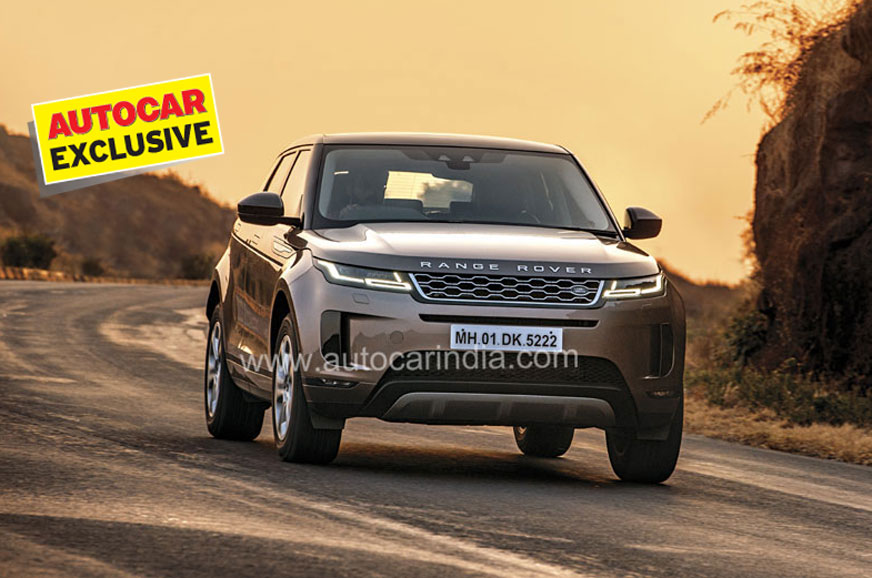
la-di-da fashion icon, the new Evoque gets people’s attention wherever it goes. And the fact that most confuse this new one with the stunning Velar does its prospects no harm at all. Truth be told, it is difficult to tell the two apart as they share many features. Both get laid-back mesh grilles, slim-line headlights with rectangular LED inserts, headlight extensions that run onto the front doors, severely tapering rooflines and steeply rising beltlines. They even look similar from the rear with the stunning, layered LED tail-lights. So, size apart, how do you tell one for from the other, especially if all you get is a quick glance? Not that simple. . .so pay attention, 007.

The new Evoque uniquely gets an additional slot-like opening under the front grille, the bonnet line prominently runs around the big front wheel arch, and around the side, there’s a steeply sloping cut or shoulder line. And at the rear? Your best bet is to look for the badge. As with all futuristic and modern designs, wheel size is important, and here the ‘S’ gets 18-inch alloys which strike a good balance.

It feels very plush on the inside; high-quality materials abound.

The design on the inside is equally stunning. Minimalistic in extreme, the focal point of the cabin remains the soft dash with lower and upper halves clearly defined by a channel in between. I particularly like the hooded cobra-like instrument panel cowl, the manner in which the vents have been cupped in between the two layers of the dash is super, and then there’s the neat chrome surround that runs around the touchscreen. And I also like how the feather-touch steering wheel controls can be reconfigured according to the menu you are in. While the version on test, the ‘S’, gets regular dials and only one touchscreen, the higher-spec SE version gets an additional touchscreen.

Slick operation and a high level of functionality also seem to be extremely important here. The two control wheels placed ahead of the now-traditional gear lever (no rotary dial this time around) function superbly. The dials can be used for several modes, which you can select. However, I don’t like the fact that you need to swap modes to control fan speed; it’s a pain when you are driving and want to keep your eyes on the road. Still, must say I do like the soft tray above the cupholders for your phone, and that the individual elbow rests splits down the centre, and then seat comfort on the front chairs is seriously good.

Panoramic sunroof brightens cabin and doesn’t eat into headroom.

This isn’t exactly the ideal car to be chauffeured around in, still comfort levels at the rear aren’t too bad. Yes, you are seated a bit low due to the plunging roofline, and legroom is only decent. The seat though is fairly large and comfortable, the backrest is perfectly reclined, and headroom, despite the panoramic sunroof, isn’t too bad for those under 6ft. What helps here is that the sunroof is designed in such a way that it doesn’t impinge on headroom.

You are sat low but the seat is nicely put together; legroom is sufficient too.

Seating three abreast in the back, however, isn’t a good idea. The cabin is a bit narrow and then visibility out the rear isn’t very good either due to the fat C-pillars. So, while space may be at a premium in the Evoque, it certainly is comfortable enough and feature-rich, especially if you opt for the SE version (see box), where for approximately Rs 5 lakh extra, you get a good amount of kit.

Size isn't everything

The Evoque clearly isn’t for everyone – and definitely not for those who believe size and price are directly proportional. It is a luxury SUV designed and built for a more evolved car buyer . . . someone who has been there, done that. Here compactness is a virtue, attitude, stance and style matter more than practicality, and what separates this luxury SUV from its rivals is that owners often drive themselves.


That the Evoque manages to deliver in most areas there is no doubt. Yes, ride could have been a bit more comfortable at low speed, a bit more power and performance would have been nice, and it isn’t nearly as well equipped as it should have been, considering its expected starting price of around Rs 50 lakh. Do remember, however, that the better-equipped SE version is available for not all that much more, and for those interested in more power and performance, there also will be a 249hp petrol – the P250.

Closer in price to rivals a full size up, like the BMW X3 and the Audi Q5, the new Evoque clearly isn’t a car you buy with your head; but then the Evoque has always been an emotional choice.


from Autocar India https://ift.tt/35m1dY2
via IFTTT
Hyundai Santro BS6 petrol engine details revealed

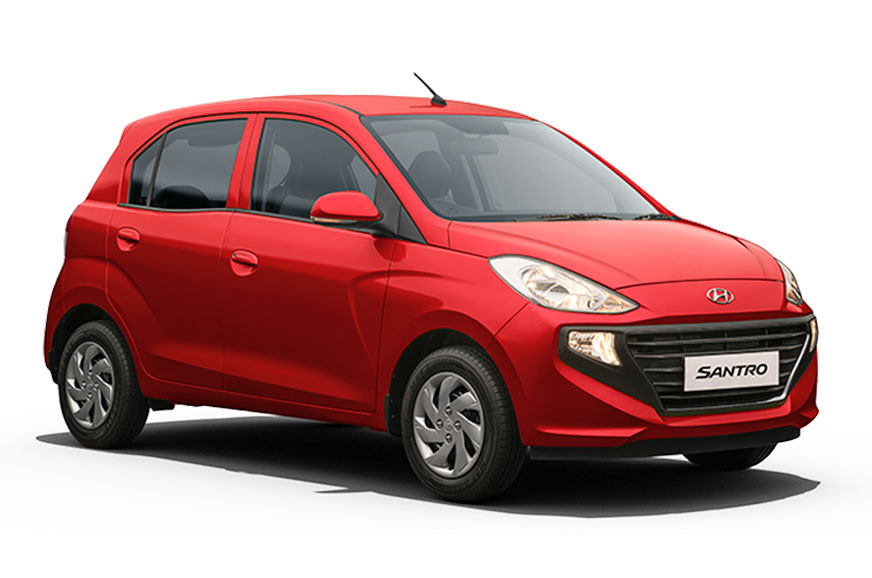
With the new, stricter BS6 emissions norms set to come into effect from April 1, 2020, carmakers are looking to update popular models with engines that comply with these new norms. Hyundai is no different, as we can now confirm that the carmaker will update the Santro to become a BS6-compliant vehicle very soon.

In order to meet the new emission norms, Hyundai will upgrade the Santro’s current 1.1-litre, four-cylinder petrol engine to meet BS6 standards. The engine will continue to produce 69hp and 99Nm of torque, even after the transition to the stricter Bharat Stage VI emissions standard. The engine will also continue to be paired with either a 5-speed manual or a 5-speed AMT automatic gearbox. Interestingly, the carmaker will most likely offer the automatic gearbox option across all variants of the Santro and not just the Magna and Sportz trims that it is currently offered with, in order to increase the model's appeal.

There are talks of the Santro getting some minor tweaks to its interior as well as exterior in order to increase appeal. However, the current car’s dashboard design and dual-tone cabin will remain more or less the same. The top-spec Santro Asta will still be equipped with a touchscreen infotainment system, a reverse camera, a rear wash/wipe, a 7.0-inch touchscreen infotainment system with Apple CarPlay, Android Auto and MirrorLink compatibility, steering-mounted controls and power-adjustable wing mirrors.

Though the pricing has not been announced, we expect the costs across the entire range of the Santro hatchback to marginally increase. The hatchback rivals the likes of the Tata Tiago (to get a facelift soon), Maruti Suzuki Wagon R and Celerio in our market.

Also read

Hyundai Santro long term review, final report


from Autocar India https://ift.tt/2stQhdL
via IFTTT

Great Wall Motors confirms India entry

The start of the New Year has brought with it the news of another Chinese automaker – Great Wall Motors (GWM) – confirming its plans for an entry into the Indian market. This confirmation, which was via a tweet on the company’s official India page, corroborates our previous report about Great Wall Motors introducing the Haval brand in the country.

A little background on Great Wall Motors, it is China's largest SUV and pickup manufacturer and it owns four brands which include Haval, Wey, Ora and Great Wall Pickup. While Haval and Wey are SUV-centric brands, Ora is EV focused, and Great Wall Pickup, as the name suggests, is a brand that specialises in pick-up trucks and other commercial vehicles.

The Chinese carmaker is based in Baoding Hebei, around 150km south of Beijing, and it is currently scouting for the best location to set up a manufacturing plant.

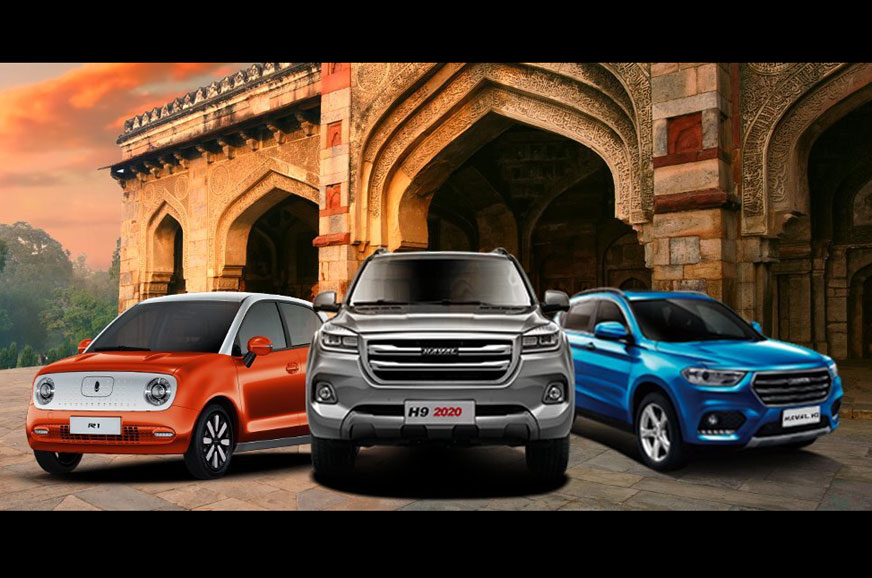
It is also worth noting that GWM will showcase some products from its successful Haval brand at the upcoming Auto Expo 2020, which is just over a month away. According to sources, the stand will have three of Haval's successful SUVs – the H4 (slightly larger than the Hyundai Creta), H6 and H9 (Ford Endeavour and Toyota Fortuner size) – on display. A couple of electric cars from sister brands Ora and Wey are also likely to be showcased.

The carmaker’s Indian Twitter page currently features three cars on the banner, which includes the Haval H9 and H2 facelift, and the Ora R1 electric car. This could be a hint at GWM’s plans for future models in India.

In related news, Haima, which is part of Chinese state-owned First Automobile Works, has also recently confirmed its entry to the Indian market. The brand will make its debut at the Auto Expo 2020.

Also see:

Great Wall Motors to debut; Honda, Toyota to skip


from Autocar India https://ift.tt/36iUi3k
via IFTTT

Honda hints at Activa 6G’s launch on January 15

Honda will be taking the wraps off one of their two-wheelers on January 15, and it will likely be the Activa 6G (a BS6-compliant update to the Activa 5G), according to the event invite sent to us. The invite states “What’s 2020 without a 6?,” with the number ‘6’ clearly being a strong hint at the pending update for the Activa 5G. This update would make it the third BS6-compliant two-wheeler in Honda’s portfolio, following the Activa 125 and SP 125.

Official details on the same are still unknown, but we can expect the Activa 6G to feature Honda’s silent start-stop system and a more comprehensive digital display, considering that these updates made their way to the new BS6 Activa 125. The engine will obviously undergo a significant update as well – to comply with the BS6 norms – and we might even see a drop in peak output figures from the 7.96hp and 9Nm that the current BS4 scooter makes. 

The Activa 5G is one of the only scooters in our market to use full-metal body panels, and it’s likely this will be done on the 6G as well. However, design tweaks are likely, considering this will be the most substantial update the scooter has undergone, yet. 

While Honda might choose to change the engine capacity of the Activa 6G, it’s likely that it will continue to use a 110cc engine. If that is the case, the Activa 6G will become the second BS6-compliant 110cc scooter after the TVS Jupiter, joining a list of 125cc and above scooters that have made the switch to the more stringent emission norms. 

The Activa is the highest selling scooter in our country and we’ll have to wait a couple weeks to see what this updated iteration has in store for us. Considering how significant a role it plays in the company’s sales numbers, we expect to see a lower price hike than the Rs 9,000 increase the top-end variant of the Activa 125 underwent.


from Autocar India https://ift.tt/37r4HtO
via IFTTT

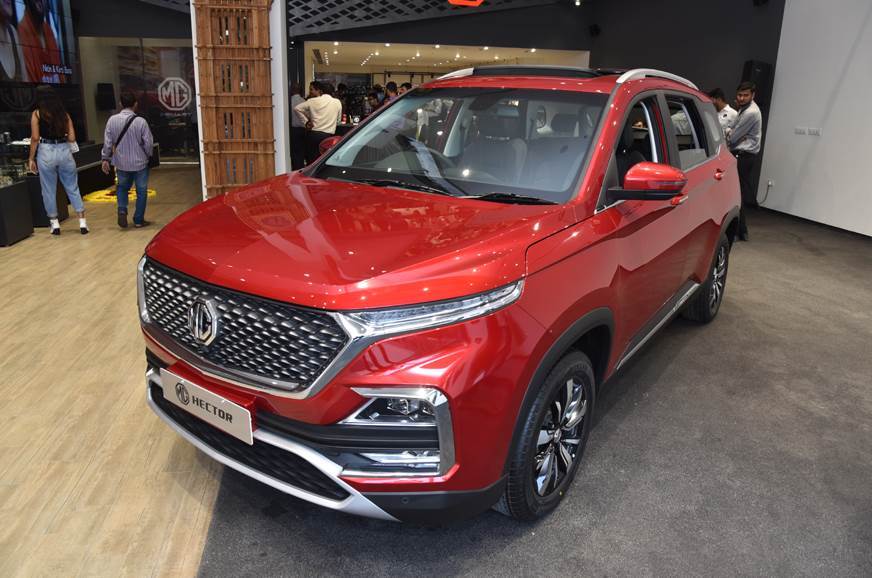
MG Hector gathers 50,000 bookings

MG Motor India has announced that its first product for our market, the Hector SUV, has crossed 50,000 bookings. The model was launched las...