Honda hints at Activa 6G’s launch on January 15

Honda will be taking the wraps off one of their two-wheelers on January 15, and it will likely be the Activa 6G (a BS6-compliant update to the Activa 5G), according to the event invite sent to us. The invite states “What’s 2020 without a 6?,” with the number ‘6’ clearly being a strong hint at the pending update for the Activa 5G. This update would make it the third BS6-compliant two-wheeler in Honda’s portfolio, following the Activa 125 and SP 125.

Official details on the same are still unknown, but we can expect the Activa 6G to feature Honda’s silent start-stop system and a more comprehensive digital display, considering that these updates made their way to the new BS6 Activa 125. The engine will obviously undergo a significant update as well – to comply with the BS6 norms – and we might even see a drop in peak output figures from the 7.96hp and 9Nm that the current BS4 scooter makes. 

The Activa 5G is one of the only scooters in our market to use full-metal body panels, and it’s likely this will be done on the 6G as well. However, design tweaks are likely, considering this will be the most substantial update the scooter has undergone, yet. 

While Honda might choose to change the engine capacity of the Activa 6G, it’s likely that it will continue to use a 110cc engine. If that is the case, the Activa 6G will become the second BS6-compliant 110cc scooter after the TVS Jupiter, joining a list of 125cc and above scooters that have made the switch to the more stringent emission norms. 

The Activa is the highest selling scooter in our country and we’ll have to wait a couple weeks to see what this updated iteration has in store for us. Considering how significant a role it plays in the company’s sales numbers, we expect to see a lower price hike than the Rs 9,000 increase the top-end variant of the Activa 125 underwent.


from Autocar India https://ift.tt/37r4HtO
via IFTTT

TVS’ Michael Metge withdraws from 2020 Dakar Rally due to injury

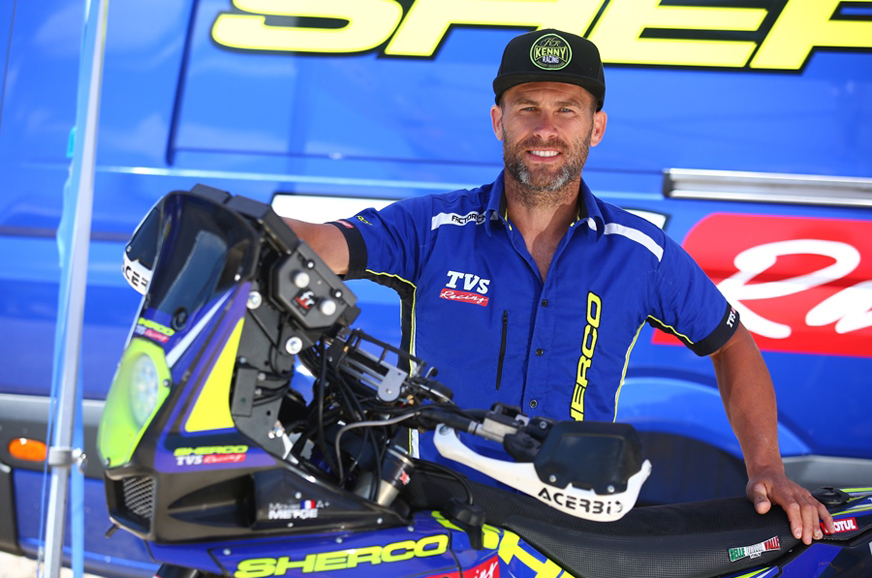
Just days before the 2020 Dakar Rally kicks off on January 5, the Sherco TVS Rally Factory Team has been hit with an unforeseen hurdle. The team’s leading rider Michael Metge has announced that a knee injury has forced him to drop out of what would have been his final outing in the iconic rally.

According to a statement released by Michael on his social media, he’d injured his knee while recently training in Morocco. “It is with great disappointment that I must announce that I will not take part in what would have been the last Dakar for me,” he said.

“Following a fall in Morocco, which caused internal injuries to my knee, I tried to treat myself as quickly as possible with the precious help of the Saint Jean clinic. However, after a motorcycle test, my knee was locked, it was impossible for me to move,”

“So [it’s] very difficult for me to make up my mind not to start this race which is so dear to my heart, for which I have given so much and trained so much every day.”

Michael will instead be replaced at the team by his brother Adrien Metge, who has also been a regular at TVS. In fact, he’d completed the 2019 Dakar Rally as TVS’ best finisher in 22nd place and will be hoping to further improve on that result as he undertakes his fifth Dakar outing. “It’s now in my hands to take the flag to the finish line for me. This will be my fifth Dakar and I wish to give it my all and bring it home for my sponsors and my brother,” he said.

Adrien will be joining Lorenzo Santolino, Johnny Aubert and Harith Noah as part of Sherco TVS’ Dakar squad. Noah will be only the third-ever Indian rider to compete in the Dakar Rally, following in the footsteps of Aravind KP and CS Santosh. After enjoying a fair share of success in India with seven national Supercross championships to his name, he made his international rally debut with TVS earlier this year at the 2019 Baja Aragon, with an impressive overall ranking of 7th.

Set to take place from January 5-17, the 2020 edition of the Dakar Rally will kick off an all-new chapter in the iconic endurance event’s history as it moves to Saudi Arabia, following a decade-long stint in South America. The rally will comprise 12 stages over a total distance of about 7,900km. While a large portion of the stages will consist of sand dunes, the official route map shows that the event will continue to test navigational abilities and endurance, with competitors having to tackle canyons, wadis and mountains as well.


from Autocar India https://ift.tt/37s56ME
via IFTTT

BS6 Toyota Fortuner, Innova Crysta bookings to open in second week of January 2020

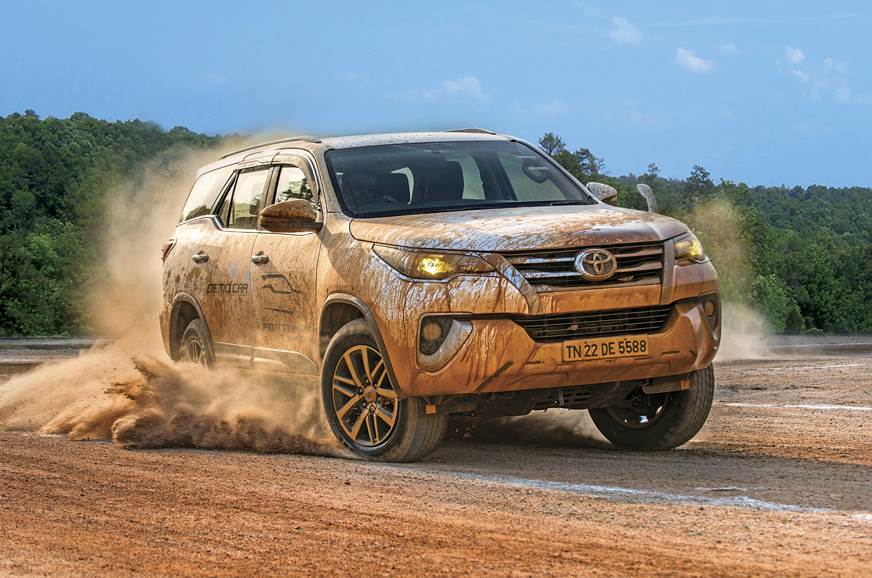
With less than three months to go for the implementation of BS6 emission norms, most carmakers are now ready for this major technological transition, and one of them is Toyota. The company has already opened bookings for the BS6-compliant Yaris, and we can now confirm bookings for the BS6-compliant Toyota Innova Crysta and Fortuner will officially open in the second week of January 2020.

Sources say bookings for the BS6 versions of the Toyota Fortuner and Innova Crysta are likely to open on January 6, 2020, and a number of dealers across the country have exhausted BS4 stock and have already unofficially opened bookings for the BS6 models, with the booking amount set at Rs 50,000. Deliveries of the BS6 Toyota Fortuner and Innova Crysta, though, are only expected to commence by end-February or early in March as the company wants to ensure BS6 fuel is available across India by the time its BS6 models hit the road.

Despite being as expensive as they are, the Innova Crysta and Fortuner have been Toyota’s bread-and-butter models in India for years now, and are set to become notably more expensive in BS6 guise. The BS6-compliant diesel versions of the Innova Crysta and Fortuner are expected to see a price hike in the region of Rs 1 – 1.5 lakh as they will employ the more sophisticated but also more complex Selective Catalytic Reduction (SCR) technology as well as a Diesel Particulate Filter (DPF).

Starting April 2020, the Innova Crysta and Fortuner will be the only locally-manufactured diesel models in Toyota’s India line-up, with the Etios family set to be phased out and the Yaris and Glanza only available in petrol form. Toyota’s super-luxury MPV, the Vellfire, will also be available only as a petrol-hybrid model, and is set to be launched in the coming weeks with prices ranging from Rs 85-90 lakh.

Think the BS6 Toyota Innova Crysta and Fortuner will be able to maintain their vice-like grip on the market despite the big hike in price? Let us know in the comments.


from Autocar India https://ift.tt/35guBPx
via IFTTT

Sponsored feature: 2019 Toyota 5 Continents Drive: The India experience

Driving in India is intense. The road surface changes every few kilometres, with the transitions between smooth roads, cratered lunar-like surfaces, single and dual carriageways, and state highways that resemble village roads coming abruptly. Adding to this is the ubiquitous chaos of animals, vehicles being driven on the wrong side, and most drivers deciding that the law applies to everyone except them. It was through this that the engineers from Toyota decided to execute the Indian leg of the Toyota 5 Continents Drive.


The Drive

Toyota’s drive to build the best cars is well known. Today, the carmaker sells some of the most trusted, reliable and high-quality vehicles in the world, and yet believes that its cars can be even better. Toyota knew that working on vehicles in workshops, simulations and test tracks wouldn’t be enough, and that its people needed to experience and study the cars in real-world conditions. Thus was born the idea of the 5 Continents Drive. Flagged off in 2014, the drive has made its way across every continent, and in 2019, it finally made its way to Asia. After a quick tour of the Middle East, the team from Toyota arrived to take on the streets of India.

Go and See

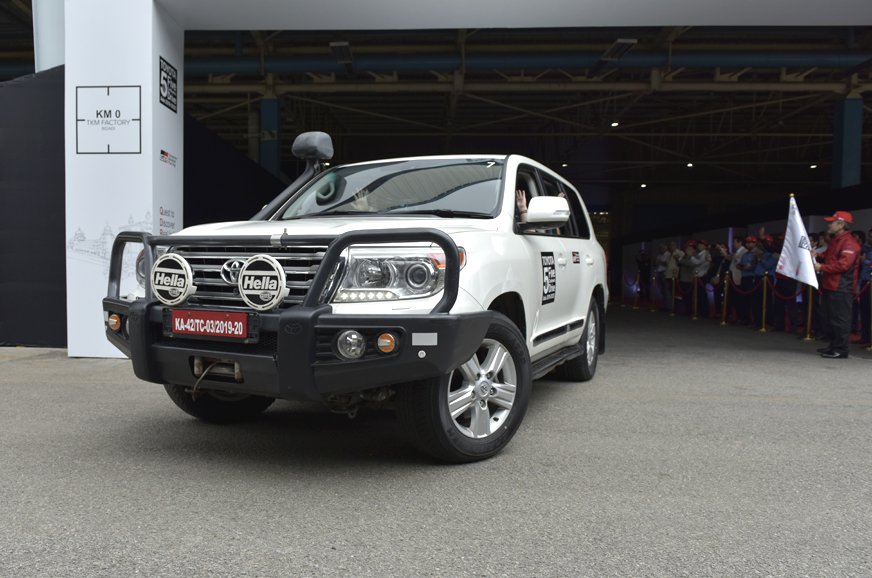
The main reason behind the drive was to understand what Toyota’s customers experience on the road and get to know their needs better. This made the Indian stage of the drive particularly crucial to the company. Not only is India an important market, but Indian customers are also some of the most quality-conscious, price-sensitive, and value-conscious in the world. Couple that with the demanding Indian road conditions and you get a testing ground like nowhere else in the world. India is where Toyota’s ‘Genchi Genbutsu’ philosophy (where employees go to the source to get the facts) paid dividends. To this end, an international team of 45 employees from Toyota Motor Corporation, Suzuki, Daihatsu and local affiliates set off on a 2,889km journey across India. Leading the convoy was the Land Cruiser 200, followed by the Innova Crysta, Innova Touring Sport, Fortuner, Camry HV, Glanza, Yaris, Land Cruiser, Corolla Altis, and the Suzuki Vitara Brezza.


Understanding India

In September 2019, a total of nine cars were flagged off from Toyota Kirloskar Motor’s plant at Bidadi near Bengaluru. Over the next 10 days, this convoy made its way through Karnataka, Maharashtra, Gujarat, Rajasthan and finally, New Delhi. India came as a bit of a shock to the Japanese, but they had processes in place and were prepared to deal with anything. Every time a car went past a reckless driver, a random object or an animal on the road, they radioed that information to the team. This was done even if the car following was a few meters away or hundreds of meters behind. The teams followed this process efficiently and reliably, irrespective of the number of times it was required of them. It’s probably this level of attention to detail that makes each Toyota car efficient, reliable and safe.

The teams had a few interesting takes on their experiences too. Yoshikazu Sahara of the Advanced Vehicle Engineering Development Division said, “The horns seem to have emotions. If you know the intention behind the sound, you get the strange sensation that you are listening to cars having a conversation.” After observing the conditions in several states, the team noted that, due to a shortage of electricity, wide acceptance of EVs may be difficult. They also saw that cars in India deal with drastic changes in road conditions and climate, and this was why Indians demanded greater reliability from vehicles than the Japanese. The team also made pertinent observations to improve the cars they offer in India, with points ranging from the angle of A-pillars to enhance visibility to a tighter turning radius to deal with our road conditions.

Our infamous speed breakers caused some concern too. While the SUVs and MPVs drove over them easily, the bigger bumps grazed the underbody of the hatchback and the sedans. Each car had four passengers and a fully loaded boot, so that may have been a contributing factor too. But the engineers didn’t take this as casually as we do. They spent some time on their hands and knees carefully examining the cars to make sure that there wasn’t any significant damage.


Driving across India helped the team learn the importance of getting local feedback too. They discovered the true nature of their customers and now want to create a system that collects local feedback and incorporates it into making cars better. Toyota’s Quest to Discover Real India — an iteration of the Quality, Durability and Reliability aspect of the brand’s philosophy — proved to be a worthy endeavour and one that promises to result in cars that will be even better than the Toyotas sold today.

Despite the challenging conditions, every Toyota, from the hatchback, the sedans to the SUVs, made it across the drive. Whether it was the narrow, tree-lined mountains of Coorg, the highway to Kolhapur, the incessant rainfall in the Western Ghats, or the harsh climate of Rajasthan, the cars performed beautifully. They proved over and over again that a Toyota badge means peace of mind. And now, Toyota is working to improve those very cars.


The intensity of India was matched by the efficiency of the Japanese. Shota Oshima from the External and Public Affairs Division, with firm resolve, said, “Some people may see the 5 Continents Drive Project as a type of tourism. But I can say that the Toyota cars that have experienced the 5 Continents Drive will become better cars”. There’s no doubt that Toyota’s methods work. And we’re looking forward to the new breed of cars that will emerge as a result of this drive.

Watch the below videos to know more:

Full Recap: https://www.youtube.com/watch?v=seyZtPVRk9E&t=3s

Customer First: https://www.youtube.com/watch?v=oRKXaK1RY0g

Made For India: https://www.youtube.com/watch?v=NDkatCNhkdo

Ever Better Cars: https://www.youtube.com/watch?v=IbmPere5o7k


from Autocar India https://ift.tt/37uwTMt
via IFTTT

Sponsored feature: Living Life To The D-Max

“Tank up! Because there’s lots of four-wheel-drive low-range usage over the next couple of days!” That simple announcement over the radio leads to a massive surge of adrenaline. The excitement is too much to bear. But we’re getting ahead of ourselves. Let us tell you where we are.

We’re in an ISUZU V-Cross (the new 1.9-litre automatic), on what ISUZU calls ‘ISUZU Discoveries’. Our destination is Sakleshpur, and such drives are a treat that the Japanese utility vehicle maker offers to its adventure-loving customers. It’s on these drives that they get to spend time, for example, by a lake in the middle of nowhere barbequing their chicken dinner under a full moon. Unsurprisingly, there is camaraderie and fun, and everyone ends the trip with some new friends.

Making new friends is part of ‘Isuzu Discoveries’.

ISUZU organises these adventure weekend drives as part of its customer-engagement initiative – a gamut of drive events under the banner ‘iV League’ (ISUZU Vehicle Owners’ League).

The excitement level is always on the rise. We say that because they make sure the food is good and the fun level is high, and we kid you not.

Celebrating togetherness in the great outdoors.

The next morning, with a full tank of gas in the V-Cross, we head out into the wilderness. Sakleshpur is spectacular. There’s no phone network, so no one is staring at their phone screens. The scenery around us is amazing: green hills, blue skies, puffy white clouds. An airplane high above us leaves a long contrail etched against a clear blue sky... you get the picture.

We drive past clear mountain streams, watch wild boars grazing on a distant hilltop, have a lip-smacking locally cooked meal on a meadow, and generally ask ourselves why we rush about the way we do back in the city.

The key difference on this off-road drive (unlike the other off-road drives we have taken part in) is that everyone’s brought their families along. This is not a macho off-road trip; it’s an experience for the whole family and that’s made it extra special.

Isuzu’s weekend adventure drives involve whole families.

We also love the ease with which the V-Cross handles the gnarly trails. Simply switch to four-wheel-drive low, set the transmission to ‘Drive’, and let the clever electronics figure out all the traction issues that Sakleshpur’s gravel throws your way.

Gnarly trails are no sweat for either the Isuzu MU-X or the V-Cross.

We drive through the day through terrain and scenery that made us want to stop every few seconds to take pictures. We’d love to tell you where we went but we can’t; because we don’t know. ISUZU makes sure they take you to places that confuse Google Maps – and that is why you need to go on one of these trips. It gives you that essential time out from the daily hustle. It lets you find yourself again.

Also see:

Isuzu MU-X gets free 3-year extended warranty for its powertrain this month

BS6 Isuzu D-Max V-Cross, MU-X to cost Rs 3-4 lakh more


from Autocar India https://ift.tt/2tmdZIO
via IFTTT

Kia Carnival bookings start unofficially

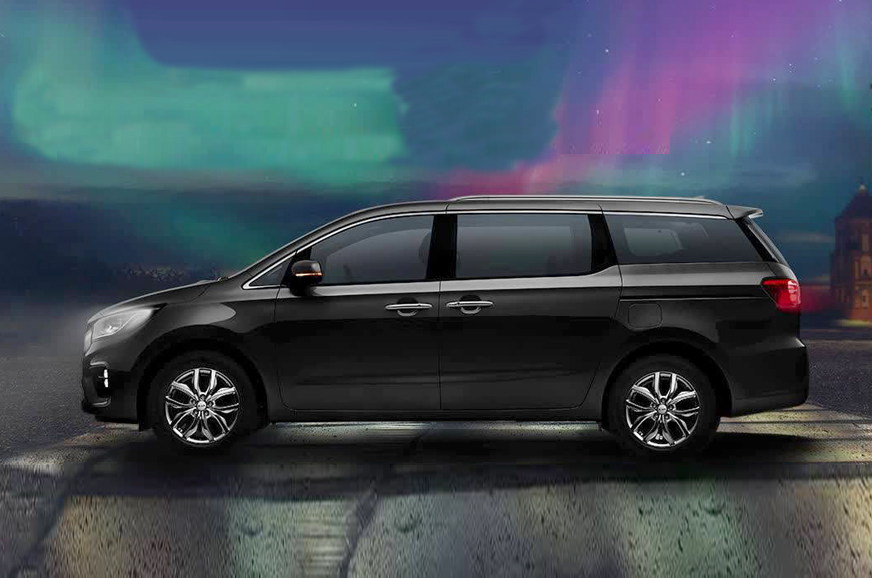
Kia Motors India will soon introduce its second product for our market – the Carnival MPV – and position it around the Innova Crysta. A few Kia dealers we spoke to have confirmed that bookings for the Carnival have commenced unofficially at most locations, with the booking amount ranging between Rs 51,000 to Rs 1 lakh, depending on the dealership. While there is no official news from the manufacturer, dealers are promising deliveries of the Carnival MPV in the second-half of next month.

As reported by us earlier, the Carnival MPV will be sold in India in multiple seating layouts. The model will most likely be offered with a long list of features, like captain seats with extendable leg rests, rear-seat entertainment packages with 10.1-inch screens, a large sunroof and power adjustable seats. Kia will also offer its UVO connectivity suite on the Carnival.

The Carnival is expected to come with a BS6-compliant 2.2-litre diesel engine that’s good for 202hp and is mated to a 6-speed automatic gearbox. There are also talks of a 6-speed manual version, as the gearbox is available on the MPV sold abroad.

The Carnival will be locally assembled via CKD kits at the brand’s facility in Andhra Pradesh, which could see it competitively priced at an estimated Rs 30 lakh (ex-showroom). Kia Motors India has already begun releasing teasers for the Carnival and an official announcement for commencement of bookings is expected in the coming days.

Also see:

Kia Seltos awarded 5-star ANCAP rating

Kia Seltos EV in the works


from Autocar India https://ift.tt/36eZoO4
via IFTTT

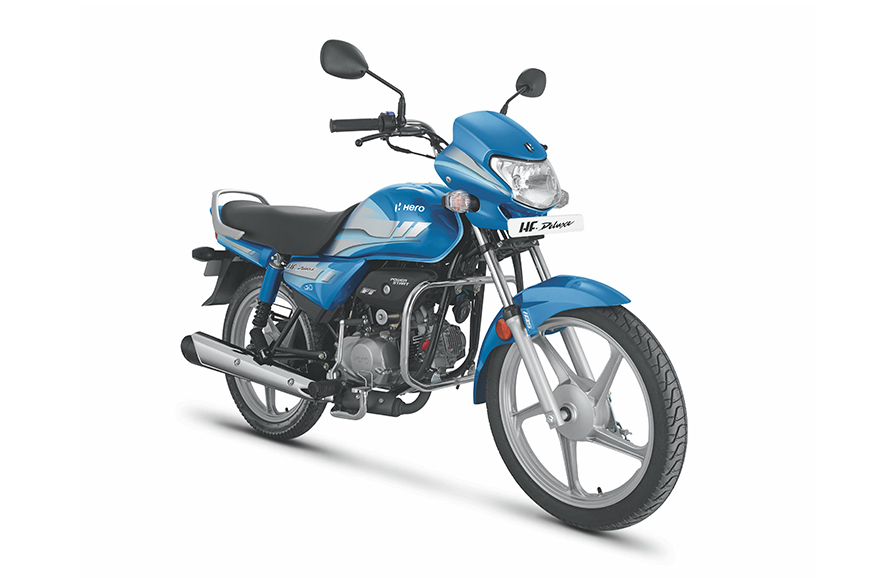
2020 Hero HF Deluxe BS6 launched at Rs 55,925

Hero has launched the BS6-compliant HF Deluxe and priced the base variant at Rs 55,925 and the i3S variant at Rs 57,250 (both prices, ex-showroom, Delhi). In comparison, the BS4 variants of the two costs Rs 7,350 less, at Rs 48,575 and Rs 49,900, respectively. 

The updated HF Deluxe features a 100cc single-cylinder engine that is now fuel injected and Hero claims is 9 percent more fuel efficient. Meanwhile, peak power has gone down to 7.94hp from 8.36hp on the BS4 bike. And while the peak torque figure remains the same, at 8.05Nm, it’s now produced higher up in the rev range, at 6,000rpm. Hero also claims that the new engine offers better performance, with 6 percent faster acceleration. The new HF Deluxe also features Hero’s i3S (idle start-stop system).

The BS6 HF Deluxe also comes with new graphic and colour schemes – Techno Blue and Heavy Grey with Green – in addition to a couple of the existing colours. The bike has begun reaching dealerships across the country.

Its direct rivals, the TVS Sport and the Bajaj CT100, are yet to see the switch to BS6.


from Autocar India https://ift.tt/35bX0WN
via IFTTT

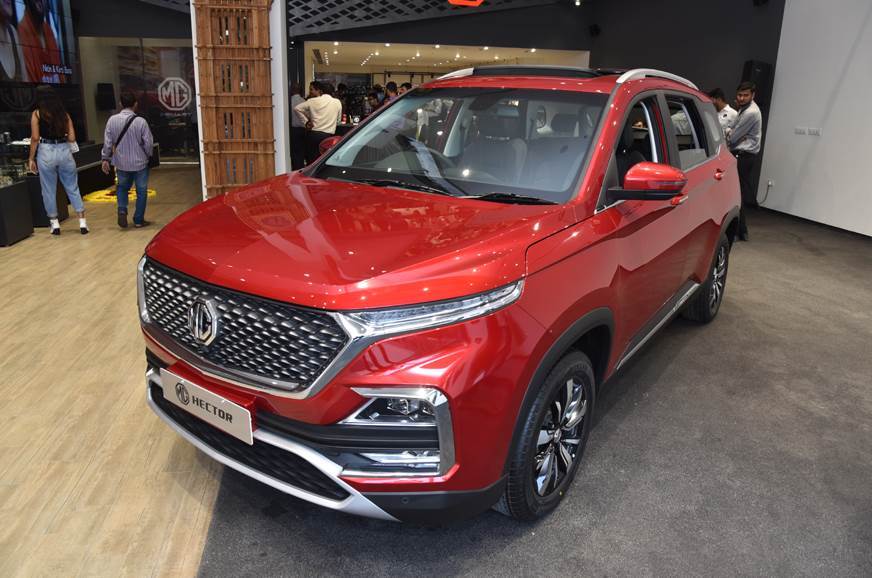
MG Hector gathers 50,000 bookings

MG Motor India has announced that its first product for our market, the Hector SUV, has crossed 50,000 bookings. The model was launched las...