Mahindra Marazzo BS6 to see a variant re-jig

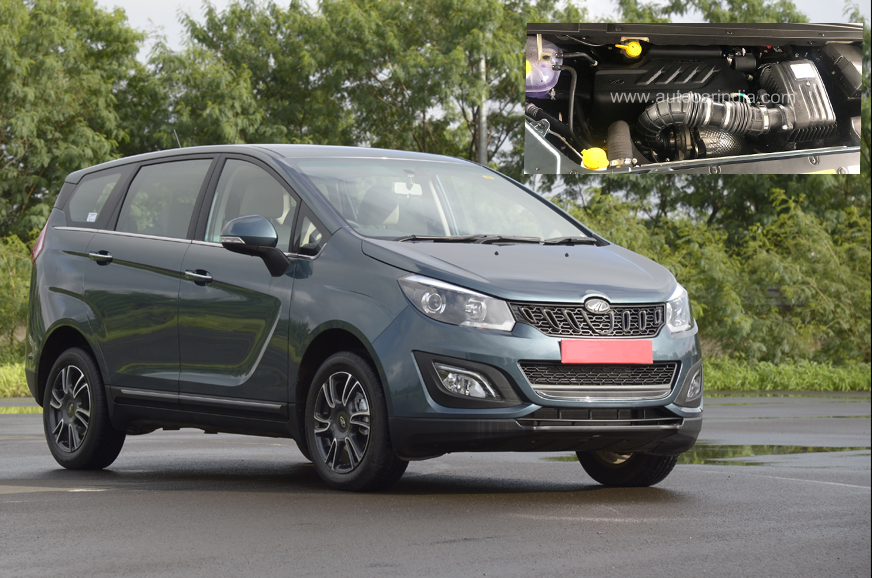
Mahindra is gearing up to launch the BS6-compliant Marazzo MPV. In BS6 form, the Mahindra Marazzo will be sold with an upgraded version of the current 1.5-litre diesel engine, which will also feature a Selective Catalytic Reduction (SCR) system with a rear-mounted urea tank that will help reduce NOx emissions – all to meet BS6 regulations. The engine will also come with a DPF or diesel particulate filter. For more on Mahindra's BS6 diesel strategy and plans, click here.

The power output for the BS6-compliant 1497cc four-cylinder diesel engine is expected to be the same as the BS4 version; this means the engine will churn out around 100hp in Eco mode and 123hp in power mode.  The MPV will continue to be sold with a 6-speed manual gearbox. The company had earlier confirmed the inclusion of an automatic gearbox-equipped variant for the Marazzo. We expect the Marazzo automatic to arrive sometime later this year. 

Apart from the engine tweaks for BS6 compliance, the Marazzo will also see a variant re-jig. According to sources, the top-spec M8 variant will be given a miss. All variants of the BS6-compliant Marazzo will be available in both seven- and eight-seater configurations. The BS6 Mahindra Marazzo range will start with the entry-level M2 trim and will see new variants like the M4+ and M6+ - the latter will be the new top trim. Details on equipment changes are not yet known, however, we expect some features of the M8 to trickle down in the new M6+ trim upon launch. 

The Marazzo currently sees stiff competition from the likes of the popular Maruti Suzuki Ertiga at the lower-end and the Toyota Innova Crysta on the higher side. The MPV will soon see a price hike too, due to BS6 engine upgrades. However, post April 1, 2020, the Ertiga will be petrol-only and the BS6-compliant Innova Crysta will be more expensive (especially in diesel form), thus creating a sweet spot for the BS6 Marazzo. By ditching the current top-spec M8 trim, the company aims to create a smaller price bracket for the Marazzo, with the new top-spec M6+ variant being seen as more value than the M8. Considering the Marazzo retails between Rs 9.99-14.77 lakh (ex-showroom, pan-India) for now, this would further help Mahindra generate more sales.

Also see:

Next-gen Mahindra Thar to be feature-laden

Mahindra & Mahindra announces more management changes


from Autocar India https://ift.tt/2rL5uGL
via IFTTT

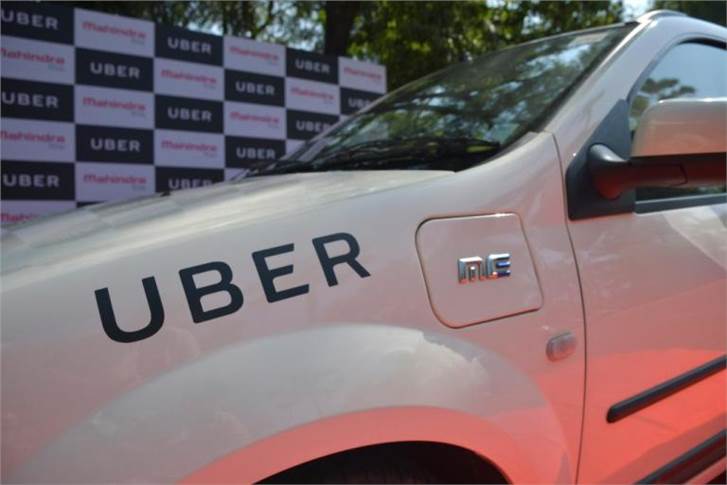
Top 5 cities with highest Uber usage in 2019

App-based ride hailing platform Uber India has shared the consumer usage pattern data for 2019, which saw Delhi and Bengaluru recording the highest and the second-highest number of Uber trips overall, followed by Hyderabad, Kolkata, and Mumbai, respectively.

In terms of ride sharing, Bengaluru was the city with the highest number of people opting for Uber Pool rides, followed by Delhi, Kolkata, Hyderabad, and Mumbai.

The month of November and December witnessed the highest usage among Indians (on the Uber platform); December 7 saw the maximum Uber rides in India across 2019.

The analysis further reveals that when it comes to travelling during festive seasons, Holi was the favourite festive season for Indians to use Uber, followed by Dussehra, then Diwali.

Uber India says the top three international cities that saw the maximum rides by Indian travellers were London, San Francisco, and Doha. Meanwhile, Delhi, Mumbai, and Bengaluru were top three cities to see international travellers travelling in India avail Uber rides.

It comes as no surprise, that when it comes to late night/early morning travel, western India is officially the sleepless region of 2019 in India, with the highest percentage of Uber trips between 2am and 5am taken in Mumbai, Surat, and Ahmedabad.

Also see:

Uber loses licence to operate in London

Now book a Bajaj Qute taxi through Uber

Volvo, Uber reveal self-driving XC90


from Autocar India https://ift.tt/35d2RLt
via IFTTT

Suzuki Swift Sport Katana Edition to be showcased at Tokyo Auto Salon 2020

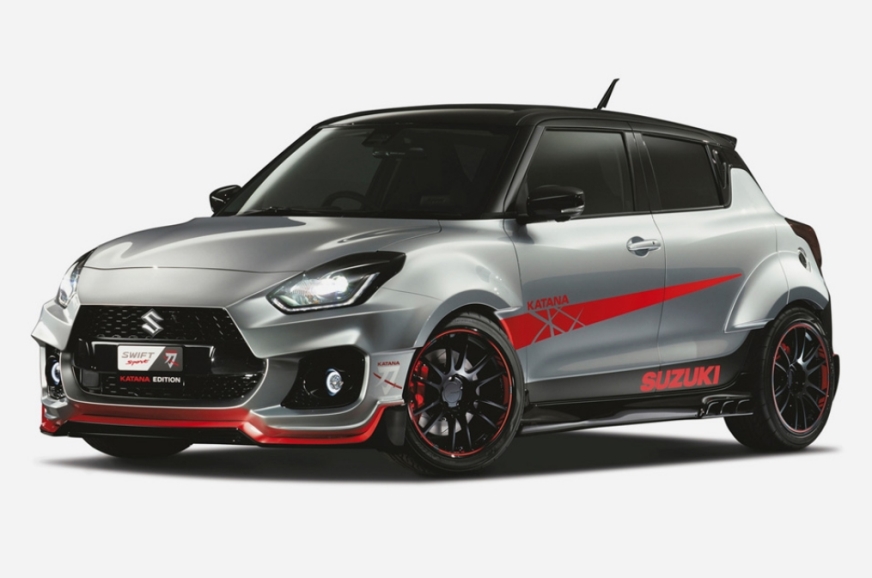
Japanese automaker Suzuki has announced its line-up for the 2020 Tokyo Auto Salon slated to be held from January 10-12. Among a wide range of products, the company will be showcasing a highly customised version of the Swift Sport hot hatch at this 38th iteration of the motor show. For a long time, the Tokyo Auto Salon has been used as a platform for exhibitors to demonstrate the latest technology and display highly tuned and kitted-out vehicles. 

Dubbed the Katana Edition, the Suzuki pays homage to its iconic Katana motorbike. The hot-hatch is based on the already souped-up Swift Sport available in international markets. In terms of design, the show vehicle takes it a step further and ups the model’s sporty appeal by employing edgier styling cues, including flared wheel arches at the front and rear. It wears a grey paint shade with a contrast-coloured roof, A-B-C pillars and wing mirror elements, along with ‘Katana’ themed graphics and decals on the sides.

The muscular front fascia incorporates a large blacked-out grille and fog-lamp housings, accentuated by a red chin spoiler and smoked projector headlamps. The generous dose of black continues with the side skirts and sizeable alloy wheels whose red brake calipers take the five-door hatchback’s sporty pretensions further.

The latest iteration of the Swift Sport was unveiled for the global markets last year. It is powered by a 1.4-litre, four-cylinder, turbocharged “Boosterjet” petrol engine that provides enough oomph for accelerating the 970kg hatch from standstill to a 100kph in just 8sec. Output is rated at a commendable 140hp and 230Nm of torque, with either a 6-speed manual or a 6-speed automatic handling transmission duties. In comparison, the India-spec Swift gets an 83hp, 1.2-litre, naturally-aspirated petrol engine and a 75hp, 1.3-litre diesel mill, with the latter set to bow out prior to the April 2020 deadline for BS6 emission norms. Buyers have the option of a 5-speed gearbox on both the engine offerings, available in either manual or AMT-automatic form.

There has been no official announcement about the Swift Sport making it to India anytime soon. Consequentially, the only sporty hatch that Maruti Suzuki can boast of for the time being is the Baleno RS, equipped with a 102hp, 1.0-litre turbo-petrol motor from the same Boosterjet family of engines as the 1.4-litre unit in the Swift Sport.


from Autocar India https://ift.tt/2SJm0SJ
via IFTTT

Review: 2019 BMW 745Le xDrive PHEV review, test drive

What is it?

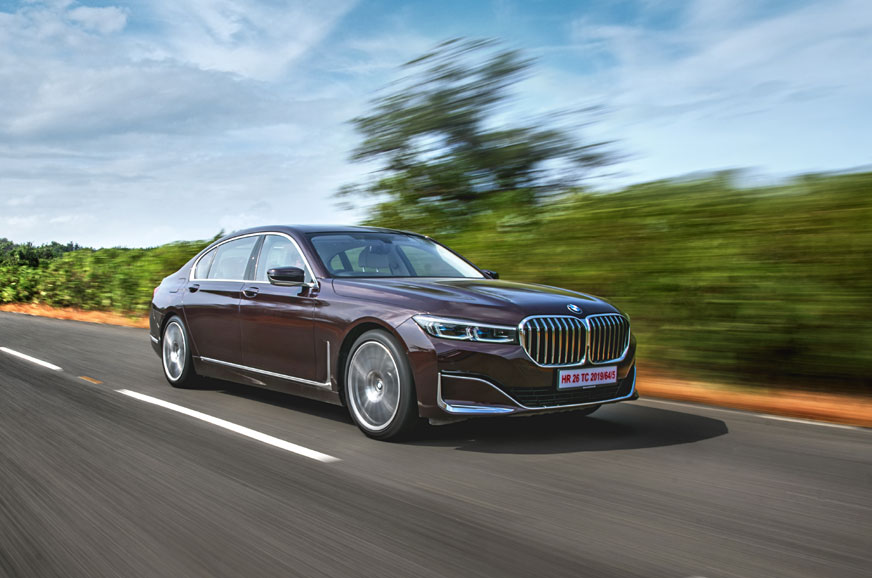
This is the BMW 7 Series, the brand’s flagship limousine, updated in 2019 with plusher, quieter, better-equipped interiors, and the largest grille ever seen on a BMW. This particular one, however, is the 745Le, a plug-in hybrid, which is something we haven’t seen in this segment before. Before you ask, while the Lexus LS500h and even the last-gen BMW ActiveHybrid 7 are both full hybrid cars, they have limited electric-only range, and can’t be charged independently using a power socket.


This new 745Le can be charged from a power socket at your home or office, and the 10.4kWh battery takes about 3 hours to get from 0-80 percent. The motor allows for an electric-only driving range of up to 45km, and the motor alone produces 113hp (83kW) and 265Nm. Now sure, those numbers by themselves might not sound like much in today’s world of Teslas and Taycans, but realistically, if your commute from bedroom to boardroom is intra-city, you could potentially do it every day without a drop of fuel or a gram of pollution. The only other luxury cars on sale in India that can offer you this are the Volvo XC90 and the Porsche Cayenne.

What is it like to drive?

Driving in electric mode is as you’d expect – silent and smooth – but also brisker than you’d think. Floor it and it will leap quite vigorously forward, all that torque coming in instantly to hurl the two-tonne limo forward. The thrust doesn’t last, of course, and you have to remind yourself that this is the ‘commuter’ mode, and you’ll have to drive it gently to maximise the range.


The good part is, when you do want to drive it like a BMW is meant to be driven, just enlist the help of good ol’ internal combustion in Hybrid or Sport mode. In comes the 3.0-litre, straight-six turbo-petrol and now the maximum combined output is 396hp and 600Nm! And because this is a 7 Series, it stays very refined throughout, the ZF 8-speed gearbox slushing away anonymously in the background. It’s genuinely fun to drive too, and not even just by the standards of the segment, which are, expectedly, not very high. Body control in Sport mode is surprisingly tidy, and the suspension can instantly be switched to mushy limousine mode.


What's it like on the outside?

The merits and demerits of the 2019 facelift remain – that hilariously large grille, which I admit is slowly growing on me, immediately comes to mind. I don’t like the overly stylised digital instrument cluster or the fact there’s no Android Auto either, but apart from that, the cabin now delivers a luxury experience that can truly rival an S-class.

Should I buy one?

The 745Le xDrive is not cheap. At Rs 1.65 crore (ex-showroom), it’s a full Rs 30 lakh more than its non-hybrid counterpart, the 740Li. But frankly, it might just be worth the stretch for the luxury car that truly does it all. The 7 has always been the limousine that’s as good from the driver’s seat as it is from the rear seat, and with the update, both scenarios have been improved. But now that you can use it as a zero-emissions EV, potentially all of the time, it adds an all-new dimension to the car, and the segment. The electric revolution is a while away, and even then, it will come with its drawbacks. Cars like this, in the meantime, are a working solution.

Also see:

BMW to introduce Android Auto support by mid-2020

BMW stands by new design language

BMW X1 facelift likely to get 1.5-litre petrol engine


from Autocar India https://ift.tt/2SJ91AD
via IFTTT

JLR acquires off-road performance tuning firm Bowler

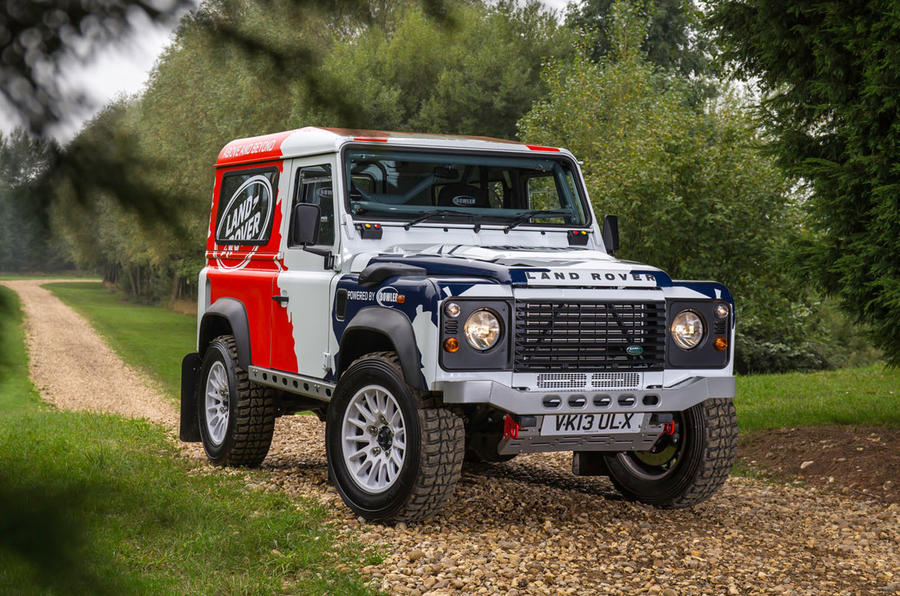
Rising to fame in the 1980s and 1990s for specialising in Land Rover-based off-road performance cars and competition cars for rally-raid events, Bowler has been acquired by the British carmaker in a bid to sidestep other tuners. Bought for an undisclosed sum, Bowler has expertise in all-terrain vehicle dynamics, low-volume production techniques, and proving component durability in extreme conditions, with JLR branding it “highly sought-after.”

JLR says Special Vehicle Operations (SVO) is a “fast-growing business that amplifies the key attributes of Jaguar and Land Rover vehicles to create distinctive world-class products.” The automaker considers Bowler a “natural fit” as one of its business units; in 2012, Bowler formed a brand partnership with JLR which led to the creation of the Defender Challenger.

If Bowler’s relationship with Land Rover is anything to go by, it seems likely that the tuner’s name will be sported by the automaker’s more extreme, off-road variants. This move comes as no surprise, given Land Rover’s long-standing objection to tuners taking business away. A number of big names in the tuning and styling scene exist predominantly for Land Rover models, including Overfinch and Kahn.

Jaguar Land Rover has a two-part plan for Bowler. SVO boss Michael van der Sande told our sister publication Autocar UK that its intentions for Bowler start with “giving it the organisation and investment it needs” but didn’t divulge any more details beyond the fact that it will become bigger.

Van der Sande seemed enthusiastic about the incorporation of Bowler into Jaguar Land Rover, and in the official statement announcing the acquisition, mentioned how the Bowler name has stood for innovation and success for almost 35 years. He concluded by saying, “Our immediate focus is on ensuring continuity of support for Bowler employees and customers during this transition to Jaguar Land Rover.”

JLR has not made any announcements regarding its plans to bring the Bowler offerings to our market. However, Land Rover has confirmed that the new Defender 110 will be making its way to our shores.

Also see:

New cars for 2020: SUVs to wait for

Jaguar XE facelift launched at Rs 44.98 lakh


from Autocar India https://ift.tt/37nWhU3
via IFTTT

Jawa Perak bookings commence on January 1 at 6pm

Bookings for the new Jawa Perak will commence on January 1, 2020, from 6pm onwards. Prospective customers can book the Perak bobber online, at the Jawa India website as well as at its dealerships. While bookings begin this evening, deliveries will only start from April 2, 2020 onwards.

The Jawa Perak was launched in November 2019, at Rs 1.95 lakh (ex-showroom, Delhi), making this the most affordable factory-made bobber in the country. Bobber motorcycles are lifestyle products and aren't supposed to cater to the practical motorcycle buyer; which explains the low-slung design and the lack of a pillion seat.

The Perak looks markedly different than its siblings, the Jawa and the Forty Two. The bike also gives up all the chrome for a matte-black treatment. The bobber-like styling elements include a floating seat, bar-end mirrors, chopped fenders, and stubby exhaust mufflers. The rear subframe-and-suspension setup is also different, compared to the smaller Jawa bikes. The Perak also gets ABS-equipped disc brakes at either end.

Additionally, the Perak is Jawa India's first, BS6-complaint motorcycle, powered by a 334cc, single-cylinder, liquid-cooled, DOHC engine which develops 30hp and 31Nm of torque. These figures are higher than the 27hp/28Nm produced by the Jawa and Forty Two's motor.

Watch this space as we bring you the first ride experience soon.


from Autocar India https://ift.tt/35jdr3X
via IFTTT

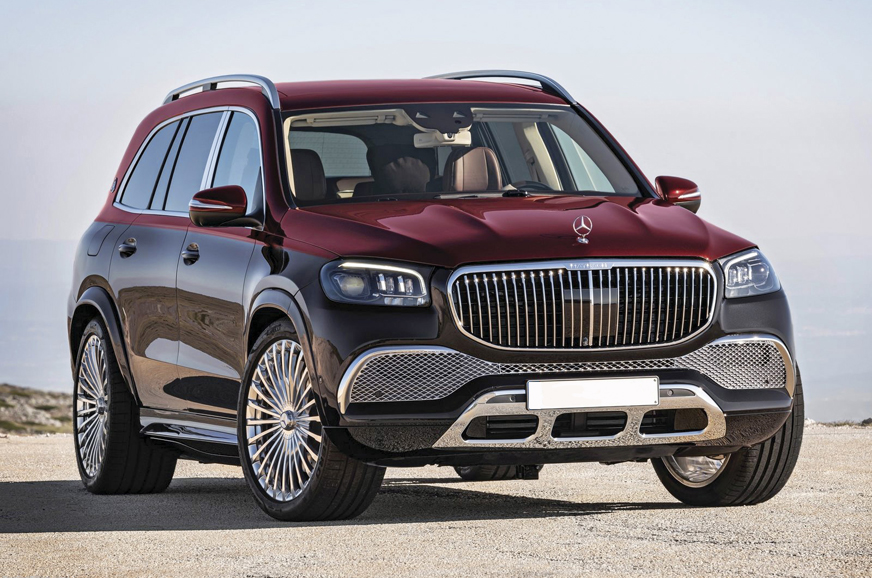
Mercedes-Benz evaluating Maybach GLS for India launch

Mercedes-Benz is planning an onslaught of SUVs next year, with the new-gen GLE and GLS, and the all-new GLB expected to launch in India. Aside from the normal GLS, Mercedes-Benz India is also actively considering a Maybach GLS launch in our country, which was unveiled last month at the 2019 Guangzhou motor show in China.

We first reported Mercedes’ interest in bringing the GLS Maybach to India in our December 2019 issue. Although there is no firm decision as yet, our sources say that Mercedes India is quite confident of its success. This is because the only Maybach model on sale in India, the S-class, has seen a decent response from buyers since its launch.

Published in the December 2019 issue of Autocar India.

The four-seater model is expected to be brought in as a completely built-up unit (CBU) under the new rule which allows carmakers to import 2,500 units a year without having to homologate them. This enables Mercedes to save on time when it decides to launch the SUV here.

The Maybach comes in a solitary GLS 600 4Matic variant powered by a 4.0-litre, turbocharged V8 petrol engine with a 48V integrated starter motor to provide an overall output of 558hp at 6,000rpm and 730Nm of torque from 2,500-5,000rpm. Power is channelled through a 9-speed torque-converter automatic gearbox and 4Matic all-wheel drive. Mercedes-Benz claims a 0-100kph time for the 2,710kg Maybach GLS of 4.9sec, while top speed is limited to 250kph.

If and when the Maybach GLS makes it to the Indian market, it will compete with our uber-luxurious SUVs like the Bentley Bentayga and the Range Rover

Also see:

Buying used: (2016-2019) Mercedes-Benz GLS

Mercedes-Benz GLC facelift launched at Rs 52.75 lakh

2020 Mercedes-Benz GLB review, test drive


from Autocar India https://ift.tt/2ZKfFIq
via IFTTT

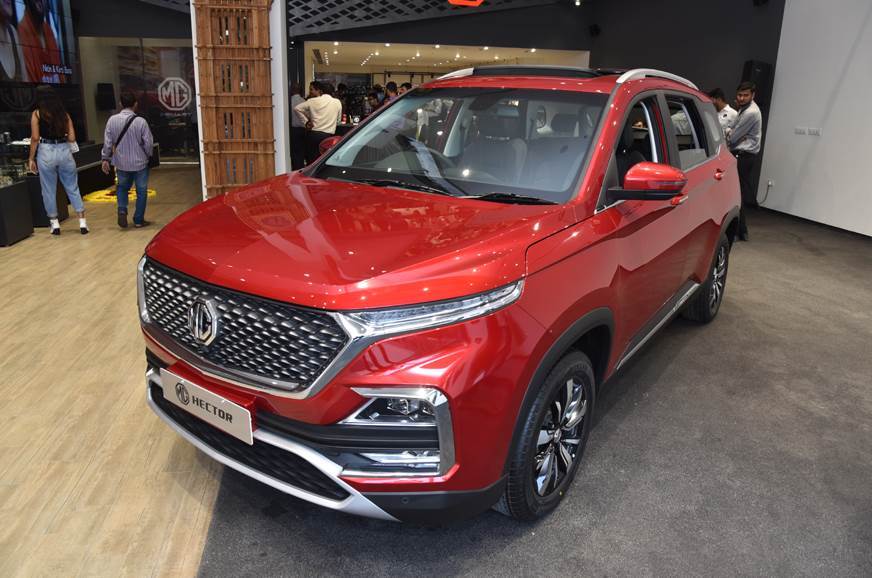
MG Hector gathers 50,000 bookings

MG Motor India has announced that its first product for our market, the Hector SUV, has crossed 50,000 bookings. The model was launched las...