Review: Volkswagen Vento facelift review, test drive

What is it?

With the amount of new technology flooding the market, car manufacturers have to make sure their portfolio is up to date. Volkswagen has followed the trend to a certain extent, and ever since the launch of the Vento back in 2010, they have been updating the car with minor cosmetic changes, but nothing major in terms of design and construction. The last major update on the Vento was in 2014 when the 1.6-litre diesel was replaced by the 1.5-litre diesel, and DSG automatic was introduced, followed by a facelift in 2015. The most recent update is the one that you see here, so let's get right to it.


What's it like on the outside?

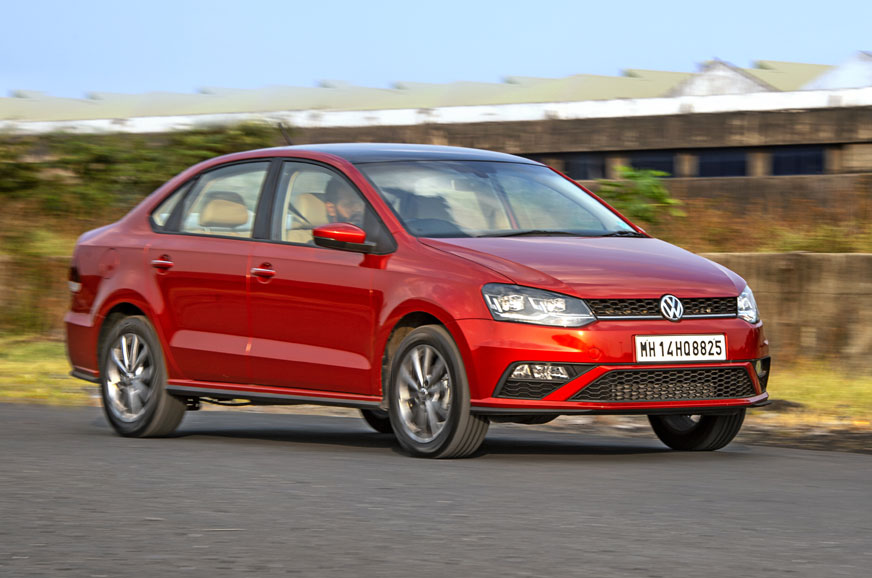
The Vento now gets styling cues from the Polo GTI hot hatchback. The grille is now sleek and the three slats have been replaced by honeycomb mesh pattern with a prominent VW logo in the centre. The front bumper gets a split air dam with fog lamps on both sides, and static cornering lights. In profile, there are no major changes except for the addition of a black side skirt. The rear also gets the GTI-inspired bumper with a chrome-tipped exhaust.

What’s it like on the inside?

The clean design of the dashboard hasn’t been altered and you still have the black and beige theme in the cabin. Fit and finish levels are impressive as well, and although there aren’t many soft-touch plastics, they are scratch-resistant. The front seats are wide, comfortable, and provide good side and underthigh support. Getting into the rear seats is pretty easy, and there are good levels of legroom and headroom as well. The backrest here, however, feels a bit upright, and the seats don't offer much underthigh support.  Moreover, the transmission tunnel makes seating a third passenger in the middle difficult.


In terms of features, the top-spec Highline Plus variant gets LED headlights with DRLs, 16-inch alloys, four airbags, ABS (Anti-lock braking system), auto-dimming inside mirror, static cornering lights, ESP (Electronic Stability Program), Hill-hold control, static cornering lights, touchscreen infotainment system with Android Auto and Apple CarPlay connectivity. In terms of convenience, you get cruise control, automatic wipers, reverse parking camera with sensors and auto-levelling headlamps. With the facelift, the Vento now gets Volkswagen Connect – a telematics and vehicle assistance system that allows users to connect their car to their smartphone via a data dongle fitted to the on-board diagnostics (OBD) port of the car. Once connected, customers can use features like trip tracking, fuel cost monitor, driving behaviour, location sharing, SOS calls and even book service appointments.


What’s it like to drive?

The engine options for the Vento are the same – the BS4-compliant, 105hp, 1.6-litre petrol with a 5-speed manual, a 105hp, 1.2-litre turbo-petrol dual-clutch auto, and a 110hp, 1.5-litre diesel that gets 5-speed manual and 7-speed dual-clutch automatic options. The car we have with us is the 1.5-litre diesel automatic and not much has changed in the way it drives. Refinement levels at idle are average compared to that of recent diesel cars like the Hyundai Verna 1.6 and the Maruti Ciaz 1.5. The typical diesel clatter is present at idle and the cabin gets boomy at high revs. Turbo lag is well masked and power delivery is linear. The dual-clutch unit is smooth moving through the gears and it complements the engine’s strong mid-range well. Even when you demand instant power, the gearbox is quick to downshift and gives you the necessary boost for a quick overtake.


Volkswagen introduced the 16-inch alloy wheels with 195/55 R16 tyres on the Sport edition in March 2018. The bigger wheels do add a bit of stiffness to the ride quality, but, overall, it remains absorbent. The suspension works silently, with only sharp potholes felt and heard in the cabin. The steering is light at city speeds and weights up adequately on the highways, however, there’s not much feel or feedback in the corners.

Should I buy one?

The VW Vento is priced between Rs 8.77 lakh and Rs 13.18 lakh for the petrol variants, and Rs 9.59 lakh to Rs 14.50 lakh for the diesel variants (all prices ex-showroom, India), and that makes it feel overpriced when compared to the segment leader, the Maruti Ciaz. Also, the fact that the Vento has been around for over nine years without a major makeover is quite evident. And even though the equipment list has been kept up to date, it still falls short in some areas compared to its closest rivals like the Hyundai Verna, Honda City and the Maruti Ciaz.


However, the silver lining here is that the Vento is fundamentally a strong product and it gets the basics right. It is powered by a tried-and-tested, punchy diesel engine mated to one of the smoothest-shifting automatics, and it has a robust build quality that feels like it’s built to last a lifetime. This is what draws the customers to it, and although Volkswagen may not have started on a clean sheet of paper for this particular Vento, it still remains relevant in the segment.

Also see:

New entry-level Volkswagen ID EV previewed

Slideshow: 2019 VolksDrive draws crowds from all over Mumbai

BS6 Skoda Rapid petrol to launch in April 2020


from Autocar India https://ift.tt/2tlwT2o
via IFTTT

Carlos Ghosn, Nissan ex-boss flees Japan

Former Nissan boss Carlos Ghosn has escaped Japan, where he has been held under house arrest on bail while awaiting charges for financial misconduct, and emerged in Beirut, Lebanon. From here, he has vowed to fight and clear his name of said charges.

After arriving in Beirut, the 65-year-old issued a statement to the media, saying, “I have not fled justice. I have escaped injustice and political persecution.”

He went on to attack the Japanese legal system, in which, he claims “guilt is presumed, discrimination is rampant, and basic human rights are denied, in flagrant disregard of Japan’s legal obligations under international law and treaties it is bound to uphold.”

“I can now finally communicate freely with the media,” he continued, adding that he would start to do so next week.

Ghosn was arrested in Japan on November 2018 on charges relating to his time as chairman at Nissan. After spending 108 days in custody, he was released on bail, with strict conditions that barred him from travelling abroad. His trial was due to begin in April 2020.

It is not clear how Ghosn managed to leave Japan; he was under constant surveillance, with restricted phone and internet usage, while his three passports – he is of French, Brazilian and Lebanese heritage – are held by his Japanese lawyers.

One of Ghosn’s Japanese lawyers, Junichiro Hironaka, told reporters in the country that they knew nothing about Ghosn leaving the country, and were still in possession of his passports. “We told the court that we are in a bind as well,” said Hironaka. “If he actually left this country, it violates the conditions for bail.” He added, “I don’t even know if we can contact him.”

The Japan Times state that the Tokyo District Court has confirmed that the terms of Ghosn’s bail remained unchanged, suggesting that he left the country without permission. According to further reports, the Japanese Immigration Services Agency has no record of Ghosn’s departure. Meanwhile, the Lebanese newspaper Al-Joumhouriya said that Ghosn arrived in Lebanon on a private jet.

Also see:

Carlos Ghosn sues Nissan-Mitsubishi for 15 million Euros in damages

Carlos Ghosn rearrested in Japan


from Autocar India https://ift.tt/35fIflL
via IFTTT

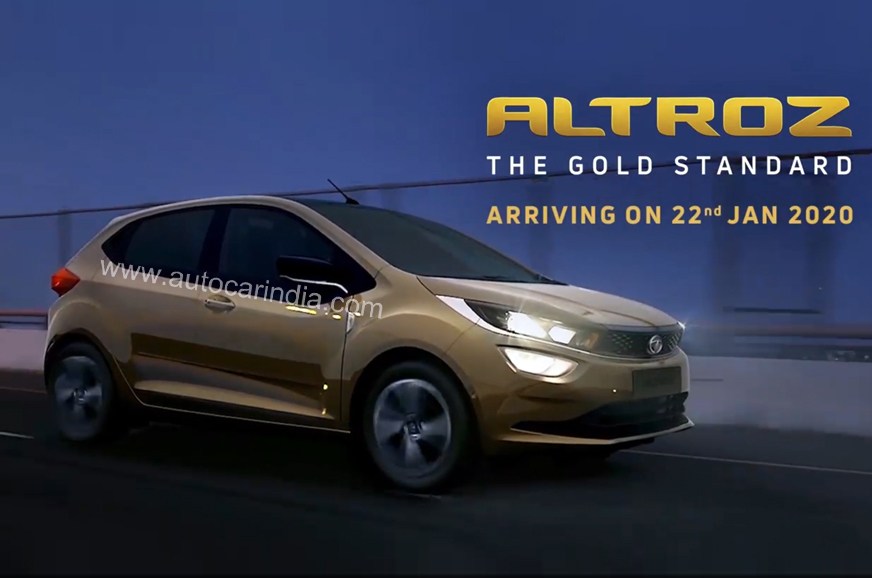
Tata Altroz India launch on January 22

Tata has released information that confirms that the Altroz premium hatchback will launch in India on January 22, 2020. Expected to be priced competitively compared to the likes of the Maruti Suzuki Baleno, Honda Jazz, Toyota Glanza and the Hyundai i20 (about Rs 5-8 lakh estimated ex-showroom), the Altroz will come with a number of other USPs too.

Besides being offered in multiple variants to meet various price points, Tata will also make the Altroz available with a number of customisation packs, making the hatchback more accessible to customers who are looking for more premium features but don’t want to pay extra for a top-spec variant.

As we had reported earlier, the Altroz will be one of the models in this segment to get BS6-compliant petrol and diesel engine options – the Jazz and i20 will also get both fuel options. The 1.2-litre naturally aspirated petrol engine is tuned to produce 86hp and 113Nm, while the 1.5-litre diesel mill makes 90hp and 200Nm of peak torque. For now, both get a 5-speed manual gearbox as standard though Tata has confirmed that a dual-clutch automatic option will be available on the former engine at a later date. There are also talks of a 1.2-litre turbo-petrol engine joining the line-up later.

We’ve been reporting on the Altroz for a while now – bookings for this much anticipated model began on December 4, with dealers reporting the petrol model commands greater interest. Deliveries for models booked since then will only begin in mid-February. We’ve even driven the car (you can read the review here) and compared it to its rivals on paper.

Stay tuned for more updates.

Also see:

12 new Tata cars coming in the next 4 years

Tata Altroz: What to expect


from Autocar India https://ift.tt/2QeYWtH
via IFTTT

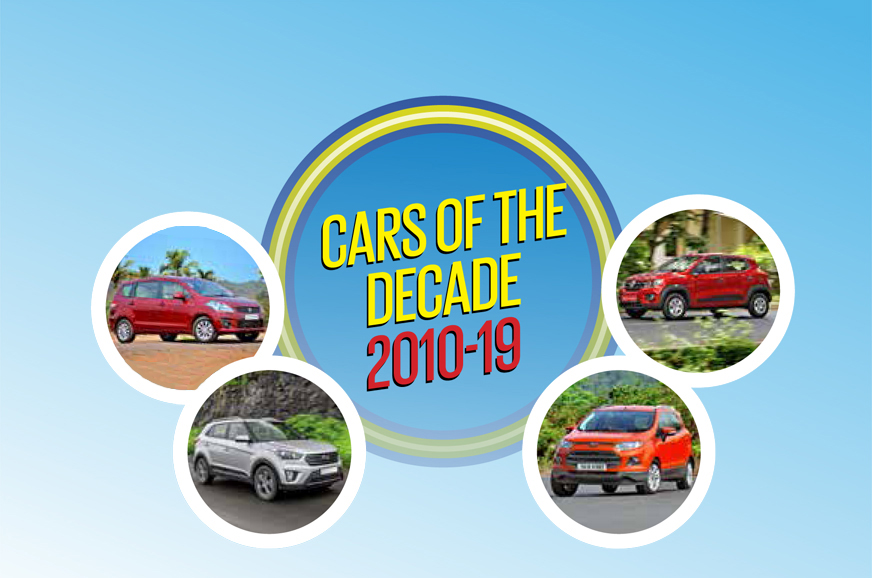
Most influential cars of the decade (2010-19)

It’s the end of a decade, and just before the new one is thrust upon us, let’s quickly reflect on the cars that really stood out in the past 10 years. Many outstanding cars were launched over the course of the decade but it’s the ones that redefined the shape of the car market that made it to our shortlist. They all aren’t necessarily best-sellers, or even the best cars, but they are those that made a lasting impact and will be remembered. In a decade that witnessed an explosion of SUVs, it’s not surprising that they ruled our list. So here are our top seven Cars of the Decade, listed in order of their launch dates.

Renault Duster (2012) – Hitting the sweetest spot


The early success of the Mahindra XUV500 proved that SUVs in India had to be large, have three rows of seats and come with big, powerful diesel engines. Renault flipped that notion on its head and found an even sweeter spot in India’s fast-growing SUV market, with something smaller – the Duster. This 4.3-metre-long SUV turned out to be optimally sized. It was not too big, not too small and gave birth to a new mid-size SUV segment, which is now the most lucrative slice of the Indian car market. The Duster itself eclipsed heavyweights such as the XUV500 and Scorpio and at its peak was the bestselling SUV in the country after the enduring Bolero.

The Duster also dispelled a long-held belief that SUVs would only sell if they came with seven seats, but the truth is that skipping an extra row actually played to the Duster’s strengths. Compared to the unwieldy and heavy body-on-frame SUVs like the Scorpio and Safari – and even the monocoque-based XUV500 – the smaller and lighter five-seat Duster was more efficient and a dream to drive. It was much easier to handle, had strong performance and an astonishing ability to smoothen out any surface. In fact, even today, there are few other SUVs that can match the Duster’s ride comfort on bad roads.

The Duster’s secret sauce is the ‘M0’ platform, which underpins it. Hardy mechanicals, a wide track (the key to its exceptional dynamics) and Renault’s hugely capable 1.5 K9K diesel are what endears the Duster to its owners. The 4x4 version is even better and possibly the most capable off-roader for the money.

However, the mechanical hardiness hasn’t come with corresponding finesse. Bits like the hydraulic steering (which has an unpleasant kick-back); the clunky, mechanically operated air controls; the flap type door handles and the cheap interior trim fell short of expectations of a new breed of gizmo-crazy SUV buyers. The Duster hasn’t raised the game enough in the segment it created but truth be told, there is still no other SUV quite like it.

Maruti Suzuki Ertiga (2012) – Filling a gap


Taking on the mighty Innova was never an option for Maruti Suzuki but the huge space below the big Toyota MPV was up for grabs and it’s incredulous that no one thought of diving in there earlier. If the success of the Innova was anything to go by, a low-end MPV costing almost half the price would be a sure-shot winner, or so logic said. And logic is one thing that appeals to Maruti, so it logically slipped into the bottom end of the MPV segment with the very logical Ertiga.

Envisioned as a poor man’s Innova, the Ertiga drew reference from the premium Toyota MPV and cobbled together a car that had seven flexible seats, a practical and well-equipped cabin, decent petrol and diesel options and was easy to drive.

The result was an MPV that did 90 percent of what the Innova could do at 60 percent of the price. Moreover, it was much cheaper to run and, except for some gearbox issues on the 1.3 diesel, was incredibly reliable. This established its popularity with fleet and individual buyers alike.

Maruti Suzuki’s formula worked and customers looking for an affordable people-mover flocked to the Ertiga. Sitting at the other end of the MPV spectrum, it often outsold the mighty Innova and challenged it for the title of India's bestselling MPV. The Ertiga’s success naturally tempted other automakers to join the party but none of them had bargained for the vice-like grip the Ertiga had on the lower-end of the market. The Chevrolet Enjoy, Honda Mobilio and Renault Lodgy all came and went after failing miserably. In contrast, the Ertiga moved up a gear with the second-generation model, hitting record sales and nosing ahead of the Innova. It’s the way the Ertiga finely mixes all the ingredients that go into making an MPV-like space, size, practicality, user-friendliness and low running costs, at a very digestible price. That makes it the MPV India needs.

Ford EcoSport (2013) – The driver’s compact SUV

The forgotten Premier Rio was the first compact SUV in India but it was the Ford EcoSport that blew the compact SUV segment wide open. It took 18 months to bring the EcoSport to our market after it was unveiled at the 2012 Auto Expo, but the delay didn’t stop it from riding the SUV wave that was fast engulfing the market. When it was launched at a jaw-droppingly low price of Rs 5.59 lakh, Ford simply couldn’t keep up with the massive demand. More importantly, the EcoSport came as an enticing alternative to formulaic hatchbacks the average buyer was jaded with. That it was a hatchback on stilts was in fact, central to the EcoSport’s appeal. Owners loved the high seating position and ground clearance, which gave them a newfound confidence behind wheel. The best bit was that the raised stance didn’t really hurt the dynamics and in fact, the EcoSport was a showcase of Ford’s renowned ride and handling. With the facelift, the ride was later softened to soothe the backsides of owners who found the suspension set-up a touch too stiff for Indian roads, but the EcoSport is still benchmark for dynamics. The engine line-up was no less impressive. The award-winning 1.0 Ecoboost direct-injection turbo-petrol – with its incredible refinement (hard to believe from a three-pot engine) and plateau-like torque curve – is still the gold standard for compact engines. The 1.5 diesel and the 1.5 Dragon (which replaced the old 1.5 Sigma petrol engine) complemented the terrific chassis too.

Though it’s now up against newer and fresher rivals, which have a lot more to offer, the EcoSport still remains a true driver’s compact SUV, if there ever was one.

Renault Kwid (2015) – A true game-changer


A landmark car that was bold enough to take Maruti Suzuki head-on and even succeed against the market leader on its own turf.  Renault was clearly on to something big with the Kwid, which came as a rude wake-up call for Maruti Suzuki and sent its engineers scurrying to the drawing board to develop a rival. And that rival arrived four years later in the form of the S-Presso to join the micro-SUV segment. Others will soon follow, but it was the Kwid that pioneered the category.

The success of the Kwid lies in its radical and even risky approach to the budget-end of the segment. It tore up the rulebook, which subscribed to the belief that conservative first-time buyers needed a conservative car. Instead, the Kwid pounced on the growing craze for SUVs with its distinctive SUV-ish looks and that was half the battle won. The other half was won by offering a mix of practicality (passenger and luggage space was class-leading) and certain features like a touchscreen that was unheard of in an entry-level car. In fact, the Kwid’s touchscreen alone was a big enough hook to snare buyers and eventually make this feature de rigueur in every car. And of course, hygiene factors such as good fuel economy and a great price were bundled in to complete what was an irresistible package.

That said, the Kwid wasn’t perfect. It couldn’t be if it had to meet the brutal cost targets Renault had set for itself. Compromises were made in areas of refinement, drivability, fit and finish and even safety, where a disproportionate amount of cost would have yielded only marginal gains.

But the genius of the Kwid lay in the fact that it had an element of desirability that made customers overlook its flaws. It had character, it had purpose, and it came as a breath of fresh air in a staid marketplace.  Four years on, Kwid sales are way off their peak but the baby Renault still has a relatively strong following and a uniqueness that has just been freshened with the launch of the Kwid facelift.

Hyundai Creta (2015) – Centre of gravity


The mid-size SUV segment pioneered by the Duster and dominated by the Hyundai Creta, is the most happening part of the Indian market. Today, almost every automaker wants to make a 'Creta' of its own, and by 2021, we will see at least a dozen brands having a ‘Creta-fighter’ in their line-up.

The monumental success of the Creta has made it the Indian car market’s centre of gravity. Apart from being in the crosshairs of other automakers tantalised by the juicy profits the Creta must make for Hyundai, this exceptionally well thought-out SUV is pulling customers across segments and from price points above and below. Premium hatch and compact SUV buyers, as well executive sedan and full-sized SUV buyers, have fallen for the Creta’s charm. It’s only now at the end of its lifecycle and with Kia doing a ‘Creta’ with the Seltos that its popularity has waned, but for the better part of the decade the Creta was the industry’s poster car.

When the Creta was launched, it took no prisoners and cluster-bombed the market with multiple variants at multiple price points. It came with diesel and petrol engines along with an automatic option for both to cover most of the mid-size SUV market and plug the gaps that rivals had left empty.

The Creta was conceived to be a car for every occasion and it’s the breadth of its appeal that’s another reason for its huge popularity. It’s SUV enough to scamper up a muddy track to the farm house, hatchback enough to punt around town and slot in to a tight parking space and sedan enough to be comfortably chauffeured in. Unlike the hard-as-nails Duster, the Creta is more polished, well-rounded and sophisticated. It’s the template future mid-size SUVs are and will be based on.

Maruti Suzuki Vitara Brezza (2016) – Going by the book


If the Ford EcoSport pried open the compact SUV segment, it was the Vitara Brezza that barged into it. Unlike the EcoSport, the Vitara Brezza wasn’t anything revolutionary, but in true Maruti Suzuki tradition, was conceived with good common sense and an ear to the ground to understand what customers really want.

The tricky part was getting something highly subjective like the design and styling right. The ‘experts’ and media (us included) derided the Vitara Brezza’s boxy and upright shape but the market gave it a big thumbs up. Maruti Suzuki obviously knew something the sceptics didn’t, which is that customers want their SUVs to feel robust and in particular, look the part as well. That means a high bonnet, a wide stance and large wheel envelopes to give it the desired road presence.

The designers made a virtue of the Vitara Brezza’s upright proportions to carve out a spacious passenger compartment and a decent-sized boot within the confines of a sub-four metre long car. And it’s with this space on offer that the Vitara Brezza trumped the sleeker but less spacious EcoSport.

Practical, cheap to buy and even cheaper to own and run, the Vitara Brezza with its rather underwhelming but very efficient 1.3 DDiS engine racked up record sales and was a classic example of the head winning over the heart. It also exemplified Maruti Suzuki at its best, giving the customer just what they need. Nothing more, nothing less. However, with car buyers becoming ever more demanding and compact SUVs such as the Hyundai Venue – armed to the roof and ready for the kill – the Brezza has to seriously up its game if it wants to stay relevant in the next decade.

Tata Tiago (2016) – Redefining a brand

 
‘More car per car’ was the catchy tag line for the original Indica when it was launched in 1999 and VFM has been Tata Motors’ mantra ever since. But playing the value card hasn’t always worked because what Tata customers saved on price they lost in product quality. The Tiago was Tata’s first product that came with a great price and quality to match. In fact, pound for pound, the Tiago was simply outstanding value. It felt a segment or two higher than a similarly priced Wagon R and came with premium bits like a knitted roof liner, plush plastics and seat fabrics never seen before in a car at this price point. “They must be losing pots of money” was the common response from execs in rival companies. They weren’t wrong. The Tiago, when launched, was far from profitable and a clear attempt by the company to buy market share. Let’s not forget the Tiago wasn’t just another hatchback from Tata Motors but a model aimed at redefining the Tata brand and finding new customers.

Based on a heavily modified version of the first Indica’s platform, the Tiago follows the same template of a handsome, well-proportioned hatchback with a generously spacious cabin. Fresh out of the box, were a new set of petrol and diesel engines powering the Tiago, but they weren’t fully sorted and stood out as rough edges in an otherwise solid package. However, the price made up for any shortcomings and the Tiago went on to become the best-selling Tata.

However, the Tiago’s success was more than just a number on the sales charts. It led a product renaissance at Tata Motors and brought a new breed of customers into Tata showrooms; not the Indica and Indigo fleet buyers but individuals on the lookout for a decent, affordable, family car. Changing the perception of the Tata brand is the Tiago’s biggest contribution.

Which cars launched between 2010 and 2019 do you think had the biggest impact on the Indian car market? Let us know in the comments.


from Autocar India https://ift.tt/39s5qg7
via IFTTT
Special feature: Mercedes-Benz - The pleasure is all mine

AMG’s history is a storied one. Right since 1967, the mad hatters at AMG have been fettling big-on-luxury Mercs to make them big on power too. AMGs today? They come in all shapes and sizes, like the GLE 43 Coupe I’m with today. It’s an SUV that thinks it’s a sportscar. The way it builds speed, and even the grace with which it turns-in belies the GLE 43’s size and weight. But as much of an AMG as it is, it’s an SUV too. And that’s what brings me to Katni in the mining belt of Madhya Pradesh. The task at hand is to see if and how the GLE 43 Coupe leverages its off-road ability and performance when things get down and dirty. I mean that quite literally so, because I’ve just looped my way down 200ft in a limestone mine. This is a setting far removed from the performance car gatherings you’d typically find a GLE 43 Coupe at.


The drive down turns out to be a journey of discovery. It’s not the rock as much as the path down that interests me. Battered and bruised by constant dumper traffic, the path makes the worst of Mumbai’s roads back home feel like expressways. But I really can’t say I have it bad – drive mode dial set to ‘Comfort’, air suspension set to full height, the Merc makes it all seem easy peasy. There’s also confidence in knowing that the Merc’s 4Matic all-wheel-drive system has my back on the shale-strewn path. On the first of the short, straight stretches, I give in to temptation and floor the big pedal. It’d be rude not to, right? It’s over these short bursts of acceleration that I start to work a rhythm with the big GLE 43 Coupe. Forward thrust is just as strong on the kuchcha raasta as it is on the tarmac. Amazing. Powering out of the hairpins is great fun too. I’m grinning. Never had I imagined that a limestone mine could double as a play pen for a big performance SUV.

We have company

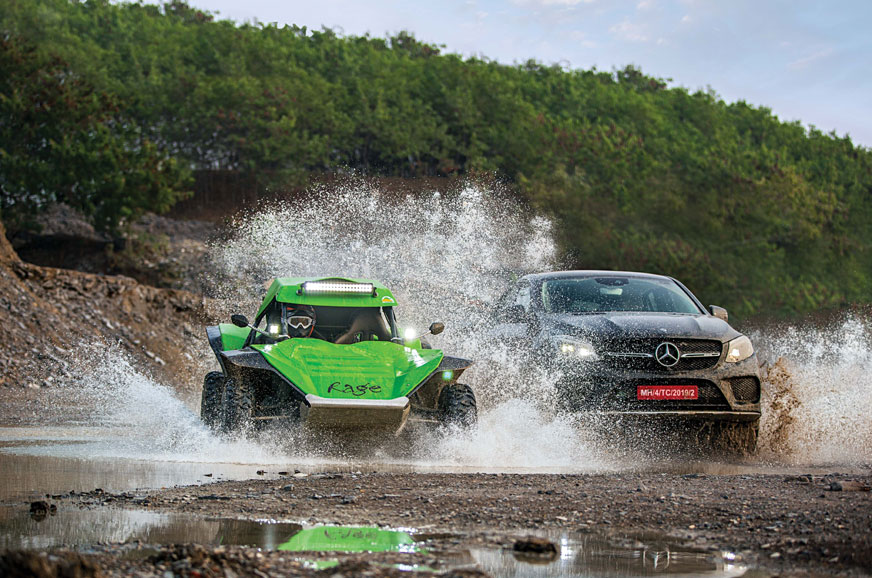
I get a glimpse of a water body every few corners and see it in its entirety when we’re at the base of the quarry. The lake is an impossible shade of turquoise which, as I learn, is due to the scattering of light by calcite crystals. I’m awed by the setting but just as I reach out for my phone to click the Merc, I hear the buzz of an engine in the distance. Right. That’ll be my friend and colleague Rahul Kakar, who’s promised to show up in something special to keep the GLE 43 Coupe honest. I see a streak of green and as he gets closer, I think I know his weapon of choice. Yup, it’s a hopped-up buggy. Think midway between an ATV and a rally car, and you’ll get the idea.

You’ll feel like a rally god in the buggy. It’s immense fun.

Rahul’s in MX gear and something tells me he’s taking the competition that’s on the menu for today really seriously. It won’t be a timed run or a lights-to-flag sprint – all that I need to do is keep up with the buggy on the quick blast up. A hill-climb with a difference, you could say.

I can’t see Rahul’s face under the helmet to gauge what he makes of the GLE 43 Coupe but I’m sure he sees a bit of trepidation on mine. The buggy is no toy. It’s got a torque-sensing limited-slip rear differential, a fly-off handbrake, 13 inches of suspension travel, racing buckets with four-point harnesses and off-road tyres – and it weighs all of 540kg. The 70hp power doesn’t sound all that bad, suddenly.

The Merc? It’s like bringing a bazooka to a gunfight. The 3.0-litre, bi-turbo V6 has to cart 2,280kg of SUV so the numbers are on my side. I have Sport+ mode to bring out the best of the engine and of course there’s all-wheel drive to help put all the power down. This should be fun.

Go time

We line up side by side. This could go either way. Cameraperson Shreyans gives us the countdown. “3…2…1, Go!” I see the buggy take off like a scalded cat. The Merc lowers on its haunches and launches forward too. It’s a short path to the first hairpin, and that’s where Rahul engages the fly-off handbrake to swivel into position. The big Merc is more elegant in its ways, and I quickly understand the fastest way through is to ease in, line up and power out. And power out I do. The elevation change goes by unnoticed and the Merc closes the gap to the pesky buggy on the long-ish straight that follows. I’m bouncing all over the bumpy and rocky track and the blares and baarps from the AMG’s exhaust only add to the drama.

You slide the buggy into corners. The Merc eases into them.

I don’t know if Rahul’s checked his mirrors but the disclaimer that objects in the mirror are closer than they appear would surely apply. I’m in hot pursuit now and the Merc’s ready power makes good on every advantage the buggy has on the turns. From the corner of my eye I sense we’ve climbed a lot so the end won’t be too far. The higher we go, the smoother (relatively speaking) the surface gets, giving me a change to unleash all of the Merc’s might. I’m firmly on the buggy’s tail by the end of it; and what follows is a dash to the designated finish line. It’s a photo finish. Did someone say this wasn’t a race?

Calm as it may appear, the cabin sees frantic activity.

The Merc’s splattered with all sorts of specks and spots thrown up by the buggy. At least I’m all clean! I can’t say the same about Rahul, who looks like he’s been sand-blasted. He gives me an appreciative thumbs up but it’s a few moments before he can work his way out of the buggy’s roll cage. And that’s precisely when it hits me: Here’s a Merc with all the trappings of a modern-day luxury vehicle that just kept pace with a purpose-built buggy in a setting suitable for the latter. And a quick wash is all it’ll take to get the GLE 43 Coupe ready for a red carpet event – or a car meet, if that’s your thing.

It’s something that an SUV with an AMG badge can do.

Also see:

Mercedes-Benz India announces new service initiative

2019 Mercedes-Benz GLC facelift review, test drive

Mercedes-Benz E-class LWB facelift spied for the first time


from Autocar India https://ift.tt/2Q8PpUP
via IFTTT

Review: Mercedes-Benz G 350d review, test drive

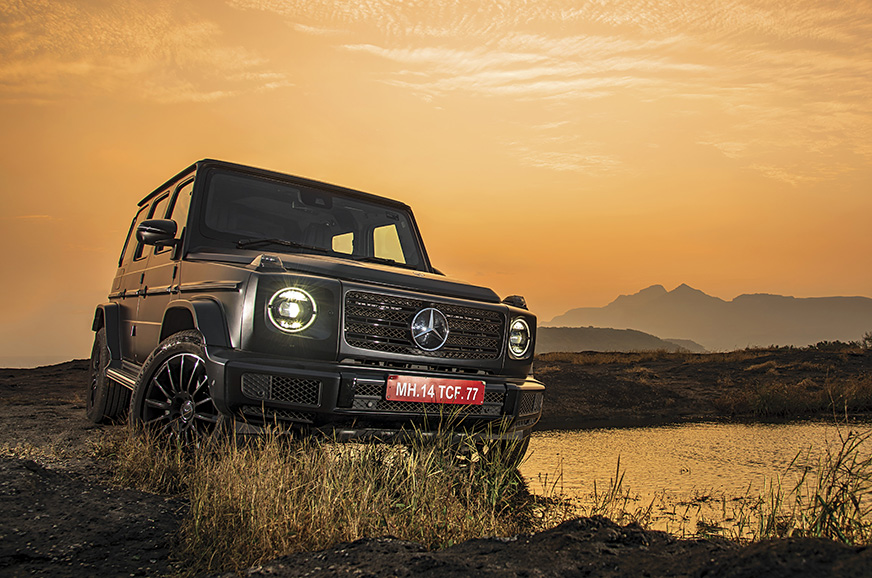
Thus far, in India, the G-class was the extroverted madcap of the Mercedes model range. It was only sold in AMG guise with tremendous V8 petrol engines. Hell, it once even had a variant called the ‘Crazy Colour Edition’. And that’s just as well, because despite its immense price tag, hilarious thirst for unleaded fuel, and a ride that bordered on uncomfortable, it was hugely popular. In fact, it remains the bestselling AMG in India, despite being one of the most expensive. And that has less to do with its uncompromising approach to off-road hardware, and perhaps not even its military-grade engineering. It’s always been something far less tangible with the G-Wagen, and that’s its incredible road presence – the fact that it looks like it could conquer a medium-size country, not the fact that it actually can.

The G 350d, then, feels like it should have come to India years ago. It gives you the same all-conquering look as its AMG sibling but at a lower price and with the promise of far lower running costs. Certainly, in this optional black-on-black-on-black colour scheme, it looks like something a Bond villain would drive. The few differences are that it foregoes the AMG Panamericana grille for the traditional three-slat Mercedes one, it has smaller wheels (20 inches on this car), its bumpers look a bit tamer, and the exhaust tips no longer poke out from the sides – how very conventional!

Push these for off-road invincibility.

Some might be more concerned about losing almost 300hp and 250Nm compared to the G63, but they needn’t be. The S-class-sourced 3.0-litre straight-six diesel engine (BS6 compliant, of course), with its 286hp and 600Nm, provides more than sufficient push, which comes in a brisk but predictable surge rather than the gut-punch you’d get from the highly-strung AMG V8. The diesel engine hustles this 2.5-tonne behemoth along without a fuss, but perhaps not quite as effortlessly as it would an S-class, which weighs about 400kg less! As a result, you tend to hear the engine as it strains a bit more in the big G, but overall, it’s still very refined. And though the straight-six note is nicer than the old V6 diesel’s, if you want sound, you can’t really beat AMG’s V8.

Where it will undoubtedly beat the AMG is on running costs, but make no mistake, despite the more sensible engine, the G 350d’s cuboid proportions and heavy hardware mean it could never truly be called fuel-efficient. Though we didn’t do a proper fuel economy test, the car’s own real-time readouts showed single-digit figures every time we used the accelerator pedal.

Surround cams you might actually use.

If you think this ‘lesser’ version gives up any of the G-Wagen’s legendary off-road ability, you’d be dead wrong. Rigid rear axle, 241mm ground clearance, 700mm water-wading ability, almost hilarious approach, ramp-over and departure angles, low range and – the party trick – three locking differentials; the whole nine yards. It’s also got those characteristic, old-school G-class touches like flared wheel arches, fender-top front indicators, the spare wheel on the side-hinged tailgate, push-button door handles, exposed door hinges, and – my favourite – locks that make an explosive ‘clack’ when they engage.

The inside is suitably modern, with Merc’s excellent dual-screen infotainment and instrumentation unit, but understandably, it’s not the latest MBUX touchscreen system you’ll see on the new GLE elsewhere in this issue. This car is also equipped with a sunroof, contrast-stitched leather upholstery and heated, cooled, massaging front seats. However, it’s worth noting that much of this is optional, which could drive the price up really quick.

Superb blend of luxury, rugged bits and new tech. Lots of stuff is optional though.

And here’s the thing – at Rs 1.5 crore (ex-showroom), the G 350d is still very expensive. Though a G63 may cost 50 percent more, this one in turn costs 50 percent more than Merc’s other big SUV, the GLS. And that’s before options. Additionally, while you can forgive a lot of the AMG G63’s flaws because of how ridiculous an indulgence it is, this more sensible G 350d lends itself to greater scrutiny, comparable to other big luxury SUVs. The back seat, though spacious, is nowhere near as comfortable, fuel economy is not great by diesel standards, rear visibility is appalling, thanks to the spare wheel, and though it has adaptive dampers, the ride quality is very lumpy.

The diesel G-Wagen, then, is a bit of an anomaly. While buyers of most luxury cars are happy to settle for a smaller engine if it means getting a prestigious badge at a more reasonable price, does that still apply when the price is north of Rs 1.5 crore? You’re certainly getting the best of both worlds – the rugged appeal of a G-class (including that insane off-road ability, should you ever need it) – in a package that’s cheaper to buy and run. Still, we suspect that most people who’ve decided to splurge on an indulgence like a G-Wagen would be happy to go the whole hog and get the AMG. 


from Autocar India https://ift.tt/2F5PlyC
via IFTTT

All-electric Mini Cooper in the pipeline for India

British carmaker Mini is considering the all-electric Cooper SE hatchback for India. The development was first reported in Autocar India’s December 2019 issue. However, the Cooper SE – the brand’s first mass-production electric vehicle that was unveiled earlier this year – will make it to the Indian market only by 2021; not any time soon. The brand cites the country's EV infrastructure (or the lack, thereof) as one of the reasons behind this decision.

Speaking to Autocar India, Francois Roca – vice president, Mini Asia-Pacific, Eastern Europe, Middle-east and Africa, hinted the car is not a priority model for India. “We’re ramping up the production, so we will be servicing the first markets that are near the plant. It will come eventually.” Roca said. He added, “We need infrastructure. So when there will be very large infrastructure, it definitely makes sense to have the BEV in the Indian market. Today, I would say it can’t be that we have to be in India with the BEV to tick a box.”

Published in the December 2019 issue.

Mini believes that the model’s limited range will not be a big concern, given the car's primarily intra-city usage. Mini’s parent company BMW has toyed with the idea of launching its own all-electric hatchback, the i3s; which, incidentally, lends its powertrain to the Cooper SE.  You can read our review of the BMW i3s here.

The Cooper SE’s i3s-derived powertrain makes 184hp and 270Nm of torque. This is mated to a 32.6kWh battery mounted beneath the passenger seat in a T-shape, which delivers a 235-270km WLTP-certified range. However, unlike the AWD BMW, the motor in the Mini powers the front wheels only. 0-100kph takes a claimed 7.3sec, with a 150kph top speed. Mini says it is also capable of fast-charging from 0-80 percent in 35min via a 50kW charge point. An 11kW wall box can achieve 0-80 percent charge in 150min – or 210min to full.

When launched, the Mini Cooper SE will be one of its kind in the country, with no direct rivals to compete with.

Also see:

Next-gen Mini Clubman likely to be an SUV

Mini John Cooper Works GP revealed at 2019 LA auto show

Francois Roca, Vice President, Mini Asia-Pacific, Eastern Europe, Middle East and Africa interview video


from Autocar India https://ift.tt/35eHGbT
via IFTTT

MG Hector gathers 50,000 bookings

MG Motor India has announced that its first product for our market, the Hector SUV, has crossed 50,000 bookings. The model was launched las...