Speed Up: Suzuki Endurace Race Experience

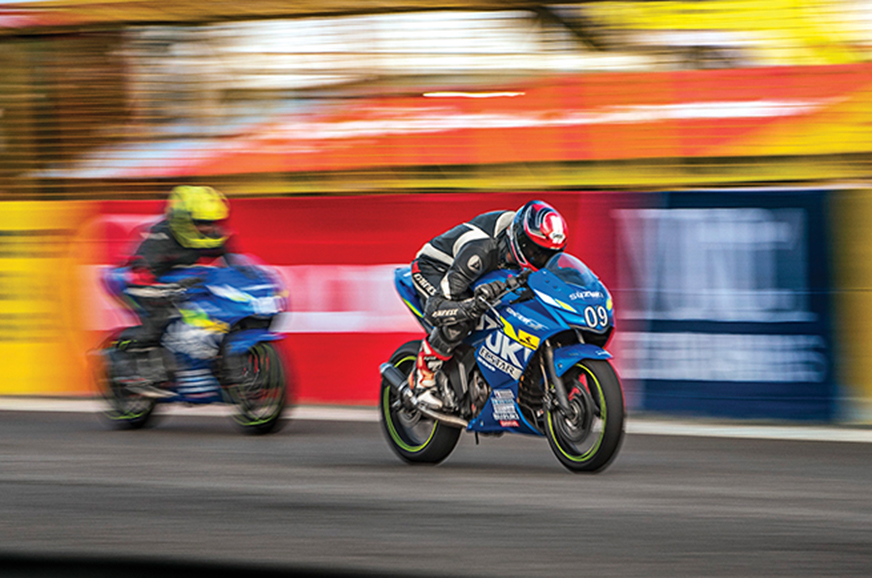
A line-up of grown men clad in leather suits sprint across the breadth of the Kari Motor Speedway (KMS) as the marshal waves his flag at the front of the pack. Their teammates hold their bikes up for them – side stand up, ignition and kill switch on. All the running member has to do is get on the bike as fast as possible, turn it on and ride away. This is how endurance races start, but to add to the excitement, this year we were getting to experience Suzuki’s gorgeous new, race-spec Gixxer SF 250.

It’s not the most graceful thing to do in a leather suit, but since every second counts, you sprint as fast as your legs can carry you.

Unfortunately for us common folk, this modified, track-only Suzuki isn’t for sale and will run only in a One Make Championship. Suzuki already has an ongoing one-make series (now in its fifth season) that uses the smaller capacity Gixxer. Just as before, it continues to be one of the most affordable entries into circuit racing in the country, and maybe even the world. Suzuki tells us that the series, comprising of the SF 250s, will debut next year and feature only experienced riders, unlike the ongoing Gixxer series that’s open to novice riders as well. Lucky for us journalists, we were given the opportunity to see how the changes to the road-going SF 250 translate to the racetrack.

One vision

Like with motorcycles in most other one-make series, weight reduction is the area that sees the most substantial change. We’ve been told that the race-ready SF 250 has lost nearly 20kg by removing hardware that isn’t needed on a racetrack. This includes the headlight, the tail extension, turn signals, saree guard, grab rails and stock exhaust. The stock bodywork remains; so we assume that the removed parts must have been made of some rather heavy materials to account for a 20kg saving.

A lightweight, neatly finished, free-flow exhaust replaces the stock system and also bumps up the power output by a bit. Suzuki claims a 3.5-5hp increase over the 26.5hp on the stock bike, but considering the bike receives no other mechanical updates, the gain is probably more in line with the lower end of that spectrum. Suzuki tells us that the exhaust didn’t demand a remapped ECU or higher-flow air filter, so they remain stock, along with the engine.

A much-needed taller windscreen is in the works.

The 249cc engine delivered an engaging performance even when we first rode the stock bike, and what really kept it from being a great machine on the track were the sports-tourer ergonomics. Suzuki has addressed this, and how! The front suspension has its pre-load dialled down, resulting in a lowered fork; a similar adjustment has been made to the rear suspension as well, and both can be adjusted according to the racer’s body weight. A more consequential change comes in the form of the clip-on handlebar that’s now been set 40mm lower. With that, the foot pegs are now set backwards and upwards, both by close to 50mm. Interestingly, the lowered handlebar meant the fairing would get in the way at higher steering angles, and to avoid this, the steering lock has been limited to conform with what Suzuki says are MotoGP-like regulations. This took some getting used to in the pit lane, with a lot of us almost dropping our bikes even before we got out on the track. However, you never notice this on the track, and it just goes to show how little steering input is required to get the bike to lean over. Now, back to how these changes were in application.

Clip-ons and fork lowered for the track. Great!

Dancing queen

The SF 250 was more intuitive to steering inputs and carried much more lean than previously possible. Another key factor responsible for the increased performance and agility came with the grippier tyres – Metzeler Sportec M7s. It wasn’t until I got passed on the outside by a faster rider that I realised the tyres had a lot more to offer.

These changes not only eliminate any trace of ‘touring’ characteristics from the SF 250, but also result in a stunning bike. The MotoGP livery is one of the best graphic schemes on an Indian motorcycle and the cut-down, minimal body work only adds to the aesthetic appeal. The rest of the bike remains nearly identical to the stock bike. The brakes lose the ABS system, and while the rest of the braking hardware remains the same, Suzuki has used a steel-braided hose for the front to decrease chances of brake fade.

Steel-braided lines reduce brake fade.

The only chink in its armour is due to the stock sprocketing – the SF 250 was banging off the rev limiter at 154kph with more than a couple of hundred metres to go down the long main straight. It was even quicker when I found myself in someone else’s slipstream. Nevertheless, in its track-prepped form, the SF 250 turned out to be a very fun and rewarding motorcycle to ride on a short, technical circuit like the KMS. And a fun and rewarding race weekend it was!

Under pressure

So here’s what you need to know about endurance races – a team of two or more riders race over multiple hours, with the participants given the chance to come into the pit lane and switch riders. The most famous example is the Suzuka 8 Hours. In this case, we were paired in two-man teams and the race duration was a mere 40 minutes, but given the general lack of fitness in our fraternity, it wasn’t exactly going to be smooth-sailing. The only regulation was that each rider needed to do a minimum of 14 minutes and a maximum of 26.

Rear-set foot pegs don’t scrape any more.

We were asked to pick numbered chits to decide our teammates, and I was paired with Manoj from MotorOctane, who thankfully had a fair amount of track experience. After a brief introduction and a quick chat about his trip to Malaysia to break the ice, we were suiting up for our qualifying session. Turns out, we would get along just fine; with a combined average time of 1m27.030s, we qualified in pole position.

On race day, the relaxed atmosphere from the previous evening started to fade, with some of us more serious than the others. I knew we had the pace to finish on the podium, or maybe even come away with the win. And I prepped, stretched and suited up, all with my headphones on, just like the pros do. Manoj too was swept over by this lingering sense of competitiveness in the air, and offered to go on track first and come in for the swap as soon as he’d completed his 14 minutes, because I was the faster rider.

The bikes were lined up on the grid, I held ours in place for Manoj and moments after the marshal flagged the start, he was on the bike. Seconds later, my teammate was off, and the waiting game began. 15 minutes in, I asked for the marshal to signal for him to come in, and a lap later, it was my turn to head out. Manoj was running in 4th place when I took over, but I knew that if I was consistent with my lap timings, we could gain a position or two. With no sense of how much time was left, I rode every lap as if it were the last and crossed the chequered flag. It was only when I returned to the pits that I discovered we’d finished first! My first race experience as a journalist turned out to be extremely fun and equally rewarding, and on a motorcycle that’s quite adept at what it’s been designed to do. Now, I’ve got to try and wrangle a seat to see where I stand against the big boys in the national championship!


from Autocar India https://ift.tt/39qwLPU
via IFTTT

Sponsored feature: Grandeur And Glory

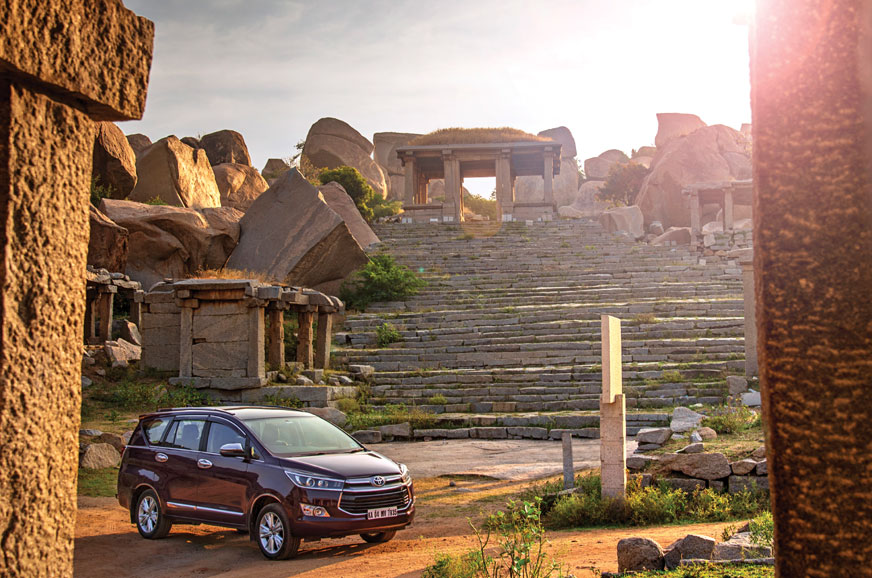
An early morning drive is the right time and the right way to appreciate Bengaluru’s many pluses – and we are not talking about the weather, which is pleasant year round. The city is the world’s fourth-largest tech cluster, the hub for India’s $150 billion tech sector, and accounts for about 10 percent of the country’s GDP. It is also a cosmopolitan metropolis that draws in people from across the country. We are, of course, not going to be just driving around the city in the Toyota Innova Crysta – a car that is the gold standard for MPVs in India, and one that was specifically made for Southeast Asian road conditions. On the infotainment screen is the route map for Hampi, another great city that was discovered over 500 years ago, and which was as celebrated then as Bengaluru is today. The road that leads to it is about 350km long, and passes through sleepy towns and busy highways. We depress the Crysta’s accelerator, feel the car surge forward smoothly, and settle down for an involving ride to the capital of the Vijayanagara Empire.

The rise and rise of Hampi

The ruins that we were going to encounter are spread out around thousands of hectares in the Tungabhadra basin, near Bellary. While the history of Hampi goes back all the way to ancient times, the city came into its own with the establishment of the Vijaynagara Empire between the mid-1300s to the mid-1500s.

As with all dynasties and empires, there are a lot of legends surrounding the rise of the empire, but it is widely believed that the Vijayanagara Empire was founded in 1336 by two brothers Harihara and Bukka of the Sangama dynasty. The brothers chose a pilgrimage centre as their capital; and soon enough, a grand city came up around it. By the late 1300s, the kings of Vijaynagar ruled the whole of southern India. The story of Hampi is closely aligned with the struggle for supremacy in the southern part of India in the medieval ages. The initial rulers of Hampi fought several wars against their neighbours, including the Hoysalas and the Madurai sultans, and later with the Bahmani sultans and the rulers of Bijapur. Hampi’s heyday was during the reign of Krishna Deva Raya, the third ruler of the Tulavas; the third dynasty to rule over the city. Krishna Deva Raya was not without his flaws – he was known to be prone to extreme bouts of anger – but he is also known as an enlightened king.

He was not only a brave ruler who brought his kingdom’s troublesome neighbours to heel, but he also had a keen interest in the arts. During his 20-year reign in the early decades of the 1500s, he not only patronised music, poetry and architects, but also wrote poetic compositions himself. Under him, Hampi – already a mighty city when he ascended the throne – became one of the world’s largest and richest metropoleis. Several travellers (especially the Portuguese Domingo Paes in the early 1500s) compared it to Rome.

Sacred water tanks or pushkaranis are among Hampi’s many architectural highlights.

15 glorious years

We break for lunch at the town of Chitradurga, and feast on an authentic Kannadiga lunch.There’s lots of rice, bisi bele bath, and saaru, kootu and huli. It been over 3 hours since we left Bengaluru, but the hours seem to have flown by and we are in good spirits. The lack of fatigue is possibly a direct consequence of travelling in a car such as the Crysta, which keeps occupants comfortable, regardless of whether you are out on the highway or in the city.

Hampi reached its zenith in the early 1500s, during the reign of Krishna Deva Raya.

Ever since the Crysta took on the mantle from its predecessor, the original Innova, it has built on its success and become the only real, reliable and well-appointed MPV on our roads today. The first Innova showed the way 15 years ago – yes, that’s right, it has been a decade and a half since Toyota redrew the MPV paradigm in India. The current model has a plush cabin that features glossy wood and leather, and LED ambient lighting; an instrument panel that sports a harmonius, flowing design; and a range of refined and robust engines – a 150hp 2.4-litre motor with a 5-speed manual gearbox, and a 174hp 2.8-litre engine with a 6-speed automatic. All these indicate that the Innova Crysta has only one competitor – itself. As important is the way Toyota has engineered space inside the cabin – which is roomy and seats seven adults – and the car’s SUV-like stance, both of which contributed in making the Innova Crysta the country’s bestselling MPV. In fact, unsurprisingly, India accounts for the most number of Innovas sold by Toyota globally.

The Innova’s cabin marries luxury and harmonious design.

We reach Hospet, the town closest to Hampi, by early afternoon, and immediately proceed through the narrow, congested streets towards the UNESCO World Heritage site. The general perception is that the Innova Crysta is great on highways and long journeys, but that light steering at low speeds and great turning radius makes it feel equally at home in small towns and in traffic as well. The sun is shining bright, but it is a kind of golden light.

Ahead of us, and all around us, are the monuments that point to a halcyon past: temples, palaces, halls and gateways. Prime among them are the Virupaksha temple – among the oldest structures in Hampi and one that still resonates with the prayers of worshippers; the Vittala temple and its ornate pillars and the large, expertly carved main hall; the elephant stables inspired by Islamic architecture; and, among others, the bazaar, with arcades on both sides. Here, one can still imagine the hubbub of daily trade and the clamour of buyers and sellers from all over the world.

The Hampi Chariot, inside the Vittala Temple Complex, is a shrine dedicated to Garuda.

Hampi is fantastic if you are into history, but its landscape is as compelling. The region is dominated by rust-coloured rocky outcrops, massive boulders, green fields and the serenely flowing Tungabhadra River. Surely, there could have been more practical reasons why Hampi was chosen as the capital of the Vijyanagara Empire, but we’re sure its beauty, especially at sunrise and sunset, would have played a part.

The next day, as we pointed the graceful nose of our Innova Crysta towards Bengaluru, we realised that Hampi is also about legacy. It might be in ruins now, but over 500 years ago, it had set a great example with regards to cosmopolitanism, and that is something much younger cities like Bengaluru follow today.

Also see:

BS6-compliant Toyota Yaris to be priced from Rs 8.76 lakh

Toyota Vellfire review, test drive


from Autocar India https://ift.tt/2MB5Bfp
via IFTTT

BS6 Royal Enfield Classic 350 reaches dealerships

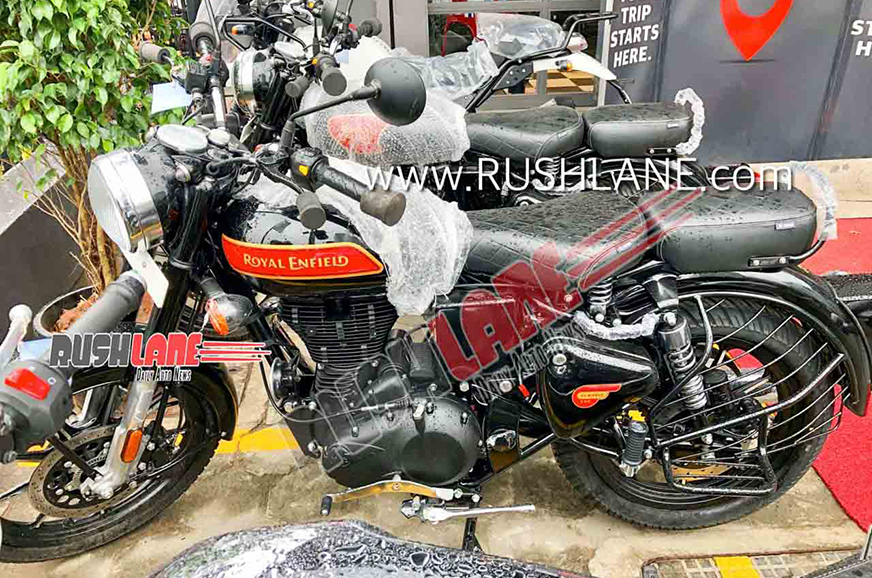
Earlier this month, we’d brought you the news that Royal Enfield will be updating its current 350cc single-cylinder platform to comply with the BS6 norms. Now this new Classic 350 has begun reaching dealerships. This bike is not the next-generation model that was spied testing multiple times over the last few months, as that platform is rumoured to be ready for production only later in 2020.

The Classic 350 seen in the images is supposedly the bike updated to the BS6-compliant engine. While we await official confirmation and other details of the bike, its blacked-out engine, alloy wheels, new paint scheme, and different tank badging is clearly seen.

Prices of the bike are yet to be revealed but we could expect to see a minor hike from the Rs 1.53 lakh price tag on the current base BS4 Classic 350 motorcycle.

As for the next-gen machines, the spy pictures have revealed them to be completely new from the ground up. The frame appears to have moved to a double-cradle design, while the motor is expected to shift to an overhead camshaft design, leaving behind the ageing OHV head layout seen in the current 350cc range. The bikes also appear to wear fresh designs, but won't be too much of a departure and will be instantly identifiable as Royal Enfields.

The next-generation Royal Enfield single-cylinder motorcycles hold plenty of promise in terms of offering an improved riding experience; and while that's exciting for buyers, it appears that there's still quite a wait before they hit the market.

SOURCE


from Autocar India https://ift.tt/2Q9nvbe
via IFTTT

Mahindra to unveil electric scooter in first quarter of 2020

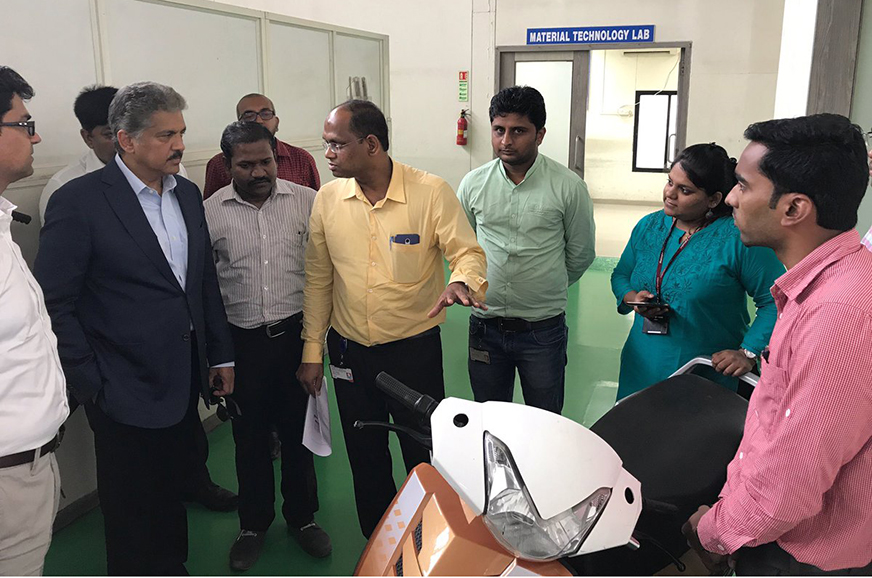
The past couple of months have seen considerable action in the electric two-wheeler space in India: Ather Energy announced plans for a new plant in Hosur, Bajaj Auto revealed the new Chetak, and Ultraviolette showcased its performance electric motorcycle. Now Mahindra & Mahindra, through its two-wheeler arm, is getting ready to plug into electric mobility, which will make it the sole OEM in India to have EVs on two, three, and four wheels. 

Mahindra is said to be at an advanced stage of unveiling its first electric scooter based on the Mahindra Gusto scooter platform. In April 2017, our sister publication Autocar Professional had reported that a Gusto-based e-scooter was under development. The now-discontinued Gusto 110cc and 125cc scooter models were the most successful Mahindra models on two wheels, compared to the Duro and Rodeo.

According to sources familiar with the latest developments, Mahindra's electric scooter will be revealed before Auto Expo 2020, which opens in early February. The e-scooter, for which ARAI certification is believed to have been received, is expected to be priced around Rs 80,000 in Delhi (including FAME 2 and state government subsidies).

Considering Mahindra owns two electric-scooter manufacturing companies (Mahindrda Genze in the USA and Peugeot Motocycles in France), it was only a matter of time before the company entered the e-mobility field on two wheels.

The upcoming Mahindra e-scooter, which is learned to have inputs from Mahindra Genze, is powered by a 3kW motor, expected to have a range of around 80 kilometres on a single charge, and a top speed of 55-60kph. What's interesting is that even the made-in-Pithampur Peugeot E-Ludix electric scooter has a 3kW motor. Little else on the eco-friendly Mahindra two-wheeler is known at this stage. 


from Autocar India https://ift.tt/37maxwx
via IFTTT

Kia Seltos awarded 5-star ANCAP rating

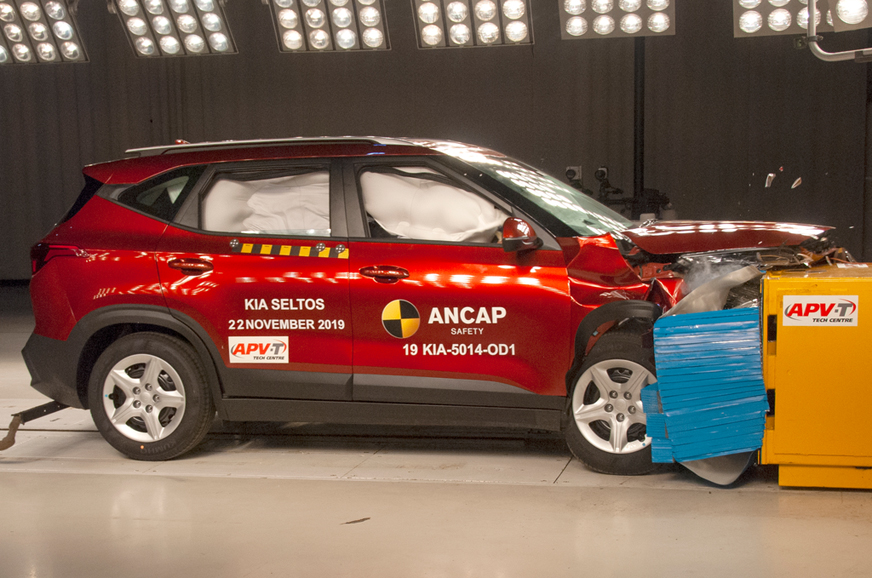
Introduced to the Indian market in August, the Kia Seltos is quite an important model for the Korean brand – underlined by the fact that it is exported from India to markets in the Middle-East and South Africa; and that it is sold in North American and Australasian markets. The SUV for the Australian market, which is imported to the country from South Korea, has been awarded a 5-star safety rating by the Australasian New Car Assessment Program (ANCAP).

All variants of Kia’s smallest SUV for the market come equipped with six airbags, ABS, an autonomous emergency braking (AEB) system, lane keep assist, lane departure warning, emergency lane keeping and a tyre pressure monitoring system (TMPS). This equipment helped it score 85 percent for adult occupancy, 83 percent for child occupancy, 61 percent for Vulnerable Road User Protection and 70 percent for its safety assist features. An options pack adds features such as adaptive cruise control, a more advanced version of the AEB system, a blind spot monitor and a rear cross traffic alert system, all of which improve the Vulnerable Road User Protection and Safety Assist score by 7 percent and 8 percent, respectively.

While standard safety kit of the India-spec Kia Seltos does comprise six airbags, ABS with EBD and brake assist, traction control, hill-start assist, a 360-degree camera, TMPS and a blind spot monitor as standard. Meanwhile, the base trim comes with just two airbags, ABS with EBD and rear parking sensors as standard.

Still, even the base level of kit, along with the sturdy body structure (as certified by ANCAP) should help it achieve a comparable score on Global NCAP’s crash tests, which are conducted with different parameters in mind.

The Kia Seltos for Australia also differs from the India-spec SUV in terms of its powertrain options. While the India-spec Seltos has three engine options (two petrols and one diesel); in Australia, the SUV is available with either a 150hp, 2.0-litre petrol engine or a 177hp, 1.6-litre turbo-petrol engine.

Also see:

Kia Seltos EV in the works

India-spec Kia Carnival teased ahead of market launch


from Autocar India https://ift.tt/367QIc1
via IFTTT

Suzuki Ignis facelift leaked

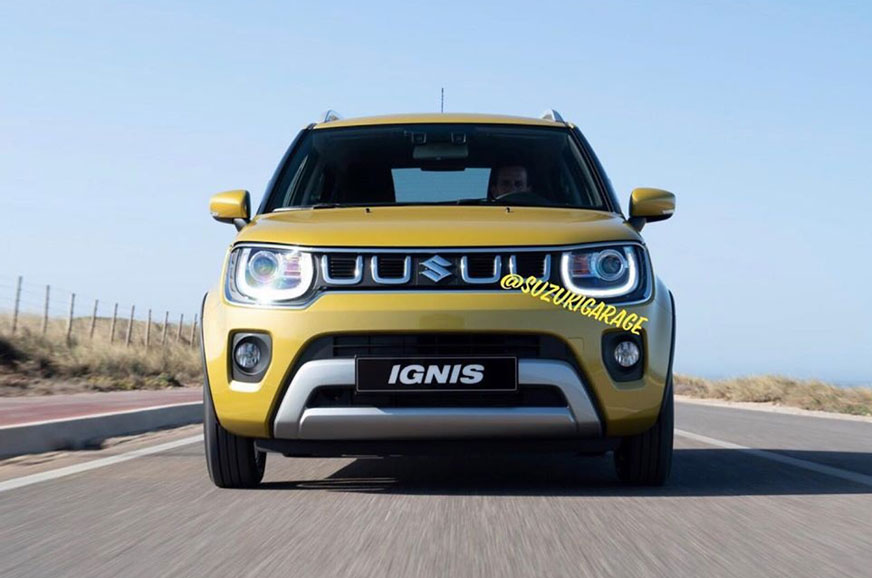
Maruti Suzuki launched the Ignis back in 2017, and due to its unique and retro styling, it was aimed towards younger buyers. Now some new images have surfaced online, and they seem to be of the international-spec Ignis facelift. The design is likely to make it to the India-spec Ignis facelift that is expected to be launched by mid-2020.

From these images, we can see that the Ignis facelift sports a new grille design similar to the one seen on the S-Presso, as well as a new front and rear bumper design. We can also see that both the bumpers get faux scuff plates. The rest of the styling, however, seems very similar to the current model, including the side profile, where the wheels, headlights, and tail-lights all appear to be carried over.

In terms of engines, the updated hatchback is expected to use the same BS6 version of the 1.2-litre petrol engine, currently seen in the Swift and Baleno. In the Swift, the 1.2-litre, four-cylinder engine produces 83hp and 113Nm of torque, but in the transition to BS6, it did see a marginal drop in fuel efficiency. Coming to gearbox options, the engine will be offered with a 5-speed manual and an AMT automatic unit.

Although the interiors are not visible in these images, the facelift is likely to feature the same interiors as the updated Ignis which saw the addition of the SmartPlay Studio infotainment and was launched earlier this year.

In the Indian market, the Maruti Suzuki Ignis rivals the likes of the Ford Freestyle and the Mahindra KUV100 NXT.

IMAGE SOURCE


from Autocar India https://ift.tt/2QILZHB
via IFTTT

12 new Tata cars coming in the next 4 years

Tata Motors’ new Altroz isn’t merely its first premium hatchback, it also boasts another first – one that is even more significant in the grander scheme of things – it is the first car off Tata’s all-new ALFA platform. Designed and engineered to deliver global levels of flexibility and local levels of cost-competitiveness, the new platform started out life as the AMP or Advanced Modular Platform. Slated to be shared with the Volkswagen Group at the time, AMP has today evolved into Tata’s first flexible vehicle architecture, ALFA.

Named ALFA for Agile Light Flexible and Advanced, the new architecture will, in combination with the OMEGA platform (shared with JLR), account for all of Tata’s new cars set to hit the market in the next decade or so. Of the two platforms, the ALFA, of course, will have the lion’s share, and that’s only right. Smaller, more affordable and the more suitable of the two in our low- cost environment, it is very flexible, and, as a result, can be adapted to make cars of different
shapes and sizes.

ALFA architecture stretches from 3.7 to 4.3m, offers tremendous flexibility.

But just how many cars can we expect? Guenter Butschek, CEO of Tata Motors spells it out: “We will have 12 to 14 new top hats between ALFA and OMEGA in the next 3-4 years”. This is huge and it is likely to take Tata’s market coverage up massively, to around 90 percent.

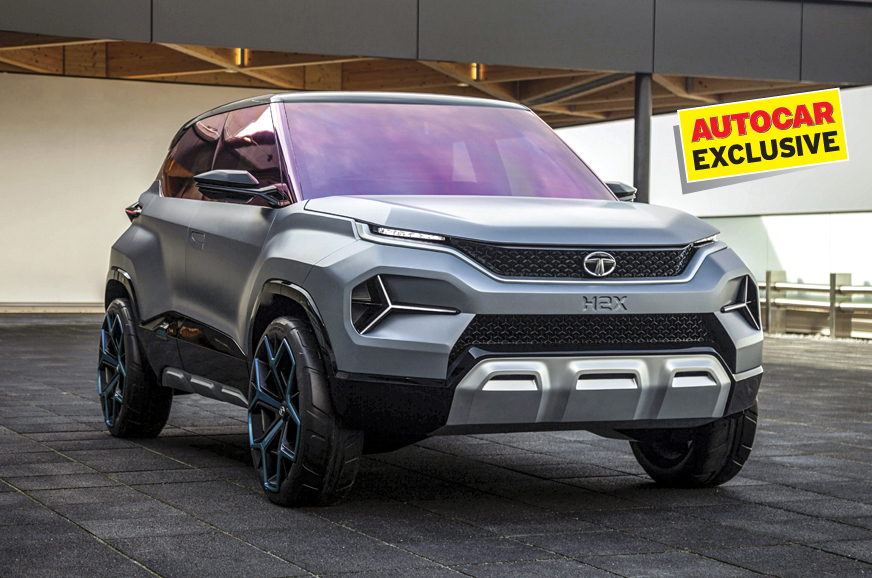
So what can we look forward to? Plans haven’t exactly been firmed up, but you can expect the range to start with Tata’s H2X or Hornbill, then the new Nexon will be built on the ALFA platform, and Tata could even push the limits of the platform and try and do a Creta rival. The latter, however, could also be built on a platform shared with Chinese carmaker and JLR partner Chery (see below).

Tata recently showed a sedan concept that looks like it could go up against the Honda City, and then, logically there should be a compact sedan or Maruti Dzire rival. An Ertiga-sized MPV is also on the cards, and then don’t discount a spacious Maruti Wagon R-rivalling hatchback either. Of course, later on, there will be replacements for the Tiago, Tigor and a dedicated EV is likely as well.

Tata is likely to do a compact sedan as well as a Honda City rival.

Tata says cars built on the ALFA platform will stretch between 3.7-4.3m in length, the wheelbase is stretchable to a not-so-insignificant 2,450mm, the front and rear track can be altered, and should engineers and designers choose, the cars, SUVs, and MPVs could be as wide as 1,800mm too. They are likely to have the biggest boots in their class, there will be a flat floor in the rear, and quality levels are likely to take a big jump up too, as around 90 percent of the cars’ bodies will be built by robots, allowing for great precision, and greater uniformity of parts.

The Omega platform is less flexible. The larger of the two and the one shared with Land Rover, it could have at least three new cars built on it. The first will be the seven-seat Gravitas. Then there will be an SUV with a coupĂ©-like roof, and later on will come the Hexa replacement or a large, Innova-sized MPV. For now, the OMEGA platform has only one diesel, the 2.0 Multijet, but Tata is working on a larger 1.5 petrol, and there could even be a mild-hybrid version, though Tata seems to currently not be in favour of hybridisation. 


The smaller ALFA architecture, on the other hand, will have all manner of powertrains: petrol, diesel, hybrid and electric. Engines currently available on the Nexon and the Altroz are expected to be the mainstay, and there is a new twin-clutch automatic gearbox in the works too.

To keep costs down on the ALFA, the entire structure will be split into around 15 essential modules which can be reused on other top hats without too much additional investment. Tata is also in the process of weeding down the supplier chain. Now finally down to around 300 component makers between both PVs and CVs, from at least double of that, it will allow Tata to get its new models to the market faster – less time wasted on taking care of poor-quality supplies.


Leapfrogging and going directly to a variable architecture was actually crucial for Tata. “We changed track halfway from doing a more limited platform to a more flexible architecture,” explains Butschek. “Rather than merely have a platform with a limited range of top hats, we moved to an architecture that’s flexible in length, width, height, and which finally is going to give us a high degree of commonality. By doing this we also de-risk individual launches, create massive economies of scale, and, at the same time, help leverage the big initial investment better.

BRIDGING THE GAP . . . WITH CHERY


Tata’s Creta-fighter, codenamed ‘Blackbird’, is an SUV looking for a platform. Too small to be built on the OMEGA or Harrier platform, and too big to be built on the ALFA architecture, it falls in no man’s land. The stumbling block isn’t overall length; ALFA can be stretched to 4.3m. The problem is wheel size, or rather a lack of it. Thing is, ALFA is predominantly a small-car architecture, and as a result doesn’t support wheels larger than 700mm in diameter, key to SUV appeal. To get around the problem, Tata has been talking with JLR partner and Chinese automaker Chery, which has SUVs and platforms that fit the description. Of the many, the best fit is thought to be the 4,338mm-long Tiggo 4 or T-17. But is a 5- star NCAP crash-test rating possible with these underpinnings?

With 90 percent market coverage now technically possible and an assault of all-new cars on the horizon, Tata Motors could be in for its most successful phase ever. ALFA and OMEGA put together certainly have plenty of promise. We just could see an all-new and hitherto unrecognisable Tata Motors emerge. Heady times ahead.

Also see:

Tata Nexon EV: What to expect from each variant

Tata Altroz: What to expect


from Autocar India https://ift.tt/37lGm8E
via IFTTT

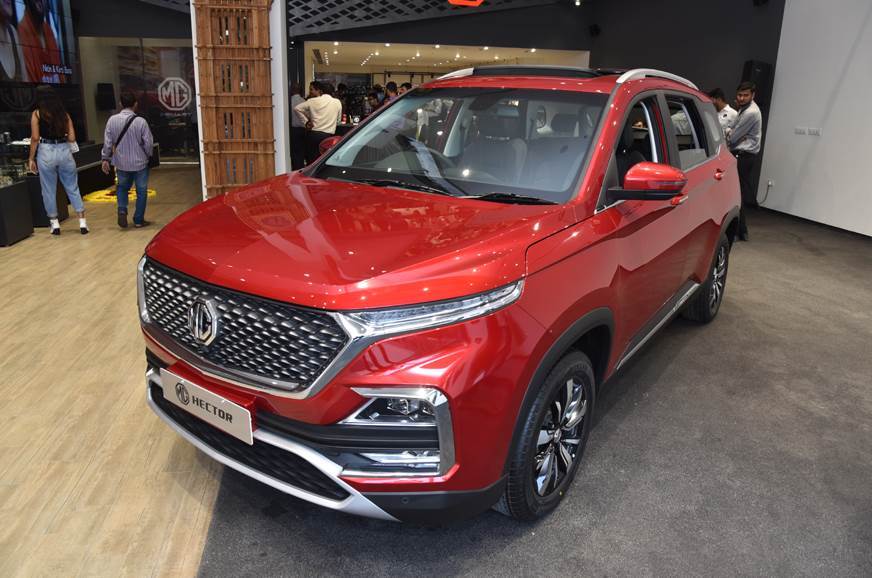
MG Hector gathers 50,000 bookings

MG Motor India has announced that its first product for our market, the Hector SUV, has crossed 50,000 bookings. The model was launched las...