Jawa teases three different new bikes

The Buzz around the upcoming Jawa motorcycles doesn’t seem to end. Just after the upcoming motorcycle was spotted testing, Jawa has released a teaser video on its social media accounts. The video showcases the possible various design styles that the upcoming bikes might follow.

The first bike showcased looks like the initial sketch of the roadster and the second bike is the production guise of the same. An interesting fact is that the design cues of the second bike are very similar to that of the pre-production prototype spotted a few days back. Apart from styling, even the cycle parts – like the frame, telescopic fork, twin shock-absorbers, a gas -charged canister at the bottom and the single disc brake at the front – is similar to the spied bike.

What’s more interesting are the other two motorcycles – a scrambler/adventure tourer and a bobber. From our sources, we knew that Jawa will be showcasing three products in Mumbai on November 15, 2018 and the released video confirms this.

Going by the sketch seen in the video, the new motorcycle looks more of an adventure tourer than a scrambler offering. In the teaser, we can see that the bike will have a bare and functional design, kind of reminiscent of the Royal Enfield Himalayan. The bike features a long-travel USD fork, a large-spoke front wheel, a raised handlebar, a high-mounted fender and a tall windscreen. Other visible details include a flat saddle, a high-set under-seat exhaust muffler, high ground clearance, monoshock, a rear disc brake and a longer swingarm.

The third motorcycle teased by Jawa is that of a bobber, which is a segment of motorcycles that was been revived a few years back and has been gaining popularity in global markets. The Jawa bobber looks to be inspired by the Triumph Bonneville Bobber, since we can see a cantilevered single seat with a monoshock suspension underneath it, chopped fenders and balloon-style tyres. The flat and low-set handlebar is a flat and low unit, which should result in a slightly sporty riding stance. The cast swingarm looks completely different from the other two bikes and even the Jawa Bobber features a USD fork and a rear disc-brake.

All the three Jawa offerings will be powered by a 293cc, single-cylinder, liquid-cooled motor producing 27hp and 28Nm of peak torque, mated to a 6-speed gearbox. Jawa officials claim that the new powerplant has been developed from scratch and we believe it shares only the very basic architecture with the Mojo’s existing 300cc mill. The motor will also be BS-VI-ready.

While all three of the new Jawa bikes will be showcased on November 15, we feel that the Jawa roadster will go on sale first, while the other two offerings will be launched in a phased manner. Given the simpler components used on the Jawa roadster, we are expecting it to be priced quite competitively. For reference, the Royal Enfield Classic 350 currently costs Rs 1.48 lakh (ex-showroom, Mumbai), and this price will go up slightly when ABS becomes mandatory.

We will be reporting live from the launch event on November 15. So make sure you follow our website and social media accounts for the latest updates.


from Autocar India https://ift.tt/2qqzYK4
via IFTTT

New Hyundai Santro gathers nearly 29,000 bookings.

It’s only been 22 days since the all-new Hyundai Santro was opened for bookings and it has already garnered more than 28,800 bookings across the country. This has contributed to Hyundai posting its highest-ever domestic sales figures in the month of October, this year, with sales figures of 52,001 units. These figures are up by 4.9 percent from October 2017. The new Santro has been doing well in this department right from the get-go as it gathered 14,000 bookings in the first nine days of pre-booking and reached 23,500 by the time of its official launch. According to Hyundai the all-new Santro has received 1,29,500 inquiries and clocked wholesale numbers of over 8,500 units. They have also stated that they plan on producing only 10,000 units of the Santro every month, so customers might face a one- or two-month waiting period for their car.

The new Santro is available in five variants – the D-lite, Era, Magna, Sportz, and Asta trims – with the Magna and Sportz trims receiving optional factory-fitted CNG kits. All trims will be powered by a 1.1-litre, four-cylinder engine that produces 69hp and 99Nm of torque in the petrol variant and 59hp and 84Nm of torque in the CNG variant. The petrol variants will be offered with a 5-speed manual gearbox as well as a 5-speed AMT gearbox – the latter is only available in the Magna and Sportz trims, while the CNG variants will only be offered with the 5-speed manual gearbox. The new Santro's main rivals are the Maruti Suzuki Celerio, the Datsun Go and the Tata Tiago.

Also see:

2018 Hyundai Santro vs rivals: Specifications comparison

2018 Hyundai Santro price, variants explained

2018 Hyundai Santro review, test drive

2018 Hyundai Santro buyer's guide video


from Autocar India https://ift.tt/2qwB0nX
via IFTTT

Kia Ceed hatchback under consideration for India

Kia Motors will reveal its first model for India – the production version of the SP Concept – next year; but there’s much more to come from the Korean carmaker. A made-in-India compact SUV will make its debut in 2020, and one of the other models in the range could be the Kia Ceed. Sun Wook Hwang, Senior General Manager, Marketing and PR, Kia Motors India confirmed the same.

Now in its third generation, the 4.3m-long Ceed is a large hatchback and a rival to the likes of the Volkswagen Golf and Hyundai i30 in markets abroad. In India, the Ceed would be a unique offering. Owing to its length, the Ceed will not qualify for any ‘small car’ excise benefits but Kia is not planning to play the hatchback on price. Rather, the Ceed will be priced at par with or perhaps even higher than executive sedans such as the Hyundai Elantra; and will be pitched as an option for buyers looking for something different. To make the offering more appealing, Kia will only introduce the hatchback in GT Line trim that gets sportier bumpers, exterior detailing in red-and-black, and large 17-inch alloy wheels. The cabins on GT Line cars are all-black affairs and also get sportier front seats.

Engine options for India will include a 140hp, 1.4-litre direct-injection turbo-petrol and a 1.6-litre diesel, likely in 136hp guise. Seven-speed dual-clutch transmissions will be available on both models.

Kia is not looking at massive sales volumes for the Ceed and the carmaker's primary focus is to use it as a brand builder. The model will be assembled at Kia’s upcoming facility from CKD kits; but if demand exceeds 1,000 units a month, local production could be a possibility, too.

Kia says it doesn’t want to be boxed-in by traditional segments and body styles. The prospect of the Ceed sure suggests the Korean carmaker is keeping to its word.

Would you pay executive sedan money for a sporty, large hatchback? Let us know in the comments section below.


from Autocar India https://ift.tt/2Qajyk9
via IFTTT

PhotoGallery: 2019 BMW 8-series Convertible image gallery


from Autocar India https://ift.tt/2P1XnA0
via IFTTT

Kia compact SUV to debut at 2020 Auto Expo

Kia will begin its India innings in 2019 with the introduction of its Hyundai Creta-rivaling SP concept-based SUV. However, the company has already begun work on its second model for the Indian market, which will mark the brand’s entry in the crucial sub-four-metre compact SUV segment. This new model will make its global debut at the 2020 Auto Expo, in New Delhi, and will take on the Maruti Suzuki Vitara Brezza, the Ford Ecosport and the Tata Nexon compact SUVs.  This new SUV is likely to be Kia’s smallest offering worldwide and could be offered in other markets abroad.

The Kia compact SUV will share its underpinnings with the Hyundai QXi compact SUV, which is set to be launched in around March next year. While the Kia compact SUV will share many mechanical bits with the Hyundai QXi, it will get a completely different bodyshell. On the inside, expect Kia to equip its smallest SUV yet with premium-looking interiors and a long feature list replete with a high-end touchscreen infotainment system.

The Kia compact SUV will share engines with the Hyundai QXi, too, so you can expect not one but multiple engine options on offer. The model could come with the all-new 118hp, 1.0-litre turbo-petrol engine along with a new 1.5-litre diesel which is likely to deliver around 115hp. Sources tell us that while the engines will be shared, the Kia derivative will receive different engine and suspension tuning than its Hyundai counterpart.

What do you think would be the right price for Kia's compact SUV? Let us know in the comments.


from Autocar India https://ift.tt/2yLgtjX
via IFTTT

How to change a flat tyre correctly

Getting a punctured tyre is not uncommon on our roads. It can happen at any time and for a variety of reasons: bad roads, metal debris, worn-out tyres and more. A puncture can happen at the least opportune moment, such as when you are driving to a wedding in the rain. Or imagine if you are stranded in the middle of nowhere, with no help in sight. This is why the skill of changing a tyre is
a very important one, and thankfully, it isn’t all that hard to do. Just follow these steps you’ll be on the move again in say 30 minutes.

1 Find a safe zone
If you are driving and suddenly realise that one of your car’s tyres has got a puncture, it is best to reduce your speed gradually and come to a halt on the shoulder of a straight, level stretch of road. But avoid driving too great a distance on a punctured tyre as you risk getting more punctures and damaging the wheel rims. Also, once you stop on the shoulder, turn on your hazard lamps to make sure you are visible to other traffic. And, if you have one, place the warning triangle that comes along with your car 10 feet behind your vehicle.

2 Setting up
Make sure you apply the parking brake before beginning to change the punctured tyre as this will prevent the vehicle from rolling forward or back dangerously. You can also use a block of wood or large stones found on the wayside as a chock to prevent the car rolling. If you’re changing a rear tyre, place the chock before the front tyres. If your flat tyre is at the front, put the chock behind the rear tyres. Also, make sure to ask all vehicle occupants to disembark before changing the tyre.

3 Locating your tools

To accomplish the task of replacing your punctured tyre, you’ll need the car’s screw-jack, wheel spanner and spare tyre. Most cars have these hidden from plain view under the floor of the boot, or even under the floor of some SUVs and MPVs. In case, you cannot locate them, refer to your owner’s manual which usually comes with handy diagrams.

4 Loosening the wheel nuts
This needs to be done before you raise the vehicle on the screw-jack. In case the punctured tyre has a cover or hub caps, you’ll have to remove them off first. Follow the owner’s manual instructions on doing this as this process varies, depending on vehicle; generally, a sharp tug will do the job. Use the wheel spanner to loosen the wheel nuts by turning them in an anti-clockwise direction. The number of wheel nuts usually varies from three to five, depending on the car. But be prepared to use a lot of force while loosening them. In case they are really tight, you can use a hollow pipe over the spanner handle for extra leverage. Also, do not hesitate in using your foot or even jumping on it. Make sure you only loosen them and not remove them completely.

5 Jacking up your car

After loosening the nuts of the punctured wheel, you will need to place the vehicle-jack (most vehicle manufacturers provide a manual screw-type scissor jack along with the car) at a specific jacking point to raise the vehicle. This area is near the wheel and is indicated by a small arrow; its location can also be found in the owner’s manual. It is extremely important to know where this point is and to locate it correctly and safely. Once the jack has been aligned correctly, start rotating the spindle clockwise to raise the vehicle until the tyre is around 10-15cm off the ground to ensure that there is extra space for the inflated spare tyre, which will be taller.

6 Removing the punctured tyre
After jacking up the vehicle, unscrew its wheel nuts completely. Eventually, this should be possible with your hands only as you had already loosened them earlier. Keep them aside safely and then remove the punctured tyre by gripping it by the treads with both your hands and pulling it towards you. Do this until it’s free from the guides on the wheel hub. Keep the punctured wheel on the ground, partially under the car between the wheels. Sometimes, due to rust, an unscrewed wheel refuses to come out. To pry it loose, sit on the floor and use your feet to kick one side hard repeatedly. Then do it to the other. Eventually it should come loose.

7 Replacing the spare
Now comes the difficult task of lifting up the spare tyre and aligning it with the wheel bolts. If you are changing the tyre of a heavy SUV you might need help here. The trick is to expect to have to hold the tyre up for a long period. Don't be in a hurry, this is the most difficult and physically taxing bit. You're objective is to look at two bolts and make sure you align them with the wheel. The rest should be easy. Gently push till all the bolts show through.

8 Tightening the wheel nuts
With one arm or your foot holding the fresh tyre in place on the wheel hub start putting back the wheel nuts on wheel bolts and then tighten by turning them in the clockwise direction firmly but not hard. Once done, start lowering the vehicle by turning the jack in an anti-clockwise direction until the wheel is just touching the ground. Now using the wheel spanner tighten the nuts further, but in a diagonal or crisscross manner. Then lower the vehicle completely and slide the jack out from underneath the vehicle. Re-tighten the wheels nuts once again with the wheel spanner to make sure they are as tight and re-install the hub cap or wheel caps as necessary.

9 Stow your tools properly
The punctured tyre can be placed and secured in the spare-tyre slot. Stow all tools like the vehicle jack, spanner and warning triangle in their requisite places so that you can find them easily the next time. Also, ensure that they are secured and do not jingle and jangle around too much when you are on the move.

10 Get to a tyre repair shop
Drive to the nearest possible tyre shop to get the punctured tyre repaired at the earliest. If you are lucky, you won't have more than one puncture. Also, many cars nowadays come with ‘space-saving’ spares which are a smaller size compared to the regular wheels. They are only meant to be used as emergency replacements to get the vehicle to a place of repair. They come with a speed limit which is usually around 80kph (or written on its sidewall).


from Autocar India https://ift.tt/2PCVnOa
via IFTTT

Volvo India registers 40 percent sales growth between Jan-Oct 2018

Swedish carmaker Volvo's Indian subsidiary announced that it has sold a record 2,194 units in Jan-Oct 2018 period, registering a growth of 40 percent year-on-year.

Volvo has said that volume sales were led by the XC60 and the new XC40 SUVs. Interestingly, the Jan-Oct 2018 sales surpassed the number of vehicles sold throughout 2017 (2,029 units).

Apart from new launches, the company says network expansion has also contributed to growth. The company is hopeful that the upcoming festive season will further boost its prospects. Volvo India has opened five new dealerships in the country since January 2018 at locations such as Kozhikode, Raipur, Kolkata, Indore and Noida, bringing the overall dealership count to 21 as of October 2018.

“We are extremely happy with our performance so far in 2018. The XC40 has been received well and its success is important for the brand to be accepted in the entry-level luxury segment. The network expansions, too, have contributed to growth and we are on-track to replicate the growth percentage [of the] previous year in 2018,” Charles Frump, MD, Volvo Car India said in a company statement.

The Swedish carmaker has registered a significant growth in volumes in the first nine months of 2018 as well, albeit on a relatively lower base. Sales totaled 1,896 units – up 34 percent year-on-year from 1,413 units sold during the same period in 2017.

India's luxury segment is currently led by German carmaker Mercedes-Benz, which sold 11,789 units in the Jan-Sep 2018 period, down marginally by 0.7 percent year-on-year. Key rival BMW sold 7,915 units (including Mini sales) during the same time, recording an 11 percent growth.


from Autocar India https://ift.tt/2F8pZTZ
via IFTTT

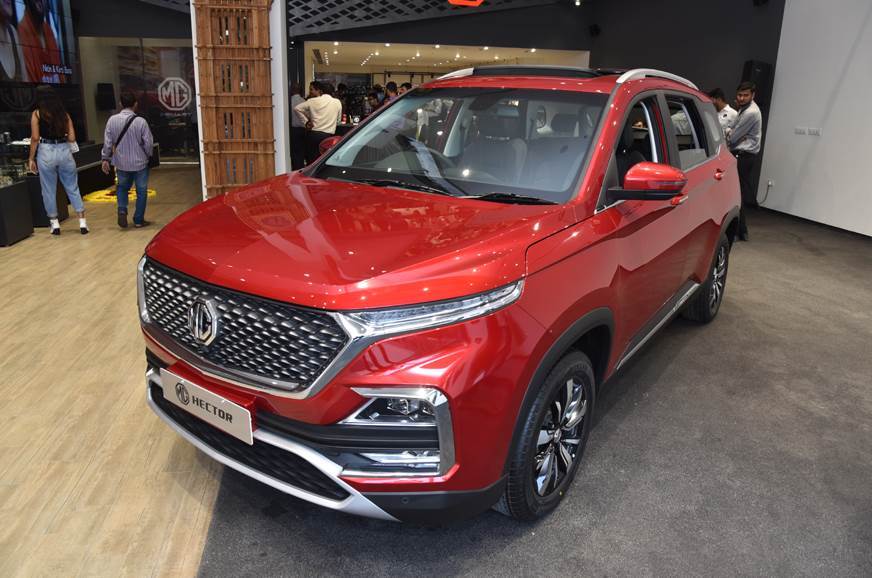
MG Hector gathers 50,000 bookings

MG Motor India has announced that its first product for our market, the Hector SUV, has crossed 50,000 bookings. The model was launched las...