Volkswagen and Ford may collaborate on EV development

Volkswagen and Ford are exploring the possibility of putting their best minds together for the purpose of developing the future of autonomous and electric vehicles.

Reuters reports that plans for a strategic alliance could help both companies save billions of dollars in research and development costs and allow for shared platforms and self-driving technology.

This news follows the companies' announcement in June that they were looking to collaborate on the development of future commercial vehicles and other projects. Ford's president of global markets, Jim Farley, called this move an example of Ford’s commitment to “leveraging adaptive business models.”

Volkswagen's in-house MEB electric vehicle platform could form the basis for shared development. However, Frank Witter, the company's CFO, has said there has been no decision on whether other companies will be allowed to use the template. The first MEB-based models are scheduled to roll out of Volkswagen's new electric vehicle factory in Zwickau, Germany, in November 2019.

Both carmakers are keen to introduce new electric vehicles in the European market, where strict regulations are being imposed on the development and sale of petrol and diesel vehicles. Volkswagen has already announced its intent to produce 2-3 million full-electric cars by 2025.

Ford and Volkswagen are co-owners of the Ionity scheme alongside BMW and Daimler. The Ionity scheme involves the development of a network of ultra-fast charging stations across Europe.

This potential alliance would not be the first of its kind. As recent as last month, Honda invested $2.75 billion in General Motor's self-driving division. The Japanese and American companies plan to challenge tech giants Apple and Google with a new range of driverless taxis.

Established car manufacturers around the world have begun to shift focus and look entirely at research and development of zero-emission and self-driving vehicles. This is mainly to counter global legislation aimed at reducing pollution.


from Autocar India https://ift.tt/2PGtKEd
via IFTTT

Honda CB Shine sales cross 70 lakh in India

Honda Motorcycle and Scooter India has announced that its CB Shine motorcycle series has developed a customer base of over 70 lakh. The two-wheeler manufacturer has revealed its Shine series as the market leader in the 125cc motorcycle segment holding a 51 percent market share. It has registered a 10 percent growth against a 2 percent dip in the segment.

Commenting on this achievement, Yadvinder Singh Guleria, senior vice president - sales and marketing, Honda Motorcycle and Scooter India said, “Shine’s outstanding performance, together with the innovation of a Combi Brake System (CBS) with an equaliser differentiates it from other offerings in the segment. Achieving this milestone ahead of Diwali is a great encouragement for us and we are all prepared to fulfil the ever-growing expectations of our customers this festival!”

While Hero MotoCorp dominates proceedings in the 100-110cc commuter class, the CB Shine has been the undisputed leader in the 125cc segment, despite facing competition from the Hero Glamour and the Bajaj Discover range over the years.

The bike is powered by a 124.73cc air-cooled, single-cylinder engine boosted by Honda Eco Technology (HET) producing 10.16hp at 7,500rpm and peak torque of 10.30Nm at 5,500 rpm. Honda also has a more premium offering of the Shine, the CB Shine SP, which gets better styling, more features and a 5-speed gearbox. The Honda CB Shine retails between Rs 57,683-62,903 (ex-showroom, Delhi) in the Indian market.


from Autocar India https://ift.tt/2yLalbb
via IFTTT

2019 BMW S1000RR engine specs revealed

The new BMW S1000RR is among the most highly anticipated superbikes in the recent past. And there’s good reason for this excitement. When the German unleashed the first generation S1000RR back in 2010, it literally annihilated its competitors. The fact that it was BMW Motorrad’s first superbike offering didn’t stop it from pushing the boundaries and it soon became the benchmark for the segment. Over the years, BMW did update its litre-class superbike; however, with competing upping the ante, it was evident that an all-new generation is the need of the hour.

BMW Motorrad has been working on a replacement over the past few years and the 2019 S1000RR will make its debut at the 2018 EICMA motorcycle show on November 6. The German marquee claims that the new motorcycle isn’t an evolution of the older bike, but rather a radical new offering. The same was gauged from the styling of the 2019 S1000RR as pictures of the prototype undergoing testing and later patent images confirmed the radical shift in design.

Now, specifications details of the new superbike have emerged and these are numbers that will please BMW Motorrad enthusiasts. Powering the 2019 BMW S1000RR is a 999cc, in-line-four cylinder motor producing 207hp at 13,500 rpm and 113Nm of peak torque arrives at 11,000rpm. The powerplant is mated to a 6-speed gearbox and BMW claims a top speed of 299kph (electronically limited) for its new offering. Kerb weight is less than 200kg, at just 197kg and there’s a special ‘M Package’ that shaves off a further 3.5kg.

 In terms of electronics, the new S1000RR gets cornering ABS, four ride modes (rain, road, dynamic and race), multi-level traction control system, HSC (hill start control) and bi-direction quickshifter. More details about the new superbike will be revealed on November 5 when the bike makes it official global debut. The 2019 BMW S1000RR will definitely be brought to our shores as a CBU unit and is likely to be launched by mid-2019.


from Autocar India https://ift.tt/2zhGN4B
via IFTTT

Viveck Goenka elected as president of WIAA

The Western India Automobile Association (WIAA) today announced that Viveck Goenka, prominent car collector and Chairman and Managing Director of the Express Group, has been elected president of the organisation for 2018-19.

Goenka succeeds Edil J. Katrak. The association, which enters its 100th year of existence, also announced that Nitin Dossa, president of Vintage & Classic Car Club of India (VCCCI), has been re-elected Executive Chairman.

Other elected representatives include Viral Acharya, who was re-elected to the post of First Vice President, and eminent car collector Jagdish Thackersey, who will serve as the Second Vice President, succeeding Kirtikumar K. Dayal.

Goenka has one of India's largest car collections and it includes rare Mercedes-Benz models and every generation of the Mercedes S-class and Land Rover, apart from a slew of classic Volkswagens and Fiats. He has a huge passion for old-school 4WDs and also has a big collection of American cars. Interestingly, at the fifth edition of the Cartier Concours D'Elegance 2017, he participated with a staggering seven cars, a record for any collector/restorer at a show like Cartier.


from Autocar India https://ift.tt/2AEEcU2
via IFTTT

Hyundai working on solar roof charging system

The Hyundai Motor Group is currently developing three different types of solar roofs for cars with hybrid, full-electric and internal combustion engine (ICE) powertrains. While solar charging panels have been fitted to vehicles previously, including on the Toyota Prius Plug-in, this is believed to be the first time the technology will be applied to an ICE-only car.

The first type, due to arrive next year, is for hybrids. It's capable of charging 30-60 percent of the battery during a day, depending on the weather. The vehicle can then use that energy to reduce engine usage, thus increasing fuel economy and cutting CO2 emissions. 

The second type is designed for ICE-only vehicles and features a semi-transparent solar roof that charges the vehicle's battery. That will be followed by a third system for fully electric vehicles, which will feature solar panels on both the roof and bonnet to maximise energy output.

All three types will use silicon solar panels that can generate up to 100W of electricity, which is then fed through a controller to increase efficiency before being sent to a battery.

It hasn't yet been confirmed which Hyundai and Kia vehicles will feature the technology first or when it's likely to become available in the UK.

“In the future, we expect to see many different types of electricity-generating technologies integrated into our vehicles. The solar roof is the first of these technologies, and will mean that automobiles no longer passively consume energy, but will begin to produce it actively,” said the developer of the technology Jeong-Gil Park, executive vice-president of the Engineering and Design Division of Hyundai Motor Group. “It is an exciting development for us, designing a technology for vehicle owners to help them shift from being energy users to being energy producers.”

How Hyundai's solar panel tech works           

The solar charging system is composed of a solar panel, a controller and a battery. As the panel absorbs photons of light from the sun, it creates electron-hole pairs in silicon cells, enabling current to flow and generating electricity.

When a 100W solar panel is equipped, it can produce up to 100Wh of energy (in ideal conditions: summer noon, 1000 W/m2 intensity of radiation). The controller features Maximum Power Point Tracking (MPPT), which controls the voltage and current to increase the efficiency of electricity harvested by the solar panel.

This power is converted and stored in the battery or is utilised to decrease the load on the vehicle’s alternating current (AC) generator, thereby increasing vehicle range.


from Autocar India https://ift.tt/2QbfdNB
via IFTTT

2019 California Superbike School India dates announced

Dates for the 2019 edition of the California Superbike School (CSS) have been announced. It will be held at the MMR race track on the outskirts of Chennai. CSS is regarded as among the best riding schools, globally, and it will be held in India in two batches. The first batch of the 2019 CSS will be held from January 18-20, 2019; the second batch is scheduled from January 25-27, 2019.

The three-day riding school is conducted by experienced trainers from the school’s centres across various countries. CSS is divided in various levels and the fee for riders participating between Level 1 and Level 3 is Rs 70,000, while the Level 4 fee is set at Rs 1.25 lakh. It should be noted that only riders who have completed the first three levels are eligible for Level 4 training.

The school fee is inclusive of taxes, insurance cover, food and fuel. Logistics and accommodation – including logistic costs for the transport of your motorcycle – has to be borne by the participant. Yes, the fee is on the higher side, but from our past experience at the school, we can attest that it's money well-spent.

The riding school helps make you a faster rider – but more importantly, it helps to be a better rider. The skills learnt over the course of the school aren’t restricted to the race track – they help you to be a better rider on the streets, as well.


Also see:

Top Class: California Superbike School experience

Atomic Motorsports riding school experience


from Autocar India https://ift.tt/2PAIOD3
via IFTTT

Review: 2018 BMW i3S review, test drive

What is it?

It's been five years since the i3 joined BMW's international line-up, yet it remains one of the most unique models to wear the propeller badge. Along with the i8 hybrid sportscar, the all-electric i3 constitutes BMW's 'i' sub-brand that's centred on sustainability and low emissions. The i3 is not on sale in India as yet but BMW has brought in a few units to serve as technology demonstrators to government bodies, and to gauge if there's indeed a market for a high-end electric hatchback as this.

The model with us is the i3s, a sportier version launched alongside the updated i3 last year. Range-extender variants that add in a two-cylinder engine – which solely acts as a generator to juice up the battery – is also an option on both versions abroad.


What's it like on the outside?

The i3 is far removed from BMW's combustion engine models in look. The silhouette is upright hatchback (it measures 3,999mm in length) but you just can't confuse the funky i3 for anything else.

The almost oversized wheels (they're 20 inchers!) and blacked-out bonnet, roof and tailgate (BMW calls it the 'i Black Belt') set the tone, and then there's the stepped window line that is such a departure from the norm. Of the other cool bits are the tail-lights that are recessed in the glass of the tailgate. But the coolest design elements of them all are the i3's doors. The front ones open conventionally while the back doors open rearwards à la the Rolls-Royce Phantom. And note, there's no B-pillar to spoil your view of the cabin or hinder access either.

The latter bit is possible because the i3's passenger cell is made of carbon-fibre reinforced plastics (CFRP) that's rigid enough to do without the need for added structural support. CFRP aside, the i3 makes liberal use of aluminium (on its bespoke skateboard chassis, for one) and plastics to keep weight to a minimum. In all, the i3's weighs 1,265kg, which is really impressive for an electric vehicle that is traditionally weighed down by heavy battery packs.

What's it like on the inside?

Just like its exterior, the i3's interior too is unlike any other BMW out there. And it's not only the minimalist design of the dash but also the materials used; the grain of the wood, the fabric on the seats and the fibre-like finish to the door inserts give the cabin an almost meditative vibe. BMW says over 80 percent of the materials visible to occupants are made from recycled materials or renewable resources. PETA sure would approve of this cabin.

Up front, the i3 feels really airy. You sit at a nice height, the glass area is large and then there's the floating dash that accentuates the feeling of space. The controls for the free-standing centre screen (not a touchscreen) sit between the front seats but what's unique to the i3 is a drum-like gear selector (D, N, R, P only, mind you) behind the steering wheel.

The rear seats score fine on comfort but there are a few quirks. To begin with, the rear door cannot open independently of the front door, so the chauffeur-driven won't make the most elegant of exits at hotel porches. Also, while the rear windows are large and afford a good view out, they are fixed and cannot be rolled down.

The i3 is a city car, so the 260 litres of boot space is acceptable. There's a storage bay under the bonnet too but a small shopping bag is all it'll take.

What's it like to drive?

The BMW i3s is powered by a 184hp (14hp up on the standard i3) electric motor that draws power from a 33kWh lithium-ion battery pack placed under the passenger compartment. The rear-mounted motor drives the rear wheels via a single-speed gearbox.

Electric motors produce max torque from the word go but the i3s feels particularly zippy. BMW claims a 0-100kph time of 6.9second and the seat-of-the-pants feel is that it really is that quick. It's just unusual to be in a quick BMW without any sound from the exhaust.

There are four driving modes – Sport, Comfort, Eco Pro and Eco Pro + – each with their own power and steering characteristics. The good thing is that the i3s doesn't drive like an insipid electric car. It's quite nice in the corners thanks to the light yet precise steering and fair body control. This may not be the BMW to go hooning about in but it sure can liven up the mundane city commute. Speaking of which, the i3s does the daily grind well. We drove it through rush-hour Gurgaon traffic and liked the i3 for its power, pep and silent progress.

That said, range anxiety does kick in out on the highway. The i3 has a claimed range of 200km and driving with verve has the numbers on the range indicator drop quite quickly. A full charge is also a long-drawn process – it takes upwards of 10 hours. Regen braking does help top up the battery on the go, but for max range, Eco Pro+ is the mode to be in. Among other measures to help the i3s go the distance, it also switches the air-con off.

Should I buy one?

The question really is, would you buy one? Assuming BMW does think it's worth bringing the i3s to India, the punitive duty structure would put the price tag upwards of Rs 50 lakh. Sure, it has the green credentials and is actually quite nice to drive too, but, at the end of the day, a similar-priced 5-series, for instance, would give you much more car and thrills for the money. And let's not even get into the matter of the inadequate public charging infrastructure.

In all, this is a BMW with its heart in the right place. It's just that India is not the place for the i3s.


from Autocar India https://ift.tt/2SGmdUu
via IFTTT

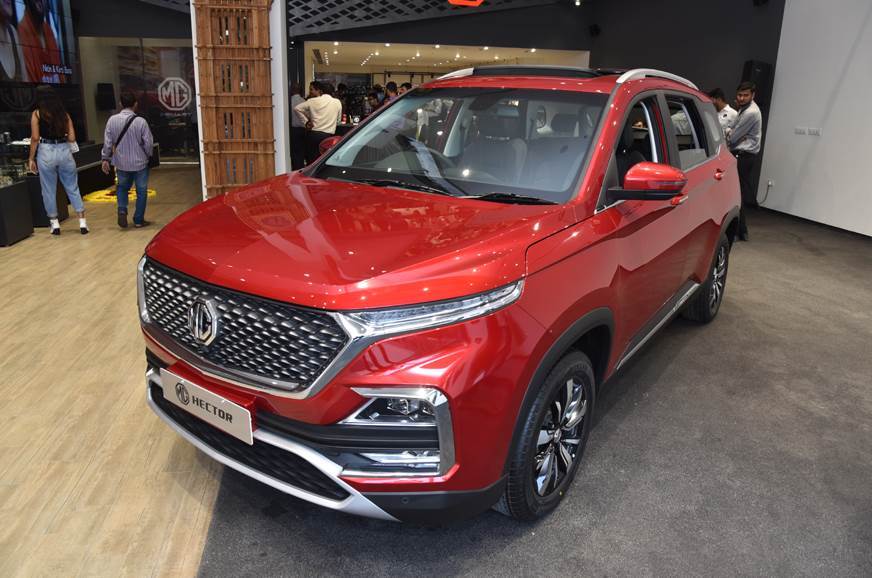
MG Hector gathers 50,000 bookings

MG Motor India has announced that its first product for our market, the Hector SUV, has crossed 50,000 bookings. The model was launched las...